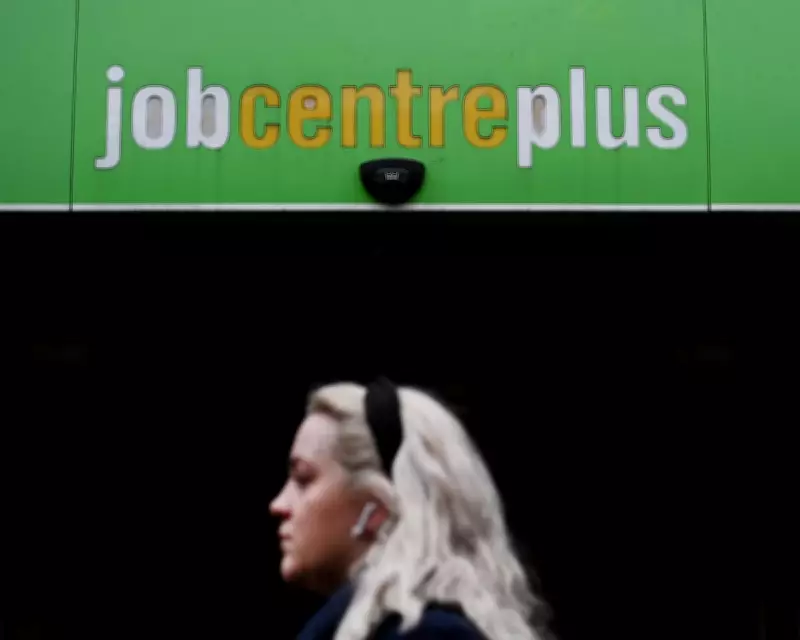
OBR Revises UK Unemployment Forecast Upward Amid Youth Employment Crisis
The Office for Budget Responsibility (OBR) has significantly increased its unemployment projections for the United Kingdom, warning of a "worrying" surge in young people out of work. According to the government's official economic forecaster, unemployment is now expected to peak at 5.3% this year, a substantial increase from the previous November forecast of 4.9%.
Youth Unemployment Reaches Critical Levels
This revised figure represents the highest unemployment rate since the final quarter of 2020 during the COVID-19 lockdowns. Excluding the pandemic period, it would be the worst unemployment situation since September 2015. The most concerning aspect of this trend is the disproportionate impact on younger workers, with 16% of 16-24 year olds currently unemployed - nearly an 11-year high.
Professor David Miles, a member of the OBR's budget responsibility committee, explained that the rise in unemployment stems primarily from companies reducing hiring rather than conducting mass layoffs. "This has a bigger impact on people entering the workforce," he stated. "You would expect it to have a disproportionate impact on people joining the labour force and trying to find a job for the first time, and that does seem to be happening."

Economic Growth Prospects Diminished
Alongside the bleak employment outlook, the OBR has downgraded the UK's growth prospects for the coming years. The forecast indicates that GDP will increase by just 1.1% in 2026, down from 1.4% in 2025, before averaging 1.6% annually until 2030. Inflation is projected to fall from 3.4% in 2025 to 2.3% in 2026 and stabilize at 2% from 2027 to 2030.
The OBR acknowledged significant uncertainty in these projections due to global factors, particularly the conflict in Iran, which could have a "very significant" impact on the UK economy. Professor Miles noted that recent market developments "have been in the direction of making the economic and fiscal outcomes more difficult" and warned of a "material impact on inflation" if energy prices continue rising.
Policy Impacts on Youth Employment
Economists have identified several policy factors contributing to the youth unemployment crisis. The government's efforts to equalize the national minimum wage for younger and older workers, combined with increased national insurance contributions for employers implemented in April last year, have disproportionately affected youth employment opportunities.
Professor Miles confirmed this analysis, stating that these policies "disproportionately increase the cost of employing very young people." The OBR expects this weak hiring trend to persist in the near term, with unemployment remaining higher than previously forecast through 2029 before aligning with November's projection of 4.2% and dropping to 4.1% in 2030.
Tax Burden Reaches Historic Highs
In additional concerning economic news, the OBR revealed that the overall tax burden will increase from 36% of GDP to 38% by 2030, with personal taxes accounting for half of this increase. This would represent the highest tax burden on record, surpassing even the 37.2% level at the end of the Second World War and nearly 6% of GDP above pre-pandemic levels.
Tom Josephs, another member of the budget responsibility committee, attributed much of this increase to the chancellor's decision to freeze income tax thresholds in the autumn budget. "The increase in personal taxes is very much driven by the policy of freezing personal tax thresholds, which, combined with relatively strong nominal earnings pushes up the tax as a share of GDP," he explained. "That counts for around two-thirds of the increase in the tax burden."
Migration and Population Adjustments
The OBR also adjusted its migration forecasts due to changes in how the Office for National Statistics measures net inward migration. The revised methodology has resulted in a lower central forecast for overall net inward migration, with a reduction in the adult population of approximately 200,000 by 2030 compared to the November forecast.

Professor Miles noted that this population adjustment would affect GDP growth, as 50% to 60% of those leaving the country would have been working. "That reduces the level of the labour force in the UK, so that reduces the level of GDP," he stated. However, he clarified that this would not negatively impact GDP per person or living standards, as the population reduction would offset the GDP decrease.
Government Response and Future Measures
Chancellor Rachel Reeves responded to the concerning employment figures by announcing government reforms to apprenticeship schemes that will prioritize young people. She promised additional reforms in the coming weeks designed to "undo the Tory legacy of neglect and give young people the support and opportunity that they deserve."
The latest official statistics from the Office for National Statistics show unemployment rose to 5.2% in the final quarter of 2025, the highest rate since early 2021. As the UK faces these economic challenges, the OBR's revised forecasts highlight the urgent need for targeted interventions to address the youth employment crisis while managing broader economic stability concerns.