

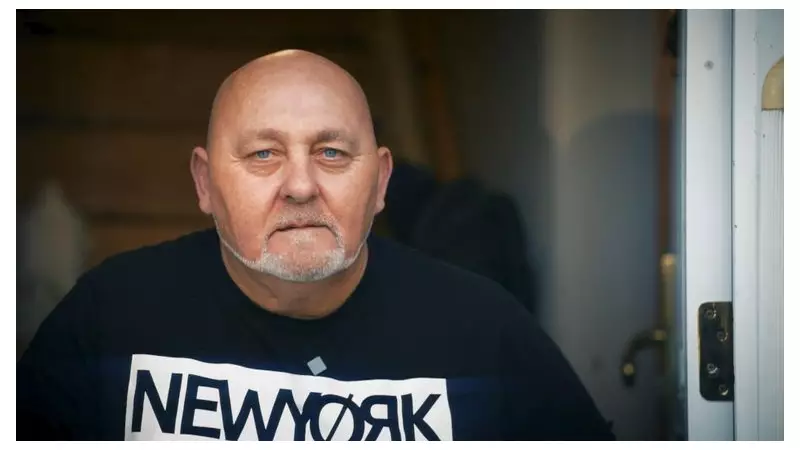
As winter tightens its grip on the Bidston Rise estate in Birkenhead, one front garden defiantly clings to life. A hydrangea thrives in the shade, its borders still in bloom. The man who tends it, Mick, a landscape gardener by trade, possesses a wealth of horticultural knowledge. Yet, he has been unable to earn a living for nearly a decade, his health shattered by a heart attack in his 30s, followed by the amputation of both legs due to vascular disease.
Now in his 60s, Mick's desire to work remains, but opportunities are scarce. His greatest barrier isn't his wheelchair, but the periodic bouts of depression that overwhelm him. "Oh, God. If it wasn't for my dog, I'll guarantee you, I probably wouldn't be here now," he confesses, describing a time of such dark despair he stopped leaving his house.
The Staggering Scale of the Crisis
Mick is one face of a national emergency. He is among 10.4 million people of working age in Britain who report a disability—roughly a quarter of all 16-64 year olds. The most alarming statistic is that 2.8 million people have completely dropped out of the labour market, ceasing to look for work altogether.

This exodus has sent the welfare bill soaring. One-in-ten people now claim incapacity or disability benefits, costing the Treasury £76.8 billion annually, which equates to about 6% of all government spending. In Westminster, policymakers are grappling with explanations for this decline in the nation's health and its devastating economic impact.
Mental Ill Health: The Driving Force
While an ageing population and the legacy of the pandemic are factors, a primary driver is the explosion in reported mental health conditions. A vast 86% of people on health-related benefits now have a mental health condition, such as depression or anxiety, even if it is not their primary ailment.
This surge has sparked a contentious political debate. The Health Secretary has spoken of "overdiagnosis," while Conservative leader Kemi Badenoch has proposed a crackdown on those with "mild" conditions. However, in places like Bidston Rise, where NHS data suggests 27.7% of people experience depression (more than double the national average), such arguments seem to miss the complex reality.
For most claimants, the picture is not simple. Those on incapacity benefits report an average of 2.7 conditions per person. It is often a debilitating combination—a chronic bad back compounded by depression, or hearing loss that triggers severe anxiety. Life's agonies, like divorce during a cost-of-living crisis, further deepen the despair.
A Perfect Storm: Austerity, Cost of Living, and Despair
Dr. Mark Fraser, a GP at Birkenhead's Fender Way Medical Centre, witnesses the human toll daily. "Demand has gone up considerably," he states, citing a general deterioration in health and a sharp rise in mental illness. He links the acceleration in benefit claims directly to 2022, when energy bills and inflation skyrocketed above 11%.
"It's more expensive just to stay alive now," Dr. Fraser explains. "Where the bread line used to be, we're down to the breadcrumbs line." His surgery sees pensioners and young people alike crippled by debt, unable to contemplate healthy living while awake at night worrying about bills.
The crisis is affecting the youngest generations profoundly. GPs are increasingly prescribing antidepressants to children and young adults, some of whom struggle to function or hold down jobs. Dr. Fraser notes a loss of resilience, impacted by lockdowns and a pervasive sense of a bleak future. "There is despair," he says bluntly, reporting more frequent encounters with patients in acute mental health crises, at the point of ending their life.
This despair is manifesting in tragic, measurable ways. Across England and Wales, deaths from alcohol, drugs, or suicide among the working-age population—termed "deaths of despair"—were up by 24% (3,700 deaths) in 2023 compared to pre-pandemic levels. For 45 to 54-year-olds, these deaths now outnumber those from heart disease.

The Austerity Legacy and a System Under Strain
New research suggests past policy decisions have exacerbated the problem. The austerity-era cuts to housing benefits and other welfare support may have been a false economy, inadvertently nudging more people onto health-related benefits instead.
David Finch of the Health Foundation, which funded an Institute for Fiscal Studies study on the issue, warns: "Cuts to one part of the welfare system can push people to claim health-related benefits, potentially driven by the cuts worsening health." This creates a long-term risk of people spending longer out of work and on lower incomes.
The resolution to Britain's worklessness problem defies simple solutions. It is a tangled web of deteriorating public health, economic hardship, and policy legacy. As Mick's garden demonstrates, the will to thrive persists, but for millions, the systemic support to translate that into productive work has withered away.





