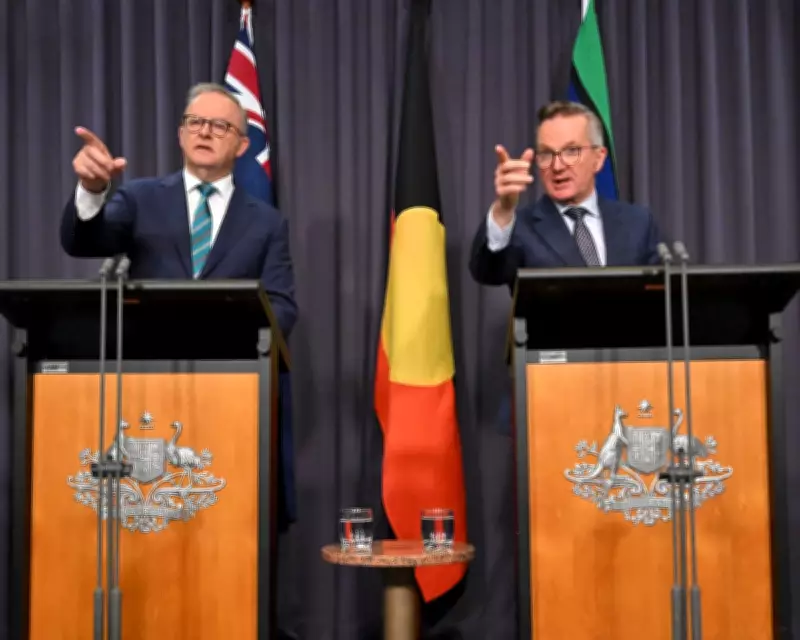
Albanese Government Vows Fuel Supply Will Remain Stable or Increase in Coming Weeks
Prime Minister Anthony Albanese and Energy Minister Chris Bowen have publicly reassured Australians that fuel supply levels are expected to be normal or even higher in the upcoming weeks, addressing growing concerns over shortages and escalating prices. This announcement came during a press conference in Canberra on Friday, where they emphasized the government's efforts to manage distribution issues, particularly in regional areas.
Rising Fuel Prices and Coalition Demands for Excise Reduction
Latest data from the Australian Competition and Consumer Commission (ACCC) reveals a sharp increase in fuel costs across the nation's five largest cities. Diesel prices have surged by an average of 10% over the past week, reaching 303.5 cents per litre, while unleaded petrol has risen by 8%, hitting 252.2 cents per litre. In response, Opposition Leader Angus Taylor has escalated calls for the federal government to halve the fuel excise for three months, a move that could save motorists approximately 26 cents per litre but is estimated to be costly, with previous proposals suggesting a $6 billion expense over 12 months.
Economists have warned that cutting the excise could exacerbate petrol shortages and contribute to inflation, labeling it a "political Band-Aid" that might worsen the crisis. Treasurer Jim Chalmers has stated that the Labor government is not currently considering such a measure, highlighting concerns that it would disproportionately benefit wealthier households.

Fuel Shortages and Government Response to Distribution Challenges
In New South Wales, the situation is particularly dire, with the state's energy department reporting that 347 out of 2,414 service stations registered on the FuelCheck platform are temporarily out of stock of at least one fuel type. This includes 59 stations with no fuel available and 207 stations lacking diesel or premium diesel, marking an increase from previous days. Prime Minister Albanese expressed sympathy for families and businesses struggling with rising fuel bills, attributing the pressures to global factors such as the war in Ukraine.
"We understand that people are under real pressure and the impact of this war is real," Albanese said. "It's happening across the other side of the world. But in today's interconnected world, it's why we have to engage and we acknowledge that. I feel for people who are under pressure with some of the shortages which have been there."
He clarified that the issue is primarily distributional, especially in regional areas, and not a reduction in overall fuel supply or production. To address this, the government has convened a national cabinet meeting to develop a coordinated response, learning from the fragmented state approaches during the Covid pandemic.
Assured Jet Fuel Supplies and Future Outlook
Energy Minister Chris Bowen provided further reassurance by confirming that six tankers of jet fuel from China are scheduled to arrive in Australia between March 28 and April 8, with supplies assured until late April or early May. He stated, "Australia's supply of petrol and diesel and oil will be the same, if not higher, than it normally would be," emphasizing the government's commitment to maintaining fuel availability.
Government sources have expressed concerns about potential economic downturns if people reduce travel, but measures such as encouraging remote work or limiting driving, considered during the 2020 fuel crises, are currently deemed unlikely. Nationals leader Matt Canavan criticized the government for failing to ensure fuel reaches where it is needed, despite claims of adequate supply.
Albanese did not endorse the idea of cutting the fuel excise but did not rule it out entirely, stating, "my government has always been strong on cost of living measures. We'll continue to do so. We do so in a responsible way in the context of our budget considerations." The debate continues as Australians grapple with the dual challenges of fuel shortages and rising costs, with the government focusing on distribution solutions and the opposition pushing for immediate tax relief.