

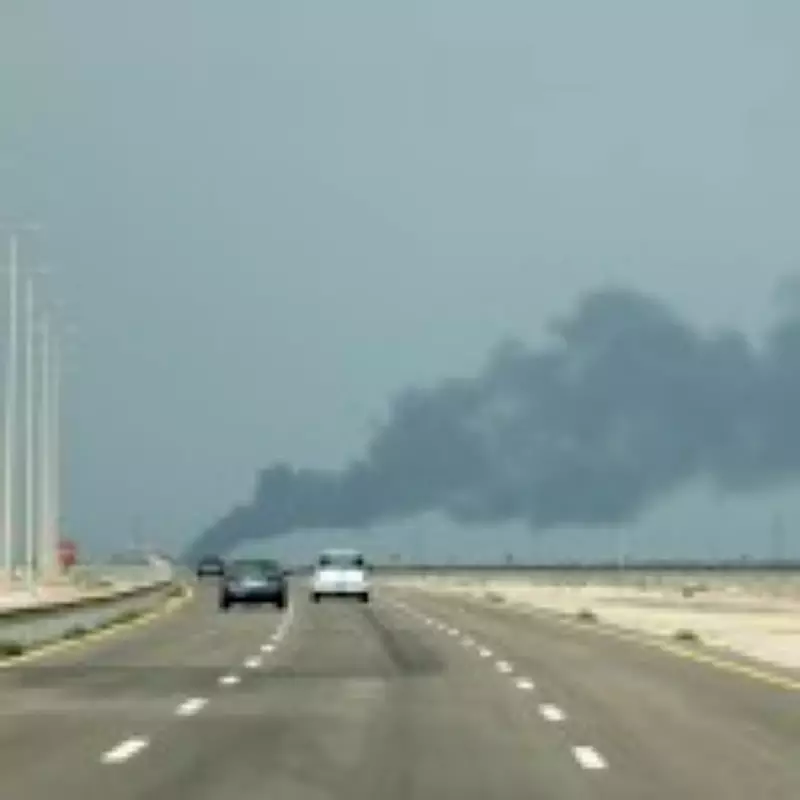
Aramco CEO Issues Dire Warning on Global Oil Supply Amid Iran Conflict
The world's largest oil company has issued a stark warning about the escalating conflict in the Middle East. Amin Nasser, CEO of Saudi Arabia's state-owned Aramco, has declared that the Iran War represents "the biggest crisis the region's oil and gas industry has faced" with potentially catastrophic consequences for global markets.
Critical Shipping Lane Brought to Near Standstill
Iran has effectively halted cargo traffic through the strategically vital Strait of Hormuz, a 60-mile-wide passage through which approximately one-fifth of the world's oil supply normally flows from the Persian Gulf toward the Indian Ocean. This critical chokepoint has been at the center of regional tensions for decades, but current disruptions have reached unprecedented levels.
"While we have faced disruptions in the past, this one by far is the biggest crisis," Nasser emphasized during recent statements. "There would be catastrophic consequences for the world's oil markets, and the longer the disruption goes on ... the more drastic the consequences for the global economy."

Attacks Cripple Regional Infrastructure
Tehran has implemented a multi-pronged strategy targeting the region's oil industry:
- Direct strikes on neighboring Gulf State refineries and storage facilities
- Attacks on oil fields in Gulf Arab nations
- Targeting of commercial shipping in and around the Strait of Hormuz
Recent incidents include a ship set ablaze off the coast of Oman, forcing crew abandonment, and another attack targeting a container ship near Ras al-Khaimah in the United Arab Emirates. The UAE reported its air defenses are actively intercepting incoming Iranian fire, with attacks having already killed six people and wounded 122 others in the wealthy nation.
Regional Energy Ministers Echo Concerns
The crisis extends beyond Saudi Arabia's borders. Qatar's Energy Minister Saad al-Kaabi warned that Iranian strikes have crippled liquefied gas plants, and it would take "weeks to months" to return to normal delivery patterns. This disruption comes as Aramco, the world's largest single oil exporter, works to meet demand by tapping into storage facilities outside the Middle East.
Global Economic Impact and Price Projections
Financial analysts are predicting severe market repercussions. Goldman Sachs has projected oil prices could skyrocket to $150 per barrel by month's end as supply constraints intensify. The situation mirrors previous energy crises, with experts noting similarities to the market disruptions following Russia's invasion of Ukraine in 2022.
Maritime experts report increasing wariness among shipowners regarding the waterway, with some vessels tightening security measures and others canceling routes entirely. This hesitation compounds the physical disruptions caused by direct attacks.
Domestic Consequences in the UK
The United Kingdom faces specific challenges despite importing oil and liquefied natural gas from various global sources. As demand for alternatives increases due to Hormuz disruptions, significant rises in gas and electricity prices are anticipated. Particularly vulnerable are approximately 1.5 million UK households relying on heating oil, with prices already doubling in some areas.
In Aberdeenshire regions including Gordon and Buchan, an estimated 45% of homes are off-grid and dependent on heating oil or LPG. A British MP has accused suppliers of "blatantly profiteering" from the Middle East conflict through rapid price increases.
The convergence of military conflict, infrastructure attacks, and shipping disruptions has created what industry leaders describe as an unprecedented threat to global energy stability, with economic consequences that could reverberate through economies worldwide for months to come.






