

Australia's Fuel Crisis Exposes Critical Energy Vulnerability
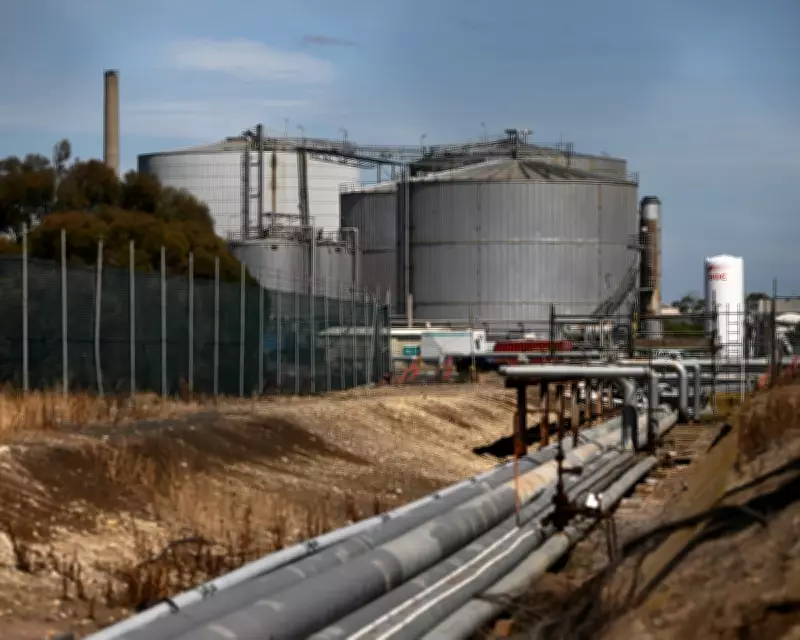
Australia's energy security has been laid bare by the ongoing Middle East conflict, revealing a nation dangerously dependent on imported fuel with only two domestic refineries remaining operational. The disruption to global oil shipments has created a perfect storm for Australian consumers and businesses alike.
From Self-Sufficiency to Import Dependence
At the turn of the century, Australia produced 563,000 barrels of oil daily, with eight refineries supplying 98% of the nation's petroleum needs. Today, the country relies on imports for 90% of its liquid fuel requirements, with oil production at its lowest level since the late 1960s.
The refinery closures over the past 25 years paint a stark picture:

- Mobil's Port Stanvac refinery in South Australia was mothballed in 2003
- Shell's Clyde refinery closed in November 2013
- Caltex's Kurnell refinery in Sydney ceased operations in October 2014
- BP closed its Brisbane plant in mid-2015
- BP's Kwinana refinery south of Fremantle shut down in March 2021
- ExxonMobil's Altona refinery in Melbourne was shuttered in August 2021
This leaves just Ampol's Lytton refinery in Brisbane and Viva Energy's Geelong facility – both of which require government support to remain operational.
Australia's Import Dependence
Singapore and South Korea now supply approximately half of Australia's refined petroleum products, with Malaysia providing 13% and India and Taiwan each contributing 8%. Singapore alone supplies 55% of Australia's petrol imports, while South Korea provides nearly 30% of diesel imports.
China, while supplying only 7% of refined petroleum products overall, accounts for a third of Australia's jet fuel imports. For crude oil to feed the remaining refineries, Australia depends heavily on Malaysia (approaching 40% of total crude imports) and the United States (21%).
"The conflict has exposed Australia's vulnerability in the global energy market," energy analysts note. "Our geographic isolation and limited domestic refining capacity create significant risks during global disruptions."
Price Impacts and Supply Concerns
Fuel prices have skyrocketed since the conflict began. Diesel has jumped from approximately A$1.80 per litre to nearly $3 – a 67% increase since late February. Regular unleaded petrol has increased by nearly 40%, rising from $1.80-$2 in east coast capitals to around $2.50.
Supply shortages have emerged alongside price increases. Energy Minister Chris Bowen reported 289 stations in New South Wales without at least one type of fuel, and 164 without diesel – concerning statistics for communities with limited service station options.
Household Impacts and Economic Consequences
The fuel crisis has compounded existing economic pressures on Australian households. Consumer confidence has plummeted to its lowest recorded level according to ANZ-Roy Morgan's sentiment survey, which dates back to 1973.
A typical family using 35 litres of petrol weekly now faces fuel bills of nearly $86 – up $27 from last month and marking the highest on record. This exceeds the peak reached during the Russia-Ukraine conflict in 2022, when average fuel bills climbed to about $71.
The economic ripple effects are substantial:
- Increased transportation costs affecting all sectors
- Higher inflation expectations, potentially reaching near 5% by mid-year
- Financial markets pricing in additional interest rate hikes
- Reduced consumer spending power
Strategic Reserves and Future Outlook
Australia's fuel reserves present another area of concern. As of mid-March, reserves stood at:
- 38 days of usual petrol consumption
- 30 days of diesel consumption
- 30 days of jet fuel consumption
These figures fall significantly short of International Energy Agency requirements, which mandate member countries maintain reserves equivalent to at least 90 days of imports. Australia has never fulfilled this requirement and maintains the lowest reserves among all IEA countries by this measure.

Long-Term Implications
Analysts warn the conflict could persist for months rather than weeks, with no guarantee that oil shipments or prices will return to pre-war levels even if hostilities cease. The International Energy Agency has suggested demand-reduction measures including promoting remote work and potentially lowering speed limits.
Some countries have implemented four-day working weeks for public servants, while rationing remains a last resort – an option not exercised in Australia since 1979.
The crisis has sparked renewed debate about Australia's energy security strategy, domestic refining capacity, and the need for diversified supply chains. As global tensions continue to disrupt energy markets, Australia's fuel vulnerability has become impossible to ignore.





