Australia's Sanctions Loophole Fuels Russian War Economy
New data reveals that millions of tonnes of Russian oil have been traded through a Singapore port partially owned by Macquarie Bank, potentially reaching Australian businesses despite official sanctions against Moscow. This exposure of a significant gap in Australia's sanctions regime comes as the country lags behind European and UK efforts to tighten restrictions on Russian energy imports.
According to the Europe-based Centre for Research on Energy and Clean Air (Crea), Australia has imported more than 3 million tonnes of Russian-originating oil products since 2023, despite formally ending direct fuel purchases from Russia following its invasion of Ukraine.
The Singapore Connection
Government data shows that since January 2023, Australia has bought nearly a quarter of its refined petroleum imports from Singapore. Analysis of Kpler trade data by Australian chemical engineer Mark Corrigan, verified by Crea, indicates the south-east Asian nation has received over 22 million tonnes of refined oil products from Russia during this period.

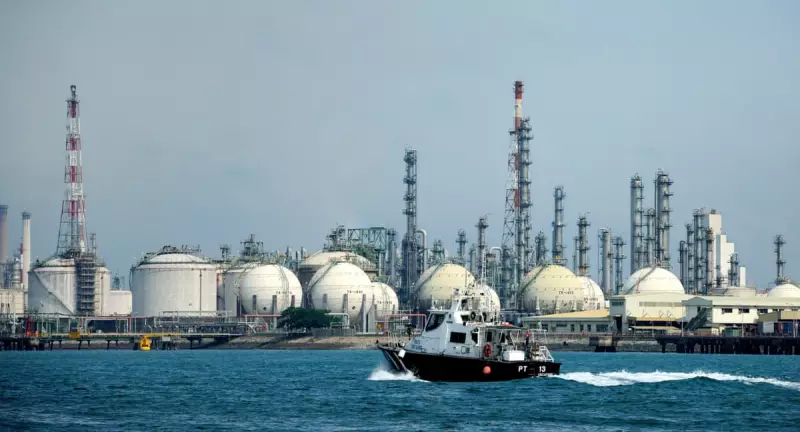
Remarkably, one-third of these volumes went to the Jurong Port Universal Terminal in Singapore, which is part-owned by a Macquarie investment fund. A Macquarie spokesperson confirmed the terminal's majority ownership lies with a Singapore government entity and emphasised compliance with applicable regulations.
When questioned, neither Macquarie nor the terminal disclosed how the bank had financially benefited from its investment or guaranteed that no Russian oil had been sold to Australia through the facility.
Ethical Concerns and Corporate Responsibility
Vaibhav Raghunandan, Europe analyst at Crea, stated that Australia's sanctions effectively permit purchases via third countries, indirectly supporting Russia's oil production and Kremlin tax revenues. "This is a significant loophole being exploited by Australian buyers who, while on the right side of the law, are undoubtedly on the wrong side of the ethics of it," Raghunandan commented.
Kateryna Argyrou, chair of the Australian Federation of Ukrainian Organisations, has called on Macquarie Bank to review its investment and disclose whether the terminal has facilitated Russian oil handling. "Australia cannot stand with Ukraine while Australian capital helps sustain Russia's war economy," Argyrou asserted. "Every drop of Russian oil sold helps finance the destruction of Ukrainian homes and lives."
The analysis revealed that the Macquarie-part-owned terminal sold oil to companies including Trafigura, which received a $135 million government bailout for its South Australian smelters in August, and Vitol. Shell petrol station operator and Australian Defence Force supplier Viva Energy purchases oil from Vitol.
Spokespeople for Vitol, Viva Energy and Trafigura each stated their businesses act in full compliance with all applicable laws and regulations, including sanctions. However, none guaranteed they had not bought or sold Russian-origin oil products to Australian businesses, consumers and government agencies.
Government Response and International Comparisons
Foreign Minister Penny Wong has urged businesses to ensure their supply chains don't indirectly fund the Russian government, telling Senate estimates in October: "Australians do expect that their businesses ensure that their supply chains don't inadvertently fund Russia's illegal and immoral invasion of Ukraine."
Despite this, Minister Wong refused to commit to further restricting the trade, citing difficulties in tracing indirect purchases. A spokesperson for Australia's Department of Foreign Affairs and Trade said the government was evaluating options to place additional pressure on Russia's oil revenues.
Meanwhile, the European Union and United Kingdom announced sanctions in October targeting third-party refiners of Russian material from 2026, including specific terminals and refineries. Dr Anton Moiseienko, senior law lecturer at Australian National University, emphasised that matching these sanctions is essential to reduce oil revenue to the Kremlin.

"It's really important to move towards that step," Moiseienko stated. "Otherwise [refineries] keep purchasing Russian oil, and then refined products go to places like Australia, and all of that combines to create a market that generates billions for the Russian government."