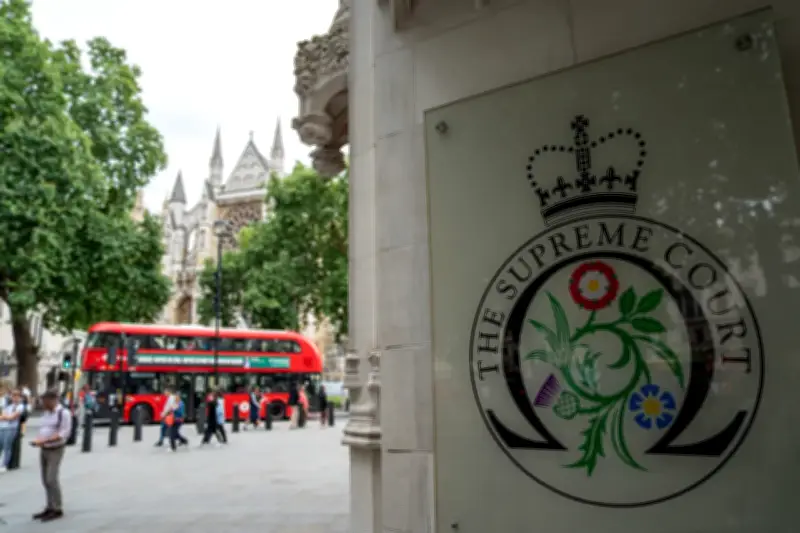
BlueCrest Capital Management, the hedge fund founded by Michael Platts, has lost a landmark tax appeal at the UK Supreme Court, leaving it facing a £200 million tax bill. The unanimous ruling, delivered on Wednesday, determined that the fund's partners were engaged in trading activities rather than investing, meaning their profits are subject to income tax rather than capital gains tax.
Background of the Case
The dispute centered on whether profits generated by BlueCrest's partners from 2006 to 2010 should be taxed as income or capital gains. The distinction is crucial because income tax rates are significantly higher than capital gains tax rates. BlueCrest argued that its partners were investing in financial instruments for the long term, which would qualify for capital gains treatment. However, HM Revenue & Customs (HMRC) contended that the partners were actively trading, making their profits taxable as income.
The Supreme Court's decision upheld earlier rulings by the Upper Tribunal and the Court of Appeal, which had both sided with HMRC. The case is one of the most significant tax disputes in recent years, with implications for the wider hedge fund industry.

The Supreme Court's Reasoning
In its judgment, the Supreme Court emphasized the frequency and volume of trades conducted by BlueCrest's partners. According to the court, the partners' activities bore the hallmarks of a trading operation, including short holding periods and a high turnover of positions. The court stated that the partners' intention was to profit from short-term market movements rather than from long-term appreciation of assets.
"The scale and nature of the trading activities undertaken by the partners are inconsistent with a characterization of investment," the judgment read. "The profits derived from these activities are properly classified as trading income."
Impact on BlueCrest and the Industry
The ruling is a major blow to BlueCrest, which had set aside funds to cover the potential tax liability. The £200 million bill includes tax, interest, and penalties. Michael Platts, who founded BlueCrest in 2000, is one of the UK's most successful hedge fund managers, with an estimated net worth of over £1 billion. The case has been closely watched by the hedge fund industry, as many funds use similar partnership structures.
According to legal experts, the decision could lead to HMRC pursuing similar cases against other hedge funds and private equity firms. "This is a significant victory for HMRC and clarifies the tax treatment of trading profits for partners in investment firms," said a tax partner at a leading law firm. "Firms will need to review their structures and practices in light of this ruling."
Reactions from HMRC and BlueCrest
HMRC welcomed the ruling, describing it as a "clear and decisive" outcome. "This judgment confirms that individuals cannot avoid paying the correct amount of tax by labeling trading income as capital gains," an HMRC spokesperson said. "We will continue to challenge those who seek to bend the rules."
BlueCrest expressed disappointment but accepted the court's decision. A spokesperson for the fund said, "We are naturally disappointed with the outcome, but we respect the Supreme Court's judgment. We will now focus on ensuring compliance with the ruling and managing the financial implications."
Broader Implications for Tax Law
The case has set a precedent for how trading vs. investing is defined in tax law. The Supreme Court's emphasis on the frequency and intent of transactions provides clearer guidance for future disputes. Tax experts note that the ruling may also affect other sectors where similar distinctions arise, such as property development and commodities trading.
"The decision reinforces the principle that the substance of an activity, rather than its label, determines its tax treatment," said a tax barrister. "This is a reminder that aggressive tax planning can be challenged successfully by HMRC."