

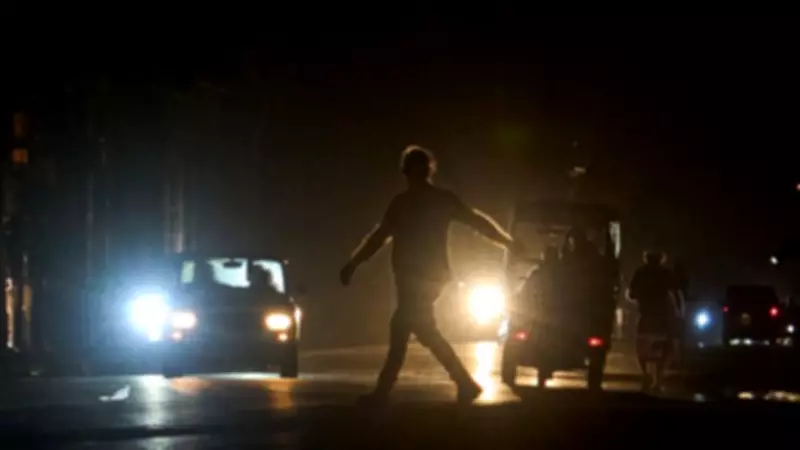
Cuba's Widespread Blackout Intensifies Amid US Fuel Embargo
Millions of residents across Cuba were plunged into darkness following a significant shutdown at the Antonio Guiteras thermoelectric power plant, located approximately 62 miles east of Havana. This incident marks the second major blackout to strike the island nation within a three-month period, severely straining an already fragile electrical infrastructure.
Power Outage Details and Immediate Response
The blackout affected vast regions from Pinar del Rio in the west to Camaguey in central Cuba, including the capital city of Havana. Government officials attributed the outage to a critical boiler leak at the power plant, as reported by Radio Rebelde, a state-run radio station.
Cuban Energy Minister Vicente de la O Levy announced on social media that emergency measures were implemented to power essential infrastructure such as hospitals and medical clinics in the impacted areas. Restoration efforts began gradually, with authorities reconnecting 2.5% of Havana—around 21,100 customers—by Wednesday afternoon.

Gradual Recovery and Systemic Challenges
By Thursday morning, the national electrical grid had been reconnected from Guantanamo in the east to Pinar del Rio in the west, with power generation slowly being brought back online. In Havana, local utility company EELH reported that 22 substations and 102 distribution circuits, accounting for roughly 36% of the city, had been restored. However, officials emphasized that the recovery process would proceed cautiously, dependent on the stability of the national grid.
Impact of US Fuel Embargo and Humanitarian Concerns
This blackout occurs against the backdrop of a strict oil and fuel embargo imposed by the Trump administration last month, which has led to severe oil shortages across Cuba. International charities have described the situation as a humanitarian crisis, citing dwindling oil reserves exacerbated by the halt of critical petroleum shipments from South America following the US military's capture of Venezuelan President Nicolas Maduro and his wife in early January.
The US Embassy in Cuba issued warnings to American citizens, advising them to prepare for significant disruptions and to conserve essential resources such as fuel, water, food, and mobile phone batteries.
Historical Context and International Reactions
The United States has maintained a comprehensive trade embargo on Cuba since 1962, following the failed Bay of Pigs invasion. Recently, former President Donald Trump extended this blockade by signing an executive order imposing trade tariffs on countries exporting oil to Havana. The UN Office of the High Commissioner for Human Rights condemned this move, accusing the US of violating international law and threatening global democratic order.
In response to the crisis, Mexico and Canada have dispatched aid to Cuba. Meanwhile, Republican Senator Lindsey Graham hinted at potential US military actions targeting the Communist regime in Havana, and Trump mentioned the possibility of a "friendly takeover of Cuba," though he provided no further details.
Ongoing Energy Infrastructure Issues
Cuba's electrical grid has long suffered from generation deficits, frequent interruptions, and crumbling infrastructure. An earlier blackout in December lasted nearly 12 hours due to a transmission line fault that caused an overload and collapsed the energy system's western sector. These recurring outages highlight the urgent need for systemic repairs and sustainable energy solutions amid external economic pressures.






