

Motor City Motorists Feel Pinch as Gas Prices Surge Amid US-Israel War on Iran
Drivers in Detroit are grappling with a sharp increase in gas prices, with reactions ranging from anger to resignation as the US-Israel war on Iran enters its third week, crippling major portions of the global oil supply chain. The conflict has sent prices soaring, creating financial strain for many in this automotive heartland.
Spiking Prices at the Pump
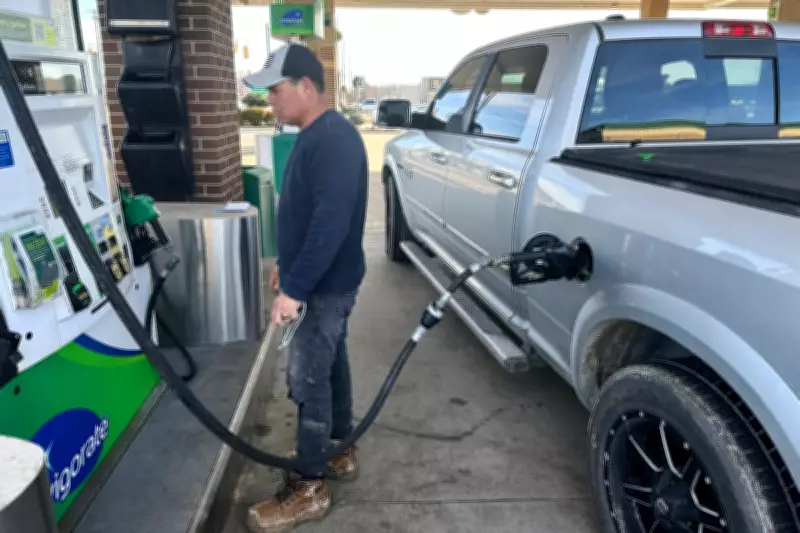
On a rainy Detroit afternoon at a gas station off Interstate 75, Victor Rodriguez watched the pump tally tick up as he filled his F-250 diesel pickup truck for $4.19 per gallon, totaling $110. "Ridiculous," he said, expressing a sentiment echoed by numerous motorists across the region.
Across Michigan, gas prices have spiked by 60 cents per gallon over the most recent week analyzed by insurer AAA. Many stations have pushed even higher in recent days, with one near downtown Detroit topping $4.30 per gallon. Nationally, prices are up 27 cents on average, according to AAA's latest figures.

Rodriguez, who lives in Macomb county, noted that he jumped off the freeway while returning from an airport drop-off because he saw diesel advertised for $4.19 per gallon. He considered this a deal compared to the $5.00 per gallon he observed in Romeo, an exurb about a half-hour drive north. "Nothing is worth higher gas prices, obviously," Rodriguez stated bluntly.
Mixed Reactions to the Conflict
While Rodriguez said he supports "getting rid of this thug," referring to Iran's Ayatollah Ali Khamenei, who was killed by the US, he emphasized that the cost is too high for everyday Americans. This dichotomy between supporting the war and bearing its economic consequences is common among Detroit drivers.
Kevin Dass, an underemployed father of two in Detroit, paid $3.49 per gallon on Eight Mile Road, a busy thoroughfare separating the city and suburbs. "I don't give a shit about Iran. I don't want to pay higher gas," he said, highlighting the immediate financial pressure over geopolitical concerns. Dass is considering driving less, but options are limited due to metro Detroit's sparse and unreliable public transit system.
In Madison Heights, Del Carey shook her head as she paid $3.70 per gallon to fill her SUV. "I think we should stay in our own business and leave theirs alone," she said, calling the war "unnecessary." Carey, who lives in nearby Warren in Macomb county, noted that no one she knows supports the war. She may cut back on dining out if high prices continue, reflecting broader anxiety about the economic future.
Political and Economic Implications
Gas prices matter significantly in Michigan, a critical swing state that Donald Trump narrowly won twice and lost once. His promise to lower prices across the economy helped propel him back to power in 2024. However, Trump has dismissed the nation's pump pain as temporary, telling Reuters, "I don't have any concern about it. They'll drop very rapidly when this is over."
This sentiment is not widely shared in Detroit, where frustration over paying higher prices for the war is palpable. Rodriguez pointed out that his liberal friends and neighbors are angered by the war and prices, while conservative folks he knows are more supportive of Trump but still struggle with elevated gas costs.
Blame is not solely directed at Trump. Rodriguez also criticizes the OPEC oil cartel for price gouging and Michigan's governor, Gretchen Whitmer, a potential future Democratic presidential contender. Michigan recently passed a gas tax to fund road repairs, which took effect at the beginning of the year. "We've got a problem with Trump and we've got a problem with Gretchen," Rodriguez said.
Broader Concerns and Future Outlook
Earl Striggan, who filled up at $3.60 a gallon at a station in Clawson, expressed categorical opposition to war. "War is never worth it. It's good for no one," he stated. While not feeling the pinch yet, he warned, "If it continues on this slope, it's going to get real dicey and a lot of people aren't going to get in their car – they'll stay in the house and that's going to affect businesses."

Imminent relief from higher gas prices seems unlikely. Oil spiked at $119 per barrel early this week, marking the first time prices surged past $100 per barrel since the July 2022 Covid price shocks. Prices are expected to rise further if Iran continues its closure of the Strait of Hormuz, a narrow passage critical for oil tankers.
Oil industry analyst Rory Johnston explained, "If Hormuz traffic remained stopped, the monumental oil supply shock will manifest as sharp price spikes in wealthy nations that sap disposable incomes." He added that poorer nations could face physical shortages, and even if the strait reopened today, oil prices would be slow to decline.
Varied Perspectives Among Drivers
Not all drivers are upset about the prices. Ken, an autoworker in Detroit who declined to give his last name, acknowledged the hit people are taking but said he trusts the president's judgment. "It's been proven that Iran massacred thousands of their citizens, so I back Trump even though I didn't vote for him – Iran needs to get the fuck on," he said.
The financial pinch is minimal for him so far because he earns enough to cover the costs. "Every little thing that happens makes our prices go up. This is just one more thing that happens, so I'm not overreacting," Ken noted. However, he added a caveat: "Now if it goes up to $10 per gallon – then we might have a problem."
As the conflict persists, Detroit motorists continue to navigate the challenging balance between geopolitical support and personal financial strain, with gas prices serving as a daily reminder of the war's far-reaching impact.





