

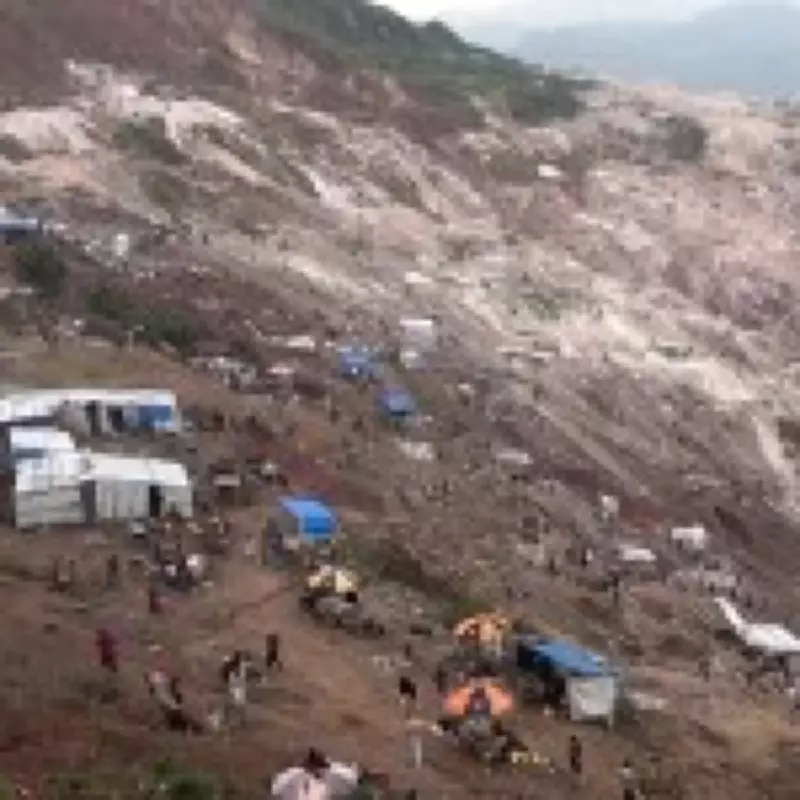
A devastating mining disaster in the Democratic Republic of Congo has resulted in the deaths of more than 200 individuals, with children among the victims, following the collapse of a mineral mine in a volatile region. The tragedy unfolded in the town of Rubaya, located in the North Kivu province, on Wednesday after torrential rainfall triggered landslides that caused the mine to cave in on workers underground.
Catastrophic Collapse Amid Heavy Rains
The incident occurred during the rainy season, a period when the ground becomes particularly fragile and unstable. According to reports from BBC News, the coltan mine, which is situated within an area held by the notorious rebel group M23, had not been properly maintained, contributing to the structural failure. Rebel authorities confirmed that the landslides led to the mine's collapse, trapping hundreds of people beneath the rubble.
Human Toll and Rescue Efforts
Lumumba Kambere Muyisa, a spokesperson for the rebel-appointed governor of North Kivu, provided a grim update on the situation. He stated, 'For now, there are more than 200 dead, some of whom are still in the mud and have not yet been recovered. Some people were rescued just in time and have serious injuries.' The victims included children, women, and miners, highlighting the widespread impact of the disaster.

Those who were rescued with severe injuries were initially taken to three health facilities in Rubaya. Some of the more critically injured individuals are expected to be transferred to the city of Goma, which is approximately 30 miles away, for advanced medical treatment. The rescue operations are ongoing, but the challenging conditions and remote location have hampered efforts.
Global Significance of the Rubaya Mine
The Rubaya mine is a significant contributor to the global supply of coltan, accounting for around 15% of the world's production. Coltan is a highly sought-after mineral that is processed into tantalum, a heat-resistant metal essential for manufacturing mobile phones, computers, and aviation components. Despite its economic importance, the mine relies heavily on local labourers who dig manually, earning only a few dollars per day for their dangerous work.
Eyewitness Accounts and Historical Context
Franck Bolingo, a miner who survived the collapse, described the harrowing scene to AFP news agency: 'It rained, then the landslide happened and swept people away. Some were buried alive, and others are still trapped in the shafts.' This disaster underscores the perilous conditions faced by miners in the region, where safety regulations are often lax or non-existent.
The mine has been under the control of M23 fighters since May 2024, when the rebel group seized the area. The Democratic Republic of Congo, particularly its eastern and northern border regions, has been embroiled in a prolonged crisis for decades. This ongoing conflict has led to a large-scale humanitarian disaster, forcing over 7 million people to flee their homes and creating a volatile environment for both residents and workers.
International Warnings and Safety Concerns
In response to the persistent instability in the region, the UK Foreign Office has issued a strong advisory against all travel to eastern DRC, including North Kivu. British nationals currently in the area are urged to leave if possible, due to the high risks associated with the ongoing conflict and poor infrastructure. This tragedy highlights the urgent need for improved safety standards and international oversight in mining operations within conflict zones.






