

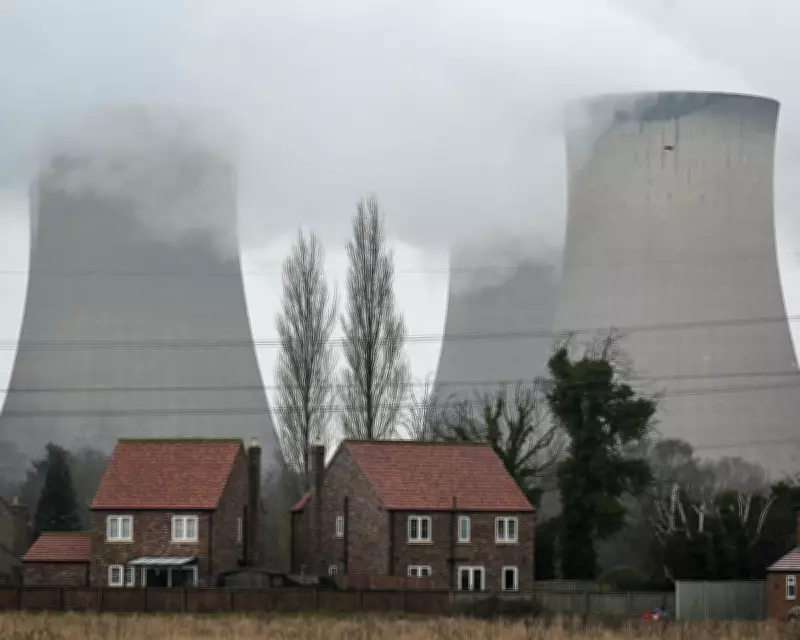
Drax Executives Privately Questioned Sustainability Claims Amid Public Denials
Senior executives at Drax, the operator of Britain's largest power plant, privately raised concerns about the validity of the company's sustainability claims while it publicly denied allegations of cutting down environmentally important forests for fuel, according to court documents. The revelations stem from an employment tribunal involving the company's former top lobbyist, Rowaa Ahmar, who alleged she was dismissed after warning that Drax was misleading the public, government, and regulators.
Public Assurances Versus Internal Doubts
In 2022, a BBC Panorama documentary accused Drax of burning wood sourced from old-growth forests in Canada, prompting a swift public defence from the company. Drax's chief executive, Will Gardiner, assured then Energy Secretary Jacob Rees-Mogg that the company was complying with subsidy requirements, emphasising robust governance and traceability. Similarly, senior policy managers offered reassurances to civil servants and the industry regulator Ofgem.
However, internal communications revealed in tribunal evidence show that other executives were less confident. Drax's head of compliance admitted in an email that the company might have consistently burnt old-growth pellets since at least 2019, potentially leading to significant misreporting under government subsidy schemes. This admission highlighted a gap between public statements and private concerns.

Subsidies and Sustainability Scrutiny
Drax has received over £7 billion in subsidies from household energy bills, contingent on using waste or low-value wood from sustainable forests. The company's business model involves importing millions of tonnes of wood pellets annually from Canada, but it has faced repeated scepticism over its environmental impact. Following the BBC documentary, Drax claimed that 80% of its biomass pellets were made from sawmill residue, with the rest as waste material.
Yet, court documents indicate that Drax lacked sufficient data to prove the exact origin of all wood pellets, undermining its ability to verify sustainability under government requirements. Paul Sheffield, Drax's chief commercial officer, acknowledged awareness of these concerns, which were later escalated to the executive committee.
Regulatory Investigations and Outcomes
An Ofgem investigation, concluded in August 2024, found no evidence that Drax had been issued subsidies incorrectly or that its biomass failed to meet sustainability thresholds. However, it identified an absence of adequate data governance and controls for wood sourcing from Canada between April 2021 and March 2022, resulting in Drax agreeing to pay £25 million in compensation. A separate Financial Conduct Authority investigation into historical statements about pellet sourcing continues.
Drax, which produced 10% of Great Britain's electricity in 2024, transitioned from coal to biomass pellets by 2023. The company maintains that all external statements were meticulously cross-checked, and it has settled with Ahmar without admission of liability. Despite this, the tribunal papers cast a shadow over the transparency and accountability of Drax's green credentials.






