

Global Fuel Crisis Forces Rationing as Middle East Conflict Disrupts Oil Supply
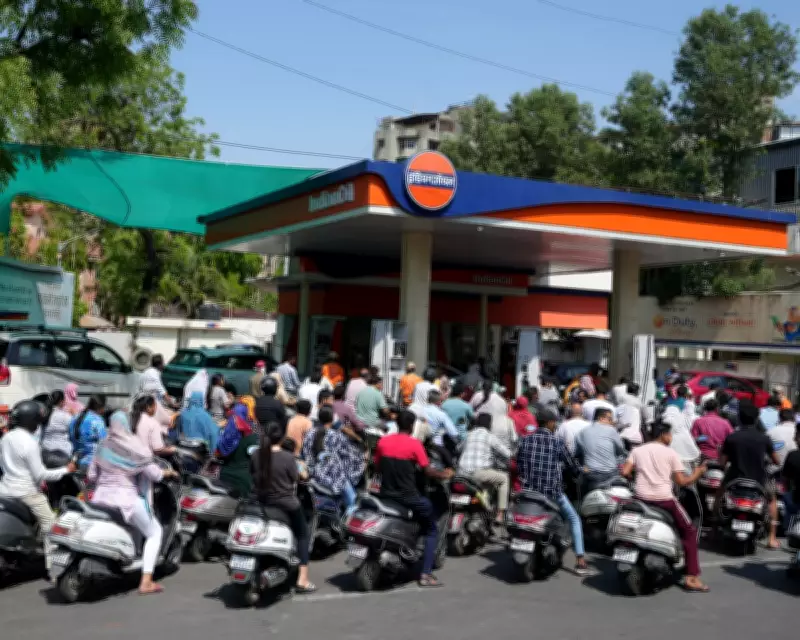
Motorists are queuing for fuel in cities like Ahmedabad, India, as a worldwide fuel shortage triggered by the US-Israel attacks on Iran forces people to ration their oil usage. From a shop owner in India to a community worker in New South Wales, rising fuel prices are compelling individuals to reconsider every mile they drive and every liter they consume.
Businesses on the Brink Amid Supply Disruptions
Alagesan, a 35-year-old roadside drink and snack shop owner in Coimbatore, India, relies on liquefied petroleum gas (LPG) to run his business. With the fuel shortage since the conflict began, he fears his livelihood could collapse. "I am far away from the Middle East, but my life is affected," he said. "The gas cylinder is not available because of the war. I don't know what to do."
The Strait of Hormuz, through which one-fifth of the world's oil travels, has become nearly impassable, driving oil prices to about $100 per barrel on international markets. This surge is increasing the cost of gasoline, petrol, and other goods, placing immense pressure on consumers and economies globally.

International Energy Agency Issues Urgent Recommendations
On Friday, the International Energy Agency (IEA) released a list of recommendations to mitigate the crisis, including:
- Working from home where possible
- Reducing highway speed limits
- Shifting from private cars to public transport
- Carpooling
- Switching to electric cooking where feasible
- Avoiding air travel
Fatih Birol, the IEA's executive director, warned that the war in the Middle East is creating "a major energy crisis, including the largest supply disruption in the history of the global oil market." He emphasized that without a swift resolution, the impacts on energy markets and economies will become increasingly severe.
Personal Stories of Struggle and Adaptation
In response to an online callout, people worldwide shared how they are coping with the price increases and scarcity of fuel. Many have cut back on driving, using cars only for essential journeys, cycling, or relying on public transport. In cooler climates, individuals have stopped or drastically limited heating oil usage due to "skyrocketing prices," resorting to heating just one room, burning wood, or layering up clothing.
Gangesh, 57, from Kerala, India, highlighted the oil crisis in his country, noting "rationing" as India imports about 60% of its LPG, with 90% routed through the Strait of Hormuz. Since the strait closed, only a fraction of the daily demand has been met, leading to a "35-day wait for the next instalment of gas cylinders" in some regions. He added that "most hotels are suffering the worst shortage" with "a large number of eateries shutting down leading to unemployment."
Driving and Heating Challenges Across Continents
Driving has become a recurring concern. Sue, a 73-year-old semi-retired teacher from Macclesfield, UK, has "banned" car use except for hospital trips for her husband, opting for a bike and tricycle instead. Katie, 71, a self-employed resident of Massachusetts supporting her medically disabled adult son, faces tough choices between food and gasoline. "We now consider carefully almost every mile we must drive and are trying to cut back expenses every way we can," she said.
In Australia, Peggy in New South Wales is reducing speed to conserve energy, while a 71-year-old woman from Pitt Town offers lifts in her EV to elderly friends worried about fuel costs. Meanwhile, in the UK, an estimated 1.7 million households rely on heating oil, with Northern Ireland depending on it for nearly two-thirds of homes. David from Londonderry expressed concern over "additional and immediate increases in fuel costs," noting the need for stable temperatures for those with respiratory issues.

Desperate Measures in the Face of Soaring Costs
Anne, a 50-year-old manager in Perthshire, Scotland, budgeted £600 for 1,000 liters of paraffin in February but now faces prices of £1,450, which she calls "out of reach." With no heating in freezing conditions, her family cuts wood from fallen trees for firewood. "It's laborious work," she admitted, adding that they use hot-water bottles and have purchased a log splitter instead.
Amanda, 48, a self-employed mother in Devon, UK, has turned off her heating oil with only three weeks' supply left. "I have had to turn it off as I do not have the extra money to pay the current prices," she said, expressing guilt over not being able to keep her teenage sons warm.
In Kogarah, New South Wales, Alex, a 46-year-old community services worker, has cut back on driving and uses public transport more. "Partly it's the cost of petrol which has increased since the war started," she explained, also avoiding air conditioning to save fuel. She added, "I'm concerned about how it will drive up fuel prices, but mostly I'm just sad and horrified about the violence and loss of life."





