

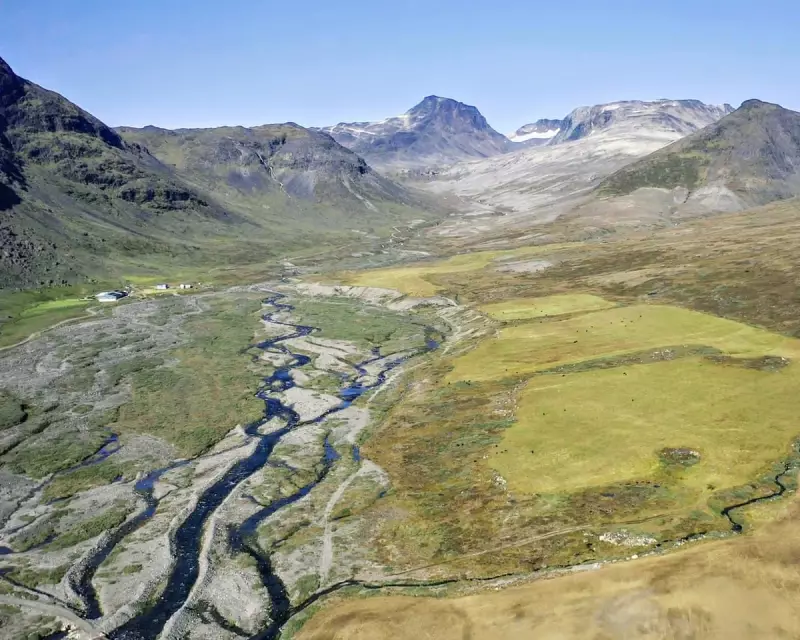
The Narsaq valley in southern Greenland, stretching towards the imposing Kvanefjeld mountain, holds one of the planet's most significant deposits of rare-earth elements. This remote location exemplifies the extraordinary mineral wealth that lies beneath Greenland's icy surface, a treasure trove that has captured global attention in recent geopolitical manoeuvres.
Why Greenland Possesses Such Extraordinary Natural Resources
Greenland, an island predominantly shrouded in ice, contains some of the world's most substantial stores of natural resources. These include vast volumes of oil and gas, rich deposits of rare-earth elements essential for modern technology, and rocks bearing precious gems and gold. The question arises: how did such planetary riches accumulate in this specific location?
A Geological Anomaly Formed Over Billions of Years
Dr Jonathan Paul, a geologist from Royal Holloway, University of London, provides insight into this phenomenon in The Conversation. He explains that Greenland's mineral and resource wealth is intrinsically linked to its unique geological history spanning an astonishing 4 billion years. Greenland represents a geological anomaly, having been shaped by three distinct processes that have collectively created its resource-rich landscape.

Firstly, periods of intense mountain building have forged a complex network of faults and fractures within Greenland's bedrock. These geological features have acted as natural conduits and repositories for valuable minerals, including gold, diamonds, rubies, and graphite. The tectonic forces that raised mountains also created the perfect conditions for these precious materials to concentrate and deposit.
Secondly, rifting events associated with the formation of the Atlantic Ocean basin approximately 200 million years ago played a crucial role. This continental separation created deep sedimentary basins that have proven capable of storing substantial quantities of oil and gas. These hydrocarbon reserves represent another layer of Greenland's geological bounty, formed through ancient biological processes and preserved by unique structural conditions.
Thirdly, volcanic activity throughout Greenland's long history has been instrumental in depositing the rare-earth elements that modern technology depends upon. These volcanic episodes brought materials from deep within the Earth's mantle to the surface, creating the concentrated deposits found in locations like the Narsaq valley. Rare-earth elements are critical components in everything from smartphones and electric vehicles to wind turbines and military equipment.
The Future Accessibility of Greenland's Resources
Approximately 80% of Greenland remains blanketed by a thick ice sheet, which has historically made resource extraction challenging and costly. However, a warming global climate is gradually changing this equation. As ice retreats, previously inaccessible mineral deposits are becoming more reachable, potentially opening new frontiers for resource development.
This accessibility raises important questions about the future of Greenland's natural wealth. While arguments will undoubtedly be made for exploiting these resources to fuel technological advancement and economic development, such extraction would come at significant cost. The environmental impact on Greenland's fragile ecosystems, the potential disruption to indigenous communities, and the broader implications for global climate patterns all represent serious considerations that must be weighed against the benefits of resource exploitation.
Greenland's geological story serves as a powerful reminder of how planetary processes operating over unimaginable timescales can create concentrations of valuable materials. As the world increasingly depends on rare-earth elements and other resources for technological advancement, understanding the geological origins of these materials becomes ever more important for making informed decisions about their sustainable use.






