

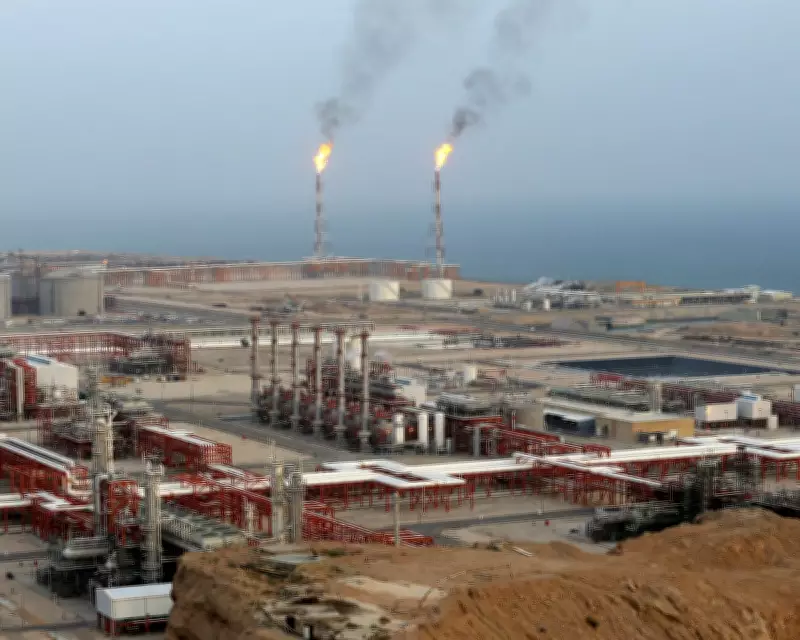
Iran Issues Dire Warning to Gulf Energy Infrastructure After Israeli Assault on Major Gasfield
In a dramatic escalation of the Middle East conflict, Iran has issued a stark threat to target energy facilities across the Gulf region in retaliation for Israeli strikes on its largest gasfield. This marks the first direct attack on Iran's fossil fuel production since the war began, signaling a dangerous new phase in the ongoing crisis.
Revolutionary Guards Vow Swift Retaliation Against Key Gulf Nations
Iran's Revolutionary Guards have declared that counterstrikes on energy infrastructure in Saudi Arabia, the United Arab Emirates, and Qatar will occur "in the coming hours." This warning follows state media reports confirming that missiles targeted the giant South Pars gasfield, which Iran shares with Qatar and is home to the world's largest gas reserves. Israeli media widely attributed the strikes to Israel, alleging coordination with the United States.
The attack on South Pars represents a significant escalation in U.S. and Israeli military operations, as both nations had previously avoided targeting Iran's oil and gas sector to help stabilize global oil prices. Eskandar Pasalar, governor of Asaluyeh in southern Iran, condemned the move as "political suicide" and warned that the conflict has shifted to a "full-scale economic war."

Global Energy Markets React with Sharp Price Increases
As tensions mount, global energy markets have responded with volatility. The international oil benchmark surged by up to 5%, reaching a high of $108.60 per barrel, while Europe's gas benchmark jumped over 7.5% to exceed €55.50 per megawatt hour. These spikes reflect growing fears of further disruptions to supplies, exacerbated by Iran's ongoing blockade of the Strait of Hormuz.
Daily oil exports from the region have plummeted by at least 60% from prewar levels due to drone and missile strikes, forcing Gulf neighbors to curtail production as pipelines and storage facilities reach capacity. Despite this, Iran's hydrocarbon infrastructure had remained largely untouched until the recent strikes.
Specific Targets Identified in Iran's Retaliation Warning
Iran's state media has pinpointed several high-value energy sites as potential targets, including:
- Saudi Arabia's Samref refinery and Jubail petrochemical complex
- The UAE's al-Hosn gasfield
- Qatar's Mesaieed petrochemical complex and holding company, along with the Ras Laffan refinery
A public warning urged all citizens, residents, and employees to evacuate these areas immediately, stating: "These centres have become direct and legitimate targets and will be targeted in the coming hours." In response, Qatari government spokesperson Majid al-Ansari cautioned that such actions threaten global energy security and regional stability.
Broader Implications for Regional and Global Stability
The conflict's third week has seen Iranian attacks expand to include the UAE's Shah natural gasfield, one of the world's largest, as well as strikes on Iraq's Majnoon oilfield and the UAE's Fujairah port and oil storage facility. While Iran has continued shipping crude through the Strait of Hormuz uninterrupted, it has threatened to set fire to vessels from neighboring Gulf states, further heightening risks.
Early last week, global oil prices breached $116 a barrel for the first time since May 2022, as traders assessed the war's impact on oil and gas supplies. With Iran now directly threatening Gulf energy hubs, the situation poses severe challenges to international energy markets and geopolitical stability in the Middle East.






