

Iran War Exposes Flaws in Trump's 'Drill, Baby, Drill' Energy Policy
The US-Israeli military engagement with Iran has sent shockwaves through global fossil fuel markets, starkly highlighting the inherent instability of oil and gas dependence. This conflict, which began in late March 2026, has already resulted in hundreds of casualties and created an ecological crisis from strikes on oil depots. More critically, it has driven oil prices to soar past $100 per barrel, reaching their highest levels since the 2022 Russian invasion of Ukraine before settling at an elevated $92. This surge has directly increased gasoline costs across the United States, sparking fears of broader inflation.
Global Market Realities Undermine Energy Promises
Experts argue that the war punctures former President Donald Trump's repeated campaign and White House promises to lower household electricity and gasoline prices by "unleashing" American fossil fuels to achieve energy "independence" and "dominance." In response to rising prices, Trump dismissed concerns, stating that if gas prices "rise, they rise," and later asserting on social media that oil spikes are a "very small price" for US safety. However, analysts contend this is an "emperor has no clothes moment" for his pro-fossil fuel agenda.
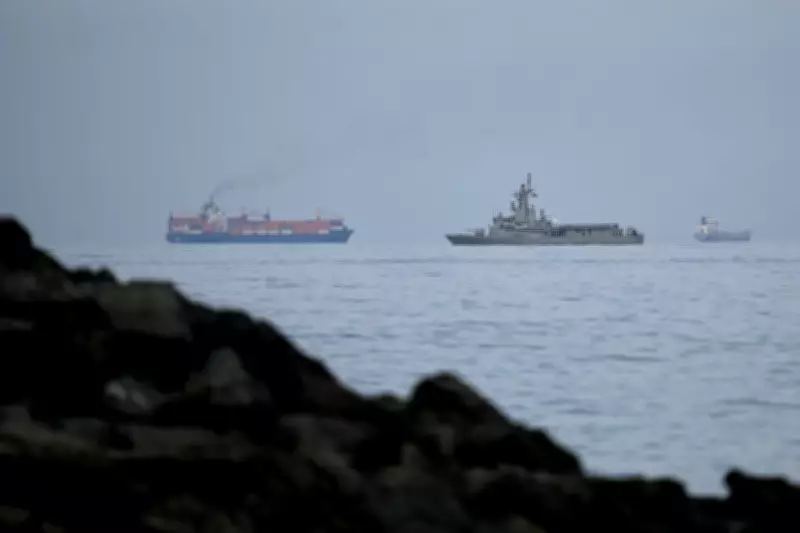
Collin Rees, US policy manager at Oil Change International, emphasized, "Americans are seeing, in real time, the deep failings of Trump's strategy. We're seeing that he's not doing anything to provide energy stability or price stability." The conflict has closed the Strait of Hormuz, a vital channel for about 20% of global oil flow, with recent incidents involving projectiles damaging ships and causing fires, further disrupting supply.

Michael Klein, a professor of international economic affairs at Tufts University, explained that the "drill, baby, drill" approach could never shield Americans from oil shocks due to the globalized nature of the market. "With a worldwide market, there's a more or less single price for crude oil," he said. "The US can't just set the price." Even domestically extracted fossil fuels rely on complex global supply chains, as not all US oil can be easily refined locally, creating interdependencies that exacerbate vulnerabilities during crises.
Volatility and the Failure of Fossil Fuel Reliance
The war has introduced extreme volatility into oil markets, where perceived threats can cause dramatic price swings. For instance, crude prices briefly skyrocketed to $119 per barrel before plummeting by $35 within hours based on shifting statements about the conflict's status and potential reserve releases. Isabella Weber, an economics professor at the University of Massachusetts Amherst, noted, "In a chaotic situation like this, no one knows exactly how supply is evolving. Market prices are anything but rational."
This instability contrasts sharply with renewable energy sources like wind and solar, which are not subject to such commodity-driven fluctuations. Rees pointed out, "You don't need to continually supply a solar panel with oil or gas once it's up and providing energy. With oil or gas, there's a constant need for that commodity which is vulnerable to shocks."
Rollbacks on Efficiency and Renewables Intensify Risks
While the US has made significant progress in energy efficiency since the 1970s—reducing oil consumption relative to GDP through better vehicle standards and home insulation—Trump's policies have actively undermined these gains. His administration has eliminated tax credits for home efficiency upgrades and electric vehicles, proposed killing the Energy Star program, and paused or canceled wind and solar projects. These moves benefit fossil fuel companies but increase costs for working-class Americans and leave the nation more exposed to global market shocks.
The war has also highlighted environmental horrors, such as toxic air and oil-tainted rain from strikes on fuel depots in Iran. Rees argued, "The quicker that we can conduct a managed transition off fossil fuels, the better off we will be in terms of affordability and energy access, and in terms of potentially ending deadly oil-fueled wars."

In summary, the Iran conflict has laid bare the fragility of a fossil fuel-centric energy strategy, challenging Trump's assurances and underscoring the urgent need for a shift toward renewables and efficiency to ensure long-term stability and security.





