

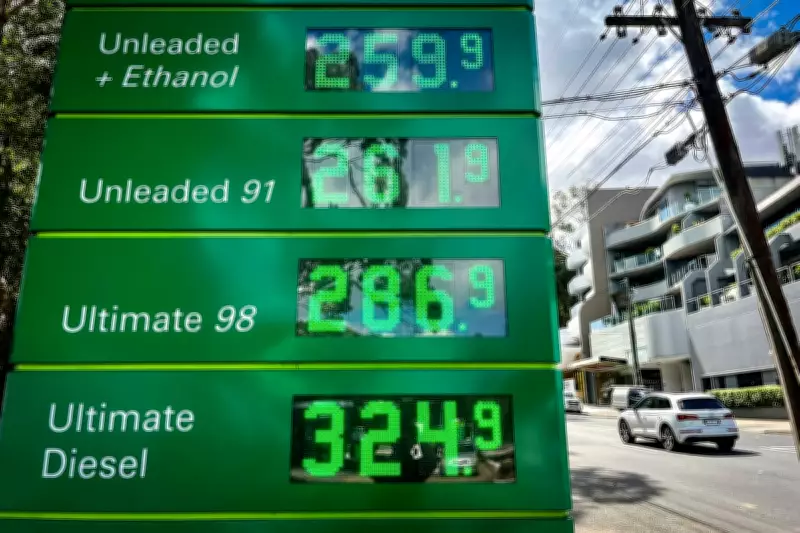
Labor Announces Major Fuel Excise Cut to Ease Cost of Living Pressures
In response to the escalating global energy crisis triggered by the war in the Middle East, the Australian Labor government has unveiled a significant economic relief package. Prime Minister Anthony Albanese, following a meeting of the national cabinet on Monday, announced a 50% reduction in the fuel excise, effective for three months. This decisive move is projected to save motorists approximately 26 cents per liter at the pump, translating to around $19 in savings for a standard 65-liter tank.
Immediate Impact on Petrol and Diesel Prices
The fuel excise, currently set at 52.6 cents per liter, will be slashed to 26.4 cents, with changes expected to be reflected at service stations starting Wednesday. Treasurer Jim Chalmers emphasized that this measure aims to provide immediate financial relief to households and businesses grappling with rising fuel costs. However, analysts caution that retail prices could still climb if global oil prices continue their upward trajectory, underscoring the volatile nature of the current energy market.
In addition to the excise cut, the government will reduce the heavy vehicle road user charge to zero for the same three-month period and defer the next scheduled increase by six months. The comprehensive relief package carries a total budget cost of $2.55 billion, reflecting the government's commitment to mitigating the economic fallout from international conflicts.

National Fuel Security Plan Unveiled
Alongside the excise reduction, Prime Minister Albanese and Energy Minister Chris Bowen released a new four-stage national fuel security plan. This strategic framework is designed to coordinate responses to potential fuel shortages across the country, ensuring supply continuity during periods of disruption.
The plan's four levels are:
- Plan and prepare
- Keeping Australia moving
- Taking targeted action
- Protecting critical services for all Australians
Australia currently operates at level 2, where fuel supply continues despite localized disruptions. At this stage, motorists are encouraged to purchase only the fuel they need and consider using public transport where possible to conserve supplies for regional areas.
Potential for Further Measures
While the plan does not explicitly mention fuel rationing, levels 3 and 4 include provisions for more stringent measures if the situation deteriorates. Level 3 would involve voluntary practical measures to limit fuel use, while level 4 could include government action to prioritize critical users and maintain economic operations.
Prime Minister Albanese stated that Australia remains "substantially away" from needing to escalate to level 3, with Energy Minister Bowen noting that any change would not be necessary for "quite a while" under current conditions. The government reports that Australia currently maintains 39 days' worth of petrol reserves, 30 days of diesel, and 30 days of jet fuel.
Supply Chain Challenges and Legislative Response
Despite these reserves, energy analysts warn that Australia faces potential supply chain disruptions, with at least six fuel shipments already cancelled as Asian suppliers reduce petrol production. The government has responded by securing additional supply to cover these shortages and is preparing to expedite new legislation that would allow urgent fuel purchases worth up to $2 billion using advance finance minister powers, similar to those employed during the COVID-19 pandemic.
Political Reactions and Industry Response
Opposition Leader Angus Taylor welcomed the excise cut but criticized the timing as overdue, questioning the government's ability to ensure fuel reaches service stations experiencing shortages. New South Wales Premier Chris Minns indicated that measures such as fuel rationing or encouraging remote work remain under consideration for the plan's later stages, while Tasmania's Premier Jeremy Rockliff praised the excise reduction as providing meaningful and immediate relief for cost-burdened households and businesses.

The government's dual approach of immediate financial relief through excise reduction and long-term strategic planning through the fuel security framework represents a comprehensive response to the complex challenges posed by the global energy crisis and Middle East conflict.





