

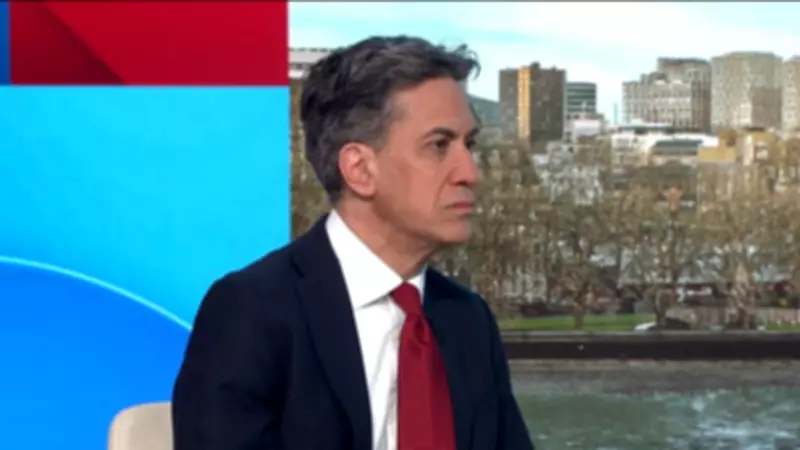
Energy Secretary Ed Miliband has declared that the government will "fight people's corner" as the escalating war in Iran threatens to trigger a fresh energy price crisis in the UK. However, in an interview on Sunday Morning with Trevor Phillips, Miliband refused to provide specific details on what support measures might be implemented, leaving many households in suspense.
Government to Announce Support for Heating Oil Users
Sky News has learned that a support package aimed at the poorest households using heating oil could be unveiled as early as Monday. This move comes as the conflict in the Middle East drives oil prices above $100 a barrel, up from approximately $70 in February, due to Iran's threats to attack oil tankers and effectively close the Strait of Hormuz, a critical shipping lane for about 20% of global oil exports.
Rural Households at Risk
While many UK homes are connected to the gas grid, significant rural areas rely on off-grid solutions such as heating oil and liquefied petroleum gas. In England, around 1.1 million homes heated by fossil fuels are not linked to the gas network, and in Northern Ireland, two-thirds of households depend on heating oil. The current energy price cap, which regulates gas and electricity prices and is set to decrease by an average of £117 from April, does not cover heating oil, leaving these consumers vulnerable to market fluctuations.

Miliband's Stance on Fuel Retailers
During the interview, Miliband defended the government's approach, stating, "We're going to fight people's corner... when it comes to the effects on them. That's why this week, we've been saying to the petrol retailers, the heating oil companies, we're not going to tolerate price gouging. We're not going to tolerate unfair practices." He emphasized that some may disapprove, but the government remains firm in its stance.
He also addressed criticisms of the government's rhetoric, which had angered petrol retailers to the point of threatening to withdraw from a recent meeting. Miliband argued that the fuel market "hasn't been working well," citing the "rockets and feathers" phenomenon where prices spike quickly with wholesale increases but drop slowly when costs fall.
Long-Term Energy Strategy
Miliband highlighted the need for the UK to learn from this crisis, noting that reliance on fossil fuels during times of geopolitical instability leaves British citizens bearing the financial burden. He pointed to government efforts to boost renewable and nuclear energy generation as part of a broader strategy. When questioned about expanding North Sea oil and gas exploration, he confirmed that existing licences would be utilized but asserted that new licences would not lead to reduced bills for consumers.
Beyond the immediate support for heating oil users, Chancellor Rachel Reeves is reportedly holding off on additional interventions for now. The situation underscores the ongoing challenges in balancing short-term relief with long-term energy security amid global tensions.






