

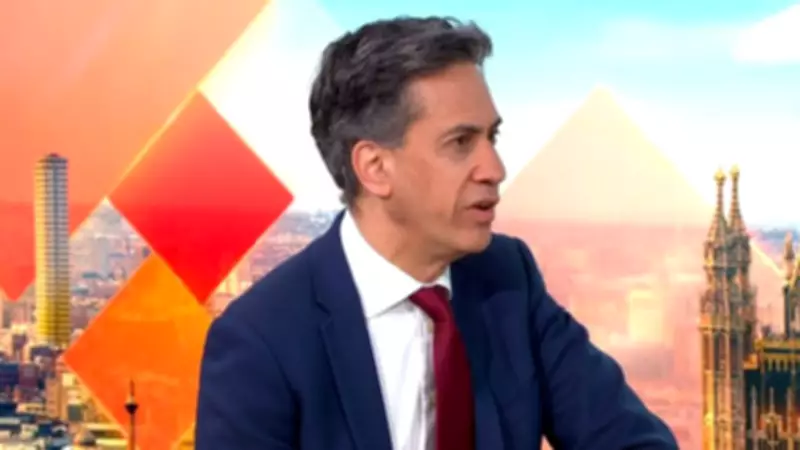
Miliband Pledges to Tackle Energy Market Link to Gas in Bid to Slash Household Costs
Energy Secretary Ed Miliband has informed Labour MPs of his commitment to examining the decoupling of electricity prices from gas, aiming to reduce household energy bills. This move comes amid growing calls for increased North Sea oil and gas drilling, highlighting a contentious debate within UK energy policy.
Complex Yet Possible Reform
During a meeting of the Parliamentary Labour Party (PLP) on Monday night, Miliband described the proposed market reform as "complicated but possible," according to sources present. He referenced a report by eco-tycoon Dale Vince, which argues that without changes to the wholesale energy market, Labour's push for cheaper renewables will not translate into lower bills for consumers.
The UK currently employs a marginal cost pricing system, where electricity is sold at the price of the most expensive energy source needed to meet demand, often gas. This means gas prices effectively set the wholesale rate for all electricity generation, including from renewable sources.

Political and Expert Support for Change
Labour MP for Stroud, Simon Opher, urged the government to "grasp the chance" of reform, stating it could save households hundreds of pounds annually. He emphasized that the crisis in the Middle East presents an opportunity to radically rethink energy market operations and alleviate the cost of living crisis.
Green Party leader Zack Polanski also called for decoupling electricity and gas prices in a recent speech on the economy. Meanwhile, Chancellor Rachel Reeves, when questioned by Green MP Ellie Chowns, highlighted Labour's Planning and Infrastructure Act as a tool to facilitate renewable energy projects, noting that gas now sets energy prices about a third lower than four years ago due to reduced imports.
Internal Divisions and External Pressures
Forecasters predict energy bills will reach a three-year high when the current price cap ends in June, intensifying the urgency for action. Within the Labour Party, MP Henry Tufnell has advocated for ending the ban on new North Sea oil and gas exploration to protect against future energy shocks, a stance echoed by the Conservatives, who argue the government's net-zero push compromises energy security.
At the PLP meeting, Tufnell was reportedly a lone voice, with most attendees supporting Miliband's approach. Miliband stressed that dependence on fossil fuel markets leaves the UK as "price takers not price makers," exposing the nation to volatility. He affirmed the government's determination to accelerate clean power development for energy sovereignty and national security.
Proposals for Market Overhaul
Dale Vince's "Breaking the Link" report estimates that the current electricity-gas link added £43 billion to UK energy bills in 2023, equating to £367 per household. His proposal involves a bidding system where generators are paid their actual bid price, rather than the highest market price, which could reflect the cheaper cost of renewables more accurately.
Vince, a Labour donor, warned against repeating past crises where billions were spent suppressing bills, urging a focus on solving the root cause. He argued that reforming the market now could insulate the UK from future energy crises and ensure more affordable, stable bills.
Labour aims to make Britain a clean energy superpower by 2030, projecting a £300 annual reduction in household bills. However, Vince's report cautions that without market rule changes, high gas prices could persist even with 95% clean electricity, underscoring the need for comprehensive reform.






