

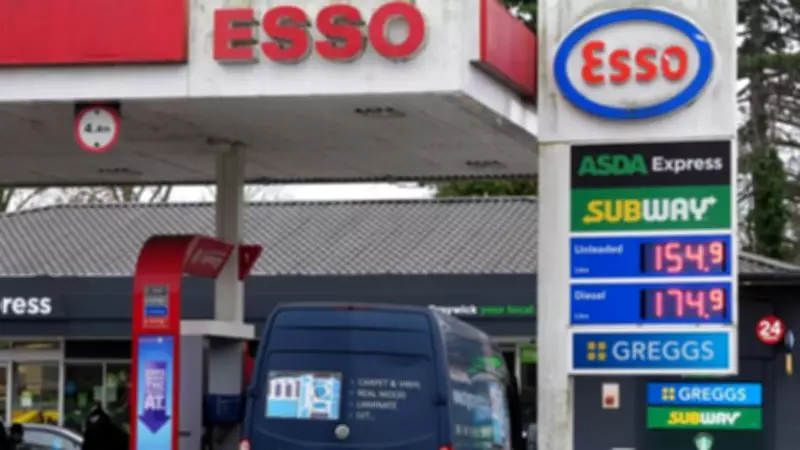
Motorists Told to 'Fill Up as Normal' Despite Soaring Fuel Prices
Motorists should continue to "fill up as normal" at petrol stations, a senior government minister has urged, even as fuel prices have surged above 150p per litre. This sharp increase comes amid ongoing tensions in the Middle East, where Iran has blocked tankers from passing through the Strait of Hormuz in retaliation for strikes by the US and Israel.
Government Insists on Preparedness Amid Rising Costs
Education Secretary Bridget Phillipson emphasized that the government is "well prepared" for any potential disruptions to fuel supplies. In an interview on Sunday Morning with Trevor Phillips, she advised the public to heed guidance from trade bodies like the RAC, which has noted that petrol prices have climbed by more than 17p per litre since the conflict with Iran escalated in late February.
"They've been absolutely clear that if you go to the pump, just fill up as normal, continue as you are," Ms Phillipson stated. "We've got the security of what is coming in, and production isn't affected. I think people should take note of what those trade bodies are saying."

Concerns Over Shortages and Market Intervention
However, not all experts share the government's confidence. Energy economist Nick Butler warned Sky News that shortages are likely due to the blockade and argued that the government cannot rely solely on the "anarchy of the open market." He suggested that intervention may be necessary to stabilize supplies and prices.
Ms Phillipson acknowledged the broader context, stressing that de-escalating the Iran war is crucial. She also pointed out that the energy price cap is set to decrease in April, though it only extends until June, and she could not provide guarantees beyond that period. "We will take a view closer to the time, but what we hope will happen between now and then is that we do see a de-escalation of the conflict," she added.
Political Debates and Policy Responses
The rising fuel costs have sparked political debates, with the Conservatives, Reform, and the Lib Dems calling for the government to scrap planned fuel duty increases scheduled for September. Ms Phillipson, however, maintained that there is "no need to take action" at present and declined to make commitments months in advance.
Conservative leader Kemi Badenoch also weighed in, opposing fuel rationing for now but advocating for renewed drilling in the North Sea to boost domestic energy production. She dismissed concerns about delays, asserting that gas from the Shell-owned Jackdaw field could be available before winter. This stance contrasts with the Labour government's ban on new oil and gas licensing, which aims to prioritize renewable energy sources.
"What we need is cheap, abundant energy, it should be clean," Ms Badenoch said. "And that means doing everything we can - nuclear, renewables and oil and gas."
As the situation evolves, motorists are left navigating higher costs at the pump while political leaders debate long-term energy strategies and immediate responses to the crisis.






