

Oil and Gas Prices Resume Upward Climb Following Iranian Strikes on Production Facilities
In a significant escalation of the ongoing Middle East conflict, oil and gas prices have surged after Iran launched attacks on production facilities for the first time since the war with the US and Israel began. This development marks a shift from previous targeting of refineries, terminals, and storage sites, directly impacting core extraction operations.
Immediate Impact on Global Energy Markets
The international benchmark, Brent crude, rose by 3% to $103.2 per barrel on Tuesday, representing a nearly 50% increase from pre-war levels recorded on February 28. Concurrently, wholesale gas prices climbed nearly 3% to €52 per megawatt hour, up from approximately €30 before the conflict erupted.
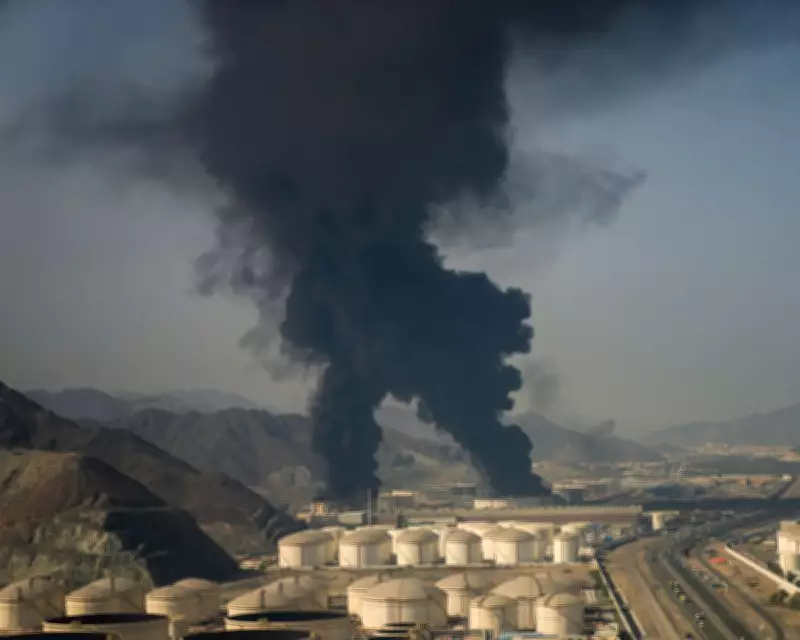
Key incidents include a drone strike on the Shah natural gasfield in the United Arab Emirates, one of the world's largest, which ignited a fire and forced operations to halt as damage assessments continue. Additional targets hit by Iranian drones and missiles include the Majnoon oilfield in Iraq and the UAE's major port and oil storage facility at Fujairah.

Disruptions Threaten Export Channels
The attacks have severely compromised the UAE's crude export capabilities. Fujairah port, a critical terminal normally handling over 1 million barrels of oil daily, experienced a fire after a tanker was struck by a projectile, leading to a suspension of loading activities by the state company Adnoc. With the Gulf region effectively isolated due to Iran's control over the Strait of Hormuz—a vital passage for 20% of global oil and gas shipments—the UAE's export outlets face near-total cutoff.
Since the conflict started, daily crude output from the UAE, OPEC's third-largest producer, has more than halved. Gulf Arab states, including the UAE, have endured over 2,000 missile and drone attacks since the war's inception, targeting not only energy infrastructure but also diplomatic, military, and civilian sites.
Analyst Insights and Regional Fallout
Despite the price hikes, Brent crude remains below its wartime peak of $119.50 per barrel. Analysts at Goldman Sachs highlight that the current oil market shock, one of the largest on record, disproportionately affects refined products like jet fuel and diesel, with supply disruptions of medium-heavy crude posing risks to their production.
Saul Kavonic of MST Marquee notes that mixed signals from the Trump administration regarding the war's duration are compounding market uncertainty, as ground actions continue to escalate. The crisis has triggered broader regional impacts, including increased blackouts in Asian countries reliant on Hormuz shipments, prompting shifts to coal and conservation measures.
For instance, Sri Lanka has declared weekly public holidays to save fuel, while Bangladesh has adjusted university schedules and implemented planned blackouts. Thailand has encouraged civil servants to adopt energy-saving practices, such as wearing short-sleeved shirts and using stairs instead of elevators.
Iranian Foreign Minister Abbas Araghchi has denied reports of contact with US envoy Steve Witkoff, amid the heightened tensions. As the conflict enters its third week, the targeting of production facilities underscores the deepening crisis and its far-reaching implications for global energy stability.






