

Oil Prices Surge Past $100 a Barrel Amid Escalating Middle East Conflict
Global oil prices have breached the $100 per barrel mark for the first time since 2022, as escalating military aggression in the Middle East continues to wipe an estimated 20 million barrels of oil from the market each day. This significant price surge reflects growing fears over supply disruptions in a region critical to global energy exports.
Kuwait Announces Precautionary Production Cut
In response to the heightened tensions, Kuwait's national oil company has announced a 'precautionary' cut to its crude oil production. This move underscores the immediate impact of the conflict on regional oil operations and contributes to the tightening of global supply.
Brent crude, the international benchmark for oil prices, climbed 12.2% to $104.05 a barrel as trading began in the Asia Pacific markets. This marks the first time prices have soared above the $100 threshold since Russia's invasion of Ukraine, highlighting the severity of the current market disruption.

Conflict Disrupts Vital Trade Routes
The price increase follows a weekend of escalating conflict, which has severely disrupted oil exports through the Strait of Hormuz. Iran has largely halted oil and gas exports through this vital waterway, which carries approximately one-fifth of the world's oil and liquefied natural gas.
Hundreds of tankers attempting to transit the strait have come to a halt after Iran's Revolutionary Guards threatened to 'set ablaze' any vessel using the route. This blockade has created a logistical nightmare for global energy markets, exacerbating supply shortages.
Expert Warnings and Market Reactions
Clayton Seigle, a senior fellow at the Center for Strategic and International Studies, noted that a deficit of 20 million barrels per day is hitting global oil market balances with no sign of relief. He warned that exports from the Middle East may not resume until shipowners, operators, and insurers feel safe from threats posed by Iranian military assets.
Overall, oil prices have rocketed by two-thirds from just above $60 a barrel at the start of the year. The acceleration began after a US-Israeli attack on Iran just over a week ago, which further destabilized the region and disrupted trade routes.
Storage Facilities Nearing Capacity
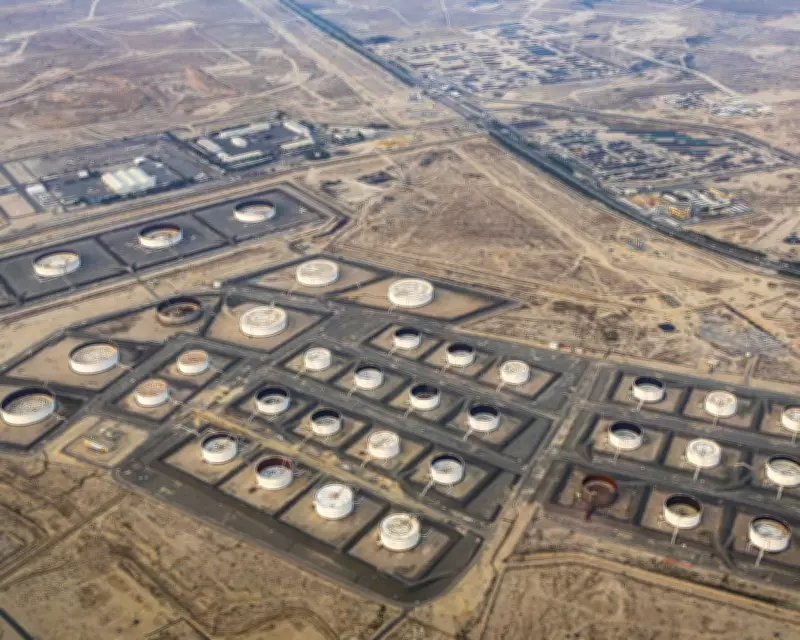
Oil storage facilities in Saudi Arabia, the United Arab Emirates, and Kuwait are reaching their limits. If crude cannot be exported via the Strait of Hormuz, major oilfields may need to be shut down, potentially leading to even more severe supply constraints.
Qatar's energy minister compounded fears by predicting that if the war continues unabated, all Gulf energy exporters could be forced to shut down production within weeks, potentially driving oil prices to $150 a barrel.
Potential Countermeasures and Their Limitations
The White House has suggested countermeasures such as rerouting Saudi crude via the Red Sea, drawing on emergency US crude reserves, or extending government-backed insurance to shipping companies. However, experts like Seigle caution that these measures may not be sufficient to offset the loss of 20 million barrels of oil a day.
As the conflict persists, the global economy faces heightened uncertainty, with oil prices serving as a stark indicator of the geopolitical tensions reshaping energy markets and international trade dynamics.






