

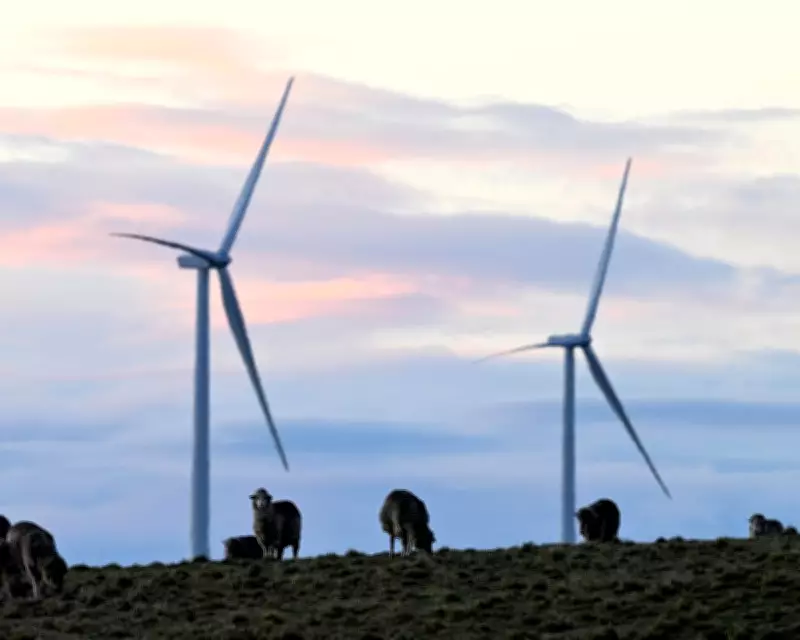
Power Prices Expected to Fall by Up to 10% from July on Australia's East Coast
The Australia Energy Regulator has announced that power prices on Australia's east coast are predicted to fall significantly from July, bringing what it describes as "welcome relief" to consumers after several years of rising energy costs. The draft decision, released on Thursday, points to increased renewable energy generation and falling electricity contract prices as the primary drivers behind the anticipated reductions.
Substantial Savings for Households and Businesses
According to the regulator's proposal, residential customers on standing electricity plans could see price reductions ranging from 1.3% to 10.1%, while small businesses could benefit from cuts between 8.5% and 21.2%, depending on their specific region. If adopted, these changes would translate to savings of more than $200 for households in New South Wales and Queensland, with small businesses in NSW potentially saving over $1,300 annually.
Clare Savage, chair of the Australia Energy Regulator, emphasized that this draft decision represents a positive shift for consumers who have endured several years of escalating prices following Russia's invasion of Ukraine. "We've had lots more renewables come into the market," Savage noted. "We've had good wind, solar and battery performance."

Renewable Energy Driving Price Reductions
The regulator identified reduced wholesale prices as the "biggest driver" behind the proposed changes for the 2026-27 period. Increased output from wind generation and battery storage, along with falling electricity contract prices, are expected to deliver lower energy bills across the region.
Every year, the Australia Energy Regulator sets a default market offer in NSW, South Australia, and south-east Queensland, while Victoria's Essential Services Commission performs the same function in that state. This offer serves as a safety net for customers who haven't sought better deals from their electricity retailers and acts as a reference price for comparing different offers.
New Solar Sharer Initiative
The draft determination also introduces an innovative "solar sharer" offer, an opt-in plan that includes three hours of free power during the middle of the day to take advantage of abundant solar energy. The free usage periods would be set between 11am to 2pm in NSW and south-east Queensland, and noon to 3pm in South Australia.
Energy Minister Chris Bowen explained that this initiative was designed to share the benefits of Australia's solar success more broadly. "For households that can shift some of their usage into the free power period, this can mean real savings on bills," Bowen said. "Whether that is running the dishwasher, doing the washing, or heating hot water during the day."
Greg Bourne, a councillor with the Climate Council, welcomed the solar sharer concept, noting that "not everyone can have solar panels" but with this program, "they can actually gain some benefit in the middle of the day."
Safety Net for Consumers
The default market offer remains an important safety net for consumers navigating what Bourne described as an "unbelievably complex" energy market. "You almost need a PhD to work out whether you're getting a good deal or not," he remarked.
Currently, approximately 8% of residential customers and 15% of small business customers are on the default offer. Savage encouraged consumers to shop around for better deals, noting that some market offers provide savings of up to 23% below the default price.
Louisa Kinnear, chief executive of the Australian Energy Council, reinforced this message, stating that "the offer was a safety net, not the best price" and encouraging consumers to "take the opportunity to save through a lower market offer today" rather than waiting for July's price reductions.

Cautious Optimism Amid Global Uncertainty
Despite the positive outlook, the regulator remains cautious about global events, particularly developments in the Middle East. Savage acknowledged that "it's a very uncertain time" and emphasized that while Australia continues to invest in new renewable energy sources, the electricity system remains significantly exposed to international fossil fuel prices.
The Australia Energy Regulator will closely monitor the global energy situation before making a final decision in May. Victorian customers on standing offers can also expect price reductions, with the Essential Services Commission recommending lower prices in its draft determination released last week. If adopted, annual bills for Victorian customers would be $46 lower on average compared with 2025-26.
This development comes as more than 4.2 million Australian households already have solar installations, demonstrating the country's growing renewable energy capacity and its potential to deliver tangible benefits to consumers through reduced electricity costs.





