

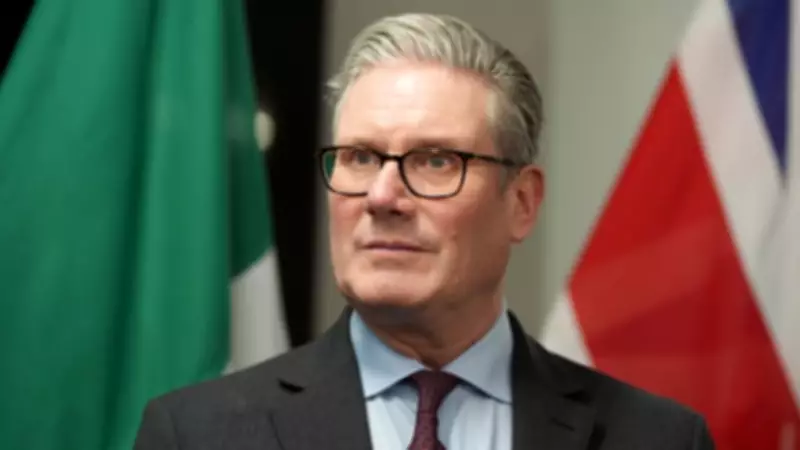
Prime Minister Announces Targeted Support for Energy-Hit Households
In response to the escalating energy crisis exacerbated by the Iran war, Prime Minister Keir Starmer is set to unveil emergency support measures for households most severely impacted by soaring heating oil prices. The government's intervention comes as heating oil costs have skyrocketed by an alarming 80% within just one week, placing immense financial strain on families across the nation.
Legal Action Threatened Against Exploitative Energy Firms
Alongside the emergency aid package, Starmer has issued a stern warning to energy suppliers, promising legal action against companies found to be "exploiting" the current crisis. The prime minister emphasized that fines and other financial penalties could be imposed on firms engaging in unfair practices, such as cancelling orders only to subsequently raise prices dramatically.
"It's moments like this that tell you what a government is about," Starmer will declare during a scheduled news conference at Downing Street. "My answer is clear. Whatever challenges lie ahead, this government will always support working people."

The prime minister further stated: "I will not tolerate companies trying to exploit this crisis to make money from working people. If the companies have broken the law, there will be legal action."
Northern Ireland Particularly Hard Hit
The crackdown follows Starmer's recent visit to Northern Ireland, where approximately 60% of households rely on heating oil and have experienced particularly sharp price increases since the outbreak of the Iran conflict. The region's dependence on this heating source has made residents especially vulnerable to the market volatility triggered by geopolitical tensions.
Government Prioritizes Targeted Assistance
Chancellor Rachel Reeves, in a recent interview with The Times, clarified the government's approach to the crisis, explaining that a universal bailout for every household would be financially unaffordable. Instead, the administration has developed "targeted" support specifically designed for poorer households that fall outside the protection of the existing energy price cap.
"I've found the money and we've worked through with MPs and others a response for people who are not protected by the energy price cap," Reeves stated. "We are giving greater support to those who really need it."
Energy Secretary Vows to Fight for Consumers
Energy Secretary Ed Miliband reinforced the government's commitment during a Sunday morning television appearance, declaring: "We're going to fight people's corner in this conflict." He specifically addressed concerns about price gouging within the energy sector, stating unequivocally that unfair practices by petrol retailers and heating oil companies would not be tolerated.
International Cooperation Sought for Swift Resolution
Downing Street sources indicate that the prime minister has consistently acted in the national interest throughout the crisis and is actively collaborating with international allies to achieve a rapid resolution to the Middle East conflict. Starmer is expected to emphasize that ending the war represents the most effective long-term solution to alleviating cost-of-living pressures on British households.
The prime minister will assert: "We will continue to work towards a swift resolution of the situation in the Middle East. Because there's no question that ending the war is the quickest way to reduce the cost of living."
The emergency measures represent the government's comprehensive response to a crisis that has seen energy costs surge dramatically amid ongoing geopolitical instability, with particular focus on protecting the most vulnerable households from the financial impact of these unprecedented market conditions.






