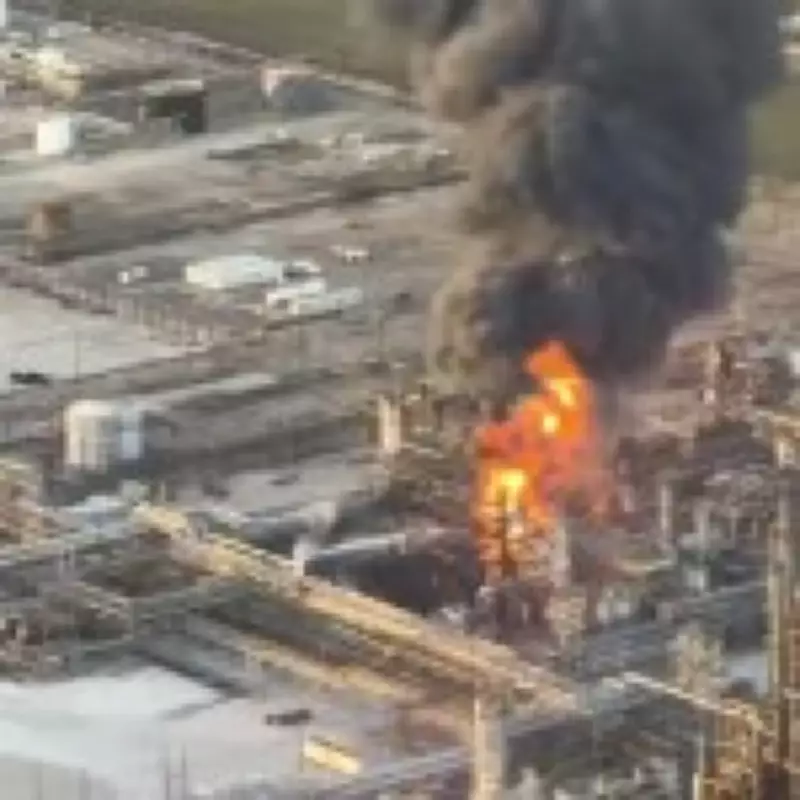
Gas Prices Soar Following Unexplained Texas Refinery Blast
A sudden and unexplained explosion at a major Texas oil refinery has sent gasoline prices skyrocketing across the United States, exacerbating existing market turmoil driven by the protracted war in Iran. The incident occurred at the Valero refinery in Port Arthur, located approximately 90 miles east of Houston, on Monday.
Details of the Port Arthur Incident
Port Arthur Mayor Charlotte Moses confirmed that no injuries resulted from the explosion, which sent massive plumes of smoke and flames into the air. Local residents reported hearing a loud boom and feeling their windows shake from the force of the blast. The Valero facility employs around 770 workers and has the capacity to process about 435,000 barrels of crude oil daily, producing gasoline, diesel, and jet fuel.
The immediate market reaction was severe. Wholesale gasoline prices jumped by 10 cents per gallon, while diesel surged by 16 cents per gallon in the wake of the explosion. Andy Lipow, president of Lipow Oil Associates, characterized the event as an "industrial accident" that remains under investigation.

Broader Geopolitical Context and Market Volatility
This refinery explosion compounds pre-existing instability in global energy markets, primarily stemming from the conflict in Iran. The situation escalated recently when former President Donald Trump issued a delayed ultimatum, threatening Iranian power stations if the strategic Strait of Hormuz was not reopened for shipping. This briefly caused oil prices to drop and stock markets to rally.
However, Trump later announced a five-day pause on U.S. strikes against Iranian energy infrastructure to facilitate diplomatic talks, which helped stabilize financial markets. Brent crude oil prices, which had plummeted by as much as 10%, recovered to settle around $101 per barrel by late afternoon.
Market analysts warn that uncertainty persists. Kathleen Brooks, research director at XTB, stated, "This war looks far from over, and the energy crisis is shifting from a shipping crisis to a supply crisis. If Iran is targeting energy assets in the region, then the conflict gets more serious and the repercussions for a long-term energy price shock also start to play out in financial markets."
Global Impact and the Strait of Hormuz Factor
The energy price shock is not confined to the United States. In the United Kingdom, gas prices surged by 20% last week alone after Trump threatened to target the world's largest oil field. Currently, a therm of gas is trading at about 171p, representing an increase of over 20% compared to the previous month. These rising costs threaten to burden UK households with significantly higher energy bills this summer if the conflict remains unresolved.
A critical factor in this global crisis is the effective closure of the Strait of Hormuz to most commercial vessels. This vital maritime chokepoint, which typically handles 20% of the world's oil supply, has become a flashpoint after Iran targeted ships in the area. This disruption has intensified fears of a severe and prolonged supply crisis, with experts cautioning that the situation is escalating rapidly.
The combination of a domestic refinery accident and international geopolitical strife has created a perfect storm for energy markets, leaving consumers and economists bracing for potential further price increases in the coming weeks.