

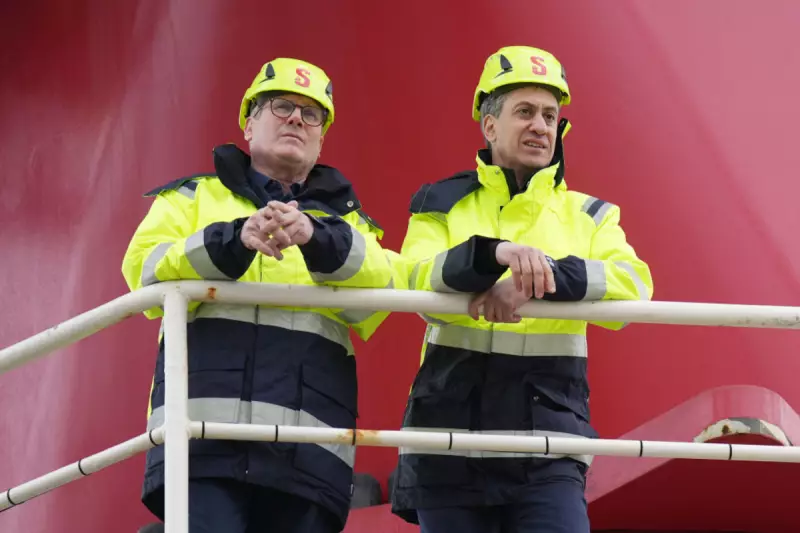
Energy Secretary Ed Miliband has ignited a political firestorm by launching the UK's largest ever auction for offshore wind farms, a move the Conservative opposition has branded an "expensive vanity project" that will add significant costs to household energy bills.
Record-Breaking Auction for 2030 Target
On Wednesday 14 January 2026, the government unveiled plans to auction offshore energy sites with a colossal total capacity of 8.4 gigawatts (GW). This figure far exceeds analyst predictions and is enough to generate electricity for approximately 12 million homes.
Miliband, the Secretary of State for Energy Security and Net Zero, hailed the move as a "monumental step" towards the UK's ambitious goal of generating 100 per cent of its electricity from renewable sources by 2030. He argued the new wind capacity would ultimately cost less than building new gas plants and would shield the UK from "volatile" international fossil fuel markets.

"With these results, Britain is taking back control of our energy sovereignty," Miliband stated. "This is a historic win for those who want Britain to stand on our own two feet, controlling our own energy rather than depending on markets controlled by petrostates and dictators."
The Billpayer Cost and Political Backlash
However, the accelerated push comes with a substantial price tag. To secure the rapid development, ministers agreed to pay wind farm developers a significantly higher price per unit of energy in this auction compared to the previous year's sale.
This cost is ultimately passed to consumers through a levy system, with estimates suggesting it could add as much as £1.8 billion a year onto national energy bills. This has drawn fierce criticism, especially as global oil prices have recently hit a five-year low due to market oversupply.
Claire Coutinho, the Shadow Energy Secretary, led the attack. She accused Miliband of caring "more about his own clean power vanity project" than customer bills, citing the 20-year guaranteed price contracts offered to developers.
"He is cementing our uncompetitive electricity prices for even longer at a time when the world is becoming more unstable and we need cheap, reliable energy to compete," Coutinho wrote on social media platform X.
Industry Calls for a Balanced Energy Mix
While renewable energy groups welcomed the auction's scale, necessary for the 2030 target, voices from across the energy sector urged caution. Enrique Cornejo, Energy Policy Director at Offshore Energies UK, emphasised the continued need for investment in domestic gas production and infrastructure.
"Long-term success for UK energy policy will rely on a balanced approach that builds on our existing industrial strengths," Cornejo said, highlighting the need for reliable power when renewable generation is low.
Think tank Net Zero Watch was more scathing. Its Campaign Director, Maurice Cousins, called the auction "a hammer blow to the British economy". He criticised the agreed strike price of around £95 per megawatt-hour, arguing that with additional costs factored in, the real price was closer to £105/MWh.
"Today’s strike price is basically a long-term price tag the country signs up to," Cousins said. "It is like renewing your mortgage at an eye-watering fixed rate for 20-years... British businesses and families will still be left paying far more than our international competitors."
This record auction represents the penultimate major opportunity for the government to contract enough renewable energy to meet its 2030 target. A further auction next year will be required to secure an additional 7 GW of capacity, setting the stage for continued debate over the pace and cost of the UK's green transition.






