

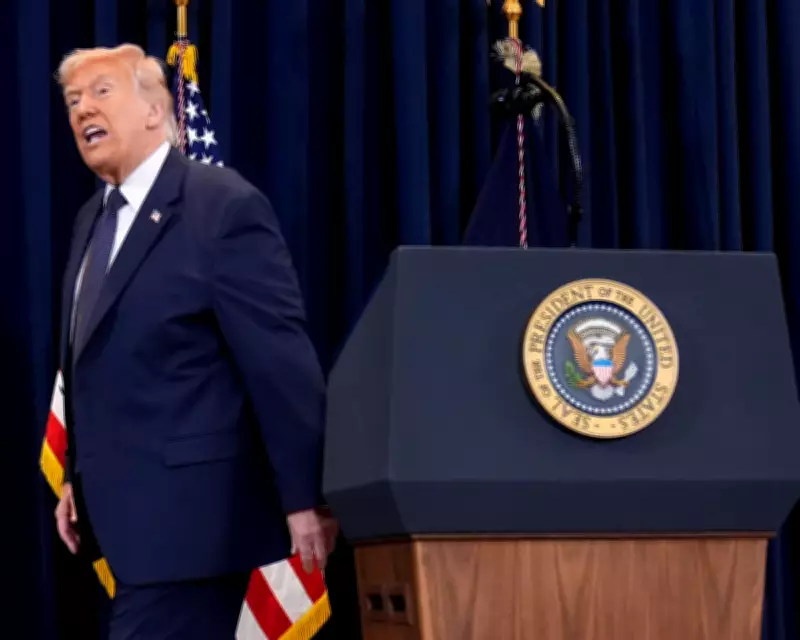
Trump Attempts to Calm Markets as Oil Prices Swing Amid Iran War
President Donald Trump has sought to minimize concerns over a dramatic surge in oil prices, stating that the increase was "probably less than I thought they’d go up." This comment came as global energy markets experienced extreme volatility following escalating tensions in the Middle East.
Oil Prices Tumble After Presidential Reassurance
Brent crude, the international benchmark for oil, soared to a four-year high of $119.50 per barrel on Monday amid fears that the US-Israel conflict with Iran could disrupt energy supplies. However, prices sharply dropped to $91.58 per barrel after Trump described the war as "very complete, pretty much" in an interview with CBS News, offering a glimmer of hope for a swift resolution.
Conflicting Statements and Continued Threats
Despite this reassurance, Trump later made contradictory remarks, suggesting the conflict is ongoing. He asserted, "We have won in many ways, but not enough," and issued a stark warning on social media: "If Iran does anything that stops the flow of Oil within the Strait of Hormuz, they will be hit by the United States of America TWENTY TIMES HARDER than they have been hit thus far."

Iran responded defiantly, with state media reporting that the regime's Revolutionary Guards spokesperson declared Tehran would not allow "one litre of oil" to be exported from the region if US and Israeli attacks persist. This threat heightens concerns, as approximately one-fifth of global oil and seaborne gas tankers typically traverse the Strait of Hormuz, which has been effectively closed for a week.
International Efforts to Secure Trade Routes
In response to the crisis, French President Emmanuel Macron indicated that multiple countries might deploy ships to escort container vessels and tankers once the most intense phase of the conflict subsides, aiming to protect this vital trade corridor.
Market Reactions and Global Implications
Trump's rhetoric initially calmed investors, leading to a sharp decline in oil prices after one of the most turbulent days in energy markets since the peak of the Covid-19 pandemic and Russia's invasion of Ukraine. The US president also announced plans to waive some oil-related sanctions to alleviate shortages, a move disclosed shortly after a conversation with Russian President Vladimir Putin. This decision could complicate US efforts to penalize Moscow for its actions in Ukraine.
Last week, the Trump administration permitted Indian refiners to temporarily purchase Russian oil for 30 days, reversing a previous claim that India had agreed to halt such purchases. Trump framed this shift as a measure to "help END THE WAR in Ukraine" by cutting off funding to Russia.
Persistent High Prices and Global Measures
Although oil prices have retreated from Monday's peaks, they remain significantly elevated compared to recent weeks. The uncertainty over supplies and rising fuel costs has prompted governments worldwide to take action:
- Croatia, Hungary, South Korea, and Thailand have implemented fuel price caps to prevent shortages.
- The Philippines ordered public officials to reduce air conditioning usage and limit travel.
- Bangladesh closed all universities early for Eid al-Fitr holidays as part of emergency measures to conserve electricity and fuel.
This ongoing volatility underscores the profound impact of geopolitical tensions on global energy markets and economic stability.






