

UK Gas Reserves Plummet to Two Days as Iran War Diverts Tankers
Great Britain's natural gas storage has dwindled to just two days' worth, a sharp decline from previous levels, as the ongoing Iran war disrupts global shipping routes and diverts liquefied natural gas (LNG) tankers away from Europe. According to figures from National Gas, which operates the national transmission system, storage stood at 6,999 gigawatt hours (GWh) on Saturday, down from 9,105 GWh a year earlier.
This equates to less than two days of reserves, far below the maximum capacity of 12 days, raising concerns about potential shortages if the Middle East crisis escalates further. However, National Gas has emphasized that storage represents only a small portion of the UK's overall gas supply mix.
Diversions and Price Surges Amid Conflict
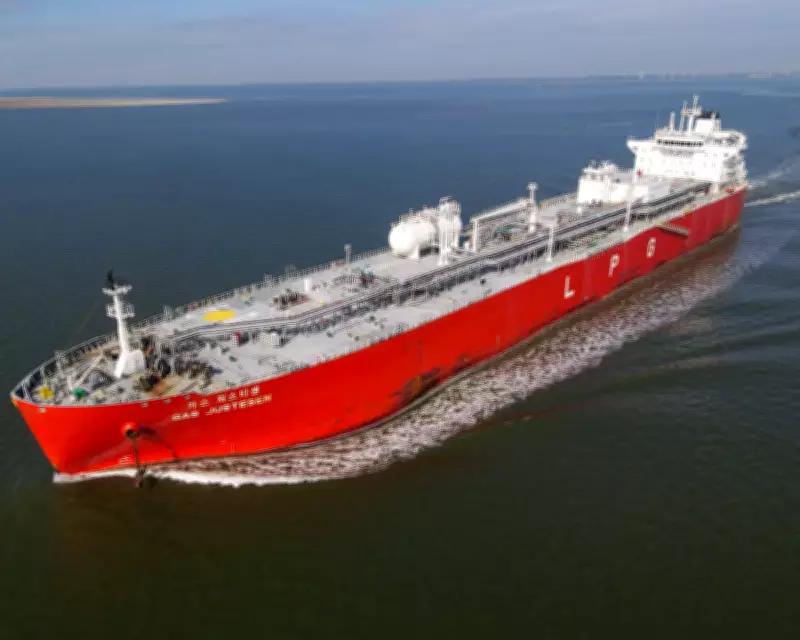
Ship-tracking data compiled by Bloomberg reveals that at least two LNG tankers have redirected from Europe to Asia since Friday, following three similar diversions last week. These shifts come as the US and Israel's intense air strikes on Iran have led to the effective closure of the Strait of Hormuz, a critical passage for a fifth of global seaborne gas shipments.

The conflict has triggered significant price increases. UK month-ahead gas prices surged to 137p a therm last week, up from 78.5p a therm before the war began. In Asia, where much of Qatar's gas exports are imported, LNG prices also soared, particularly after Qatar halted production at the world's largest LNG plant due to a drone attack.
National Gas Assures Diverse Supply Sources
A spokesperson for National Gas stated, "Britain's gas storage levels are broadly in line with what we would expect at this point in the year and are comparable to this time last year. Storage makes up only a small part of Britain's diverse gas supply mix." The majority of the UK's gas comes from the UK continental shelf and Norway, supplemented by LNG, interconnectors with continental Europe, and storage facilities.
Gas injections into storage have increased since 21 February due to milder temperatures, which typically reduce demand. Storage levels fluctuate annually and are market-driven, not government-set. In contrast, mainland Europe maintains reserves of several weeks' worth of gas, though experts note that the UK uses storage more flexibly due to different energy system structures.
Long-Term Energy Security Concerns
While National Gas expresses no immediate concern over short-term storage levels in salt caverns, it has proposed policies to safeguard future energy security in response to a government review. These include collaborating with industry to enhance flexible supply capacity through storage expansion, LNG development, and floating storage units.
The company highlighted systemic challenges such as declining North Sea production, increased import reliance, and shifting demand patterns. Jon Butterworth, National Gas chief executive, described this as a "defining moment for Britain's energy security," underscoring the need for strategic adaptations to ensure resilience amid global disruptions.






