

The United Kingdom's manufacturing sector has been struck by the most rapid one-month surge in cost inflation since the aftermath of Black Wednesday in 1992, according to new survey evidence. This sharp acceleration is primarily driven by the ongoing conflict in the Middle East, which has escalated oil prices and disrupted global supply chains, impacting the broader economy.
Impact on Manufacturing and Services
The closely monitored purchasing managers' index (PMI) reveals a significant slowdown in growth across both manufacturing and services sectors. Chris Williamson, chief business economist at S&P Global Market Intelligence, which compiles the data, stated that output growth has nearly stalled. Companies attribute lost business directly to events in the Middle East, citing heightened risk aversion among customers, surging price pressures, higher interest rates, and disruptions in travel and supply chains.
Williamson emphasized, "Inflationary pressures have surged higher on the back of rising energy prices and fractured supply chains." The cost index for manufacturing jumped to its highest level since October 2022, marking the largest month-on-month change since the fallout from Black Wednesday. In March, the cost index was 14 points higher than the previous month, compared to 17 points in October 1992.

Historical Context and Economic Weakness
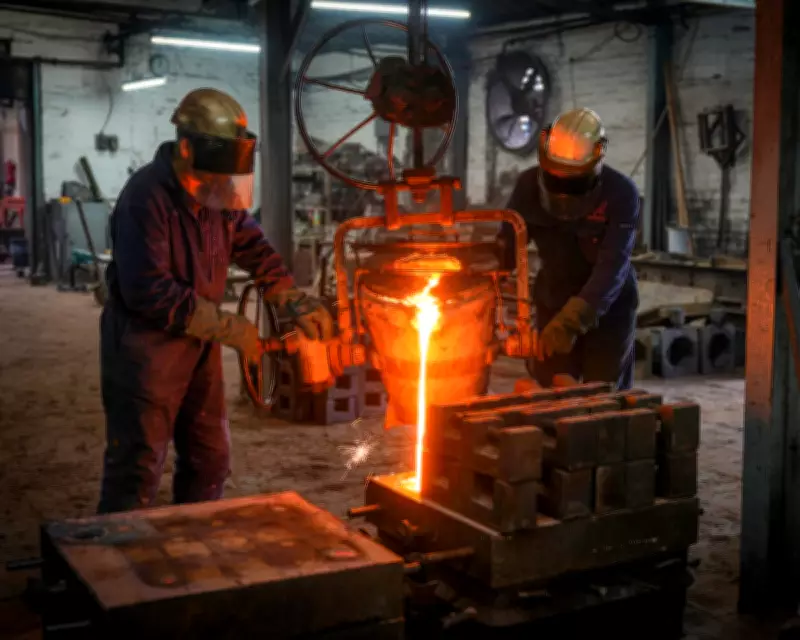
Black Wednesday in 1992 saw sterling plunge after the government raised interest rates in a failed attempt to stay within the European exchange rate mechanism, driving up import costs. Similarly, the current conflict has led to rapid increases in costs related to fuel, transportation, and energy-intensive raw materials, such as those used in foundries.
In another indicator of economic weakness, the Confederation of British Industry's (CBI) retail survey reported the fastest annual decline in sales volumes since April 2020, during the Covid lockdown. The balance of retailers reporting rising sales dropped to -52% in March from -43% in February. Martin Sartorius, lead economist at the CBI, noted, "Retailers report that weak economic conditions continue to weigh on household spending, with subdued activity also evident across the broader distribution sector."
Broader Economic Implications
The composite PMI index, covering services and manufacturing, stood at 51 in March, indicating the economy is still expanding but at a sharply slower pace than the 53.7 recorded in February. Emily Sawicz, a director and industrials senior analyst at RSM UK, commented, "Despite some resilience, geopolitical tensions remain a key concern for UK manufacturers – underscoring that conditions remain highly uncertain. The recovery many hoped to see take hold in 2026 now appears likely to be delayed at best, as rising energy costs and persistent inflation risks threaten to slow momentum."
She added, "Should these pressures intensify, the sector's fragile recovery could even slip back into decline later in the year." Companies reported a decline in new orders and falling export sales, with the fastest drop in new orders from abroad since April last year. Anecdotal evidence points to postponed projects in the Middle East and reduced international travel.
Monetary Policy Challenges
Jake Finney, senior economist at PwC, highlighted the challenges for the Bank of England in setting interest rates. "The conflict is pushing up prices while also weighing on demand. The key judgment for monetary policy committee members will be how long the conflict is likely to last and whether higher energy prices will trigger a broader resurgence in inflation pressures," he said.
The US-Israel war on Iran, now in its fourth week, has prompted a surge in global oil and gas prices and disruptions to supply chains due to infrastructure destruction in the Gulf and the effective closure of the Strait of Hormuz. Chancellor Rachel Reeves is set to address the House of Commons on Tuesday, outlining the government's plans to cushion the blow for consumers if these disruptions prove prolonged.






