

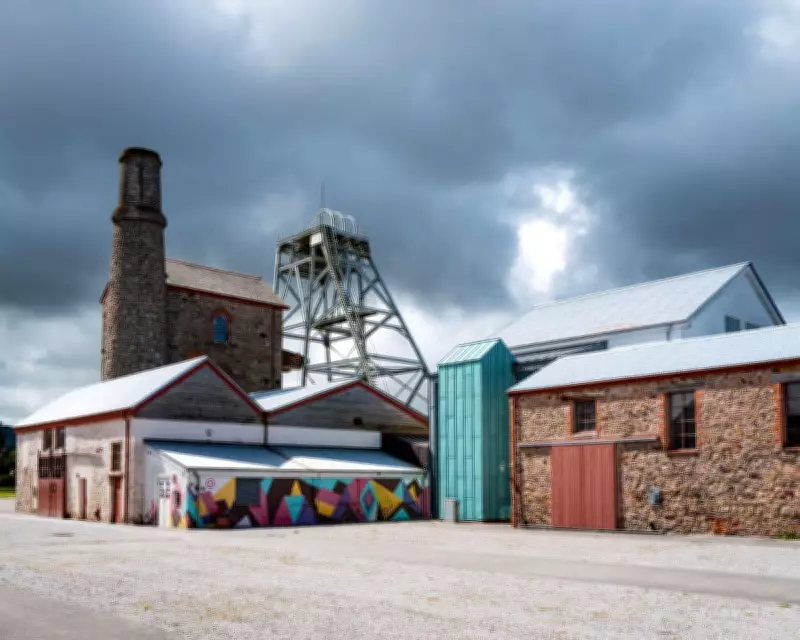
The historic South Crofty tin mine, located near the Cornish village of Pool, has captured the attention of the Trump administration as part of a strategic push to secure supplies of critical minerals. The site, which ceased operations in 1998, could be revitalised through a potential $225 million (£166 million) investment from the United States, potentially creating around 300 local jobs.
Strategic Importance of Tin in Modern Technology
Tin has emerged as a crucial component in contemporary technology, essential for soldering in electronic devices, electric vehicles, and solar panels. Its role in connecting semiconductor chips to circuit boards has become increasingly vital amid the artificial intelligence boom and expanding datacentre infrastructure. The metal's market value has soared dramatically, climbing from approximately $16,000 per tonne in 2016 to over $50,000 at the beginning of this year.
Reducing Dependence on Problematic Supply Chains
Currently, about two-thirds of global tin production originates from China, Myanmar, and Indonesia, where concerns persist regarding fragile supply chains and ethical issues including child labour practices. The US interest in South Crofty represents a strategic move to diversify sources of this critical mineral and reduce reliance on these problematic supply routes.

Cornish Metals, the current owner of the South Crofty site, confirmed on Thursday that it had received a formal letter of funding interest from the United States Export-Import Bank, the official export credit agency of the US government. Any investment would be contingent upon the mine supplying tin directly to American industries.
Historic Mine with Modern Potential
The South Crofty mine boasts a rich history dating back to the 1600s, but has remained dormant since its closure over two decades ago. Despite numerous previous attempts to revive operations, this latest development represents the most substantial opportunity for reopening. Don Turvey, Chief Executive of Cornish Metals, described the US interest as "a testament to the quality and strategic importance of South Crofty and its potential to become the first new tin producer in the western world."
Market response was immediately positive, with shares in Cornish Metals surging nearly 7% following the announcement. This development builds upon previous support for the project, including a £28.6 million investment from the UK government in 2025 aimed at facilitating the mine's reopening. Chancellor Rachel Reeves previously estimated that a revived South Crofty could support up to 1,300 jobs across the wider Cornish region.
Broader Critical Minerals Diplomacy
The interest in South Crofty coincides with broader international efforts to secure critical mineral supplies. A US-led summit involving 50 countries recently produced multiple agreements designed to diminish China's dominance over more than 25 essential elements, both in raw and processed forms. The European Union and United States announced intentions to strengthen collaboration through a memorandum of understanding within the next month, while also working with Japan to develop additional supply chains following a separate US-Japan agreement signed in October.
During the summit, the US State Department confirmed it had signed 11 bilateral deals concerning critical minerals. Patrick Schröder, a senior research fellow at Chatham House's Environment and Society Centre, observed that speeches by Secretary of State Marco Rubio and Vice President JD Vance clearly indicated America's primary motivation: securing mineral supplies to fuel AI development. Schröder noted, "Although they didn't say it explicitly, it is still America first. It was framed as 'America needs your help.' There was no mention of renewables."
The potential revival of South Crofty represents more than just an economic opportunity for Cornwall; it signifies a strategic realignment in global supply chains for essential technological components, with historic mining regions potentially playing crucial roles in powering future technological advancement.






