

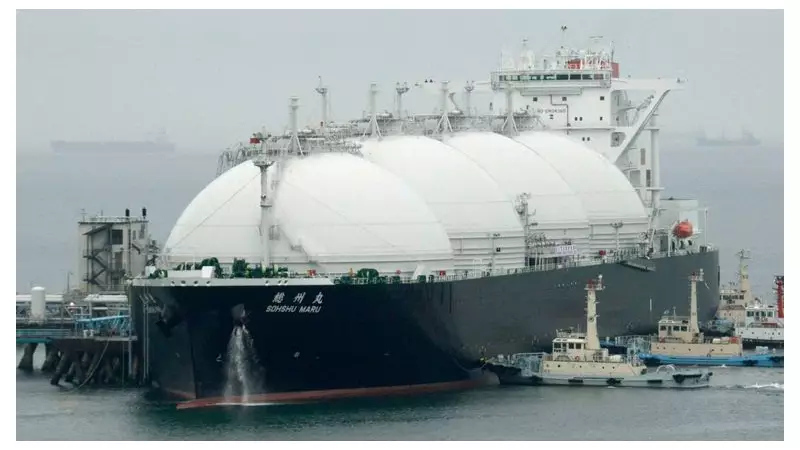
Household and business energy bills across the United Kingdom are facing renewed upward pressure as wholesale natural gas costs surge dramatically, according to market analysts and industry experts. The significant price increases stem from a complex interplay of weather-related disruptions and structural market factors, with severe winter storms in the United States creating substantial knock-on effects for European energy markets.
Weather Disruption Creates Market Complications
The extensive big freeze currently affecting thirty-seven American states has created substantial complications for global energy markets. With approximately half of the US population experiencing temperatures plunging below minus twenty degrees Celsius alongside heavy snowfall, liquefied natural gas production has been significantly disrupted. Frozen equipment has delayed extraction processes, while substantial quantities of LNG supplies are being diverted to meet soaring domestic demand for heating and power generation across storm-affected regions.
This weather-related disruption is predicted to persist well into the coming week, exacerbating existing pressures on European energy supplies during the peak winter period. The timing proves particularly challenging as Europe has already experienced declining LNG deliveries in recent weeks, placing additional strain on already diminished storage levels across the continent.

Storage Levels and Price Impacts
Current data from Gas Infrastructure Europe reveals that European Union gas storage facilities are operating at just forty-five point six percent of total capacity. This represents a concerning fifteen percentage points below the five-year average for this period, highlighting the precarious supply situation facing the region. The combination of reduced LNG deliveries and diminished storage reserves has forced pipeline costs substantially higher throughout European markets.
In the United Kingdom specifically, day-ahead wholesale gas costs have surged to an eleven-month high, reflecting the immediate market response to these supply constraints. February delivery contracts experienced particularly dramatic increases, rising more than forty-five percent month-to-date at one stage during Monday's trading session. Both day-ahead and month-ahead contracts continued their upward trajectory as market participants reacted to the unfolding supply situation.
Expert Analysis and Market Outlook
Tom Marzec-Manser, Director of Europe Gas and LNG at industry data specialists Wood Mackenzie, provided detailed analysis of the current market dynamics. He confirmed that concerns have been mounting regarding European storage levels potentially reaching particularly low points by the end of March. However, he emphasised that there remains no immediate risk of actual gas shortages across the continent.
"To be absolutely clear, though, there is no risk of a gas shortage," Marzec-Manser stated. "But higher prices are needed to attract LNG tankers that could otherwise sail to Asian markets."
The industry expert pointed to the US weather disruption as a complicating factor for European price pressures, though he characterised this impact as predominantly short-term in nature. Looking beyond the immediate disruption, Marzec-Manser offered a more optimistic longer-term perspective, noting that the United States will produce more LNG this year than ever before in its history.
"We at Wood Mackenzie also forecast that the UK and Europe will in 2026 collectively import more LNG than ever before too," he added. "Globally, LNG supply is only growing, which is aiding Europe's move away from Russian gas and fuelling the transition in Asia. It will also mean wholesale prices in the UK and Europe will on average be noticeably lower by the end of the decade."
Implications for UK Consumers
The prospect of continued disruption to LNG shipments risks exacerbating upward price pressure on pipeline supplies throughout Europe. This concern is amplified by weather forecasts predicting colder temperatures across much of northern Europe in the coming weeks, which would naturally increase heating demand and place further strain on energy systems.

For UK households, the immediate concern focuses on the energy price cap administered by Ofgem, the national energy regulator. The watchdog will determine the next three-month price cap for implementation at the beginning of April, with the announcement scheduled for four weeks' time. Any upward contribution from current wholesale energy price spikes should be partially offset by the government's decision to remove approximately one hundred and fifty pounds of policy costs from consumer bills.
Matt Turner-Tait, senior manager at energy consultancy BFY Group, provided specific analysis regarding consumer impacts. "The impact further out the curve is much more muted, with second and third quarter prices up closer to fifteen percent, which tells us this is a short-term squeeze rather than a shift in longer-term fundamentals," he explained.
Regarding the immediate price cap implications, Turner-Tait added: "For consumers, the effect on the April 2026 price cap is thankfully limited, as most of the observation window has already passed, adding only around twenty pounds to our forecast so far. If prices stay elevated, there is greater risk to later cap periods, but that remains highly uncertain at this stage."
The current market situation highlights the interconnected nature of global energy markets, where weather events in one continent can create significant ripple effects thousands of miles away. While infrastructure costs associated with improved energy systems have recently been the primary driver of price cap increases, wholesale market volatility now presents an additional challenge for regulators and consumers alike as winter continues across the Northern Hemisphere.





