

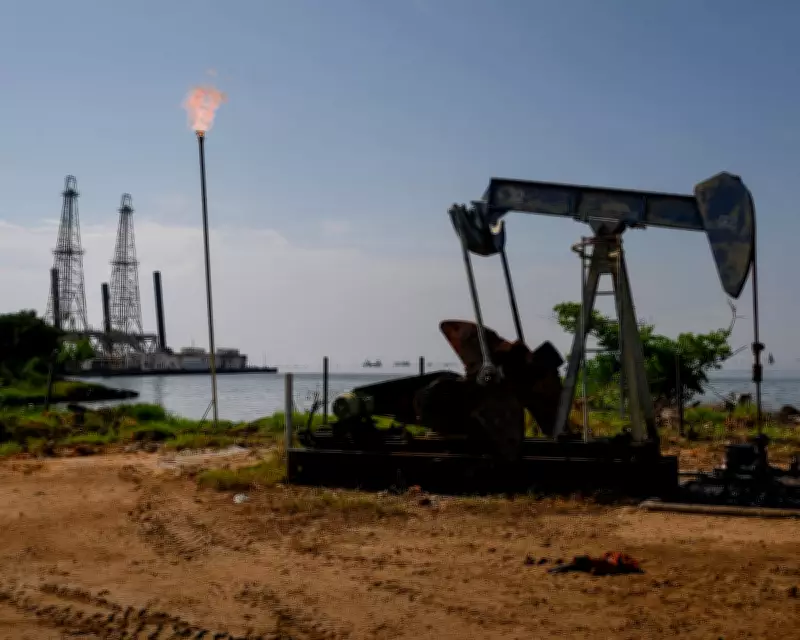
Venezuela Approves Bill to Open Oil Sector to Foreign Investment After US Pressure
Venezuela's congress has passed a significant bill aimed at reforming the country's oil sector, a move driven by pressure from the United States to encourage foreign private investment. The new hydrocarbons law promises to grant private companies greater control over oil production and sales, reduce taxes, and allow for independent arbitration in disputes, while still maintaining overall state control over the industry.
Key Provisions and Expert Caution
Under the new law, private companies, even as minority partners in joint ventures with the state-owned Petróleos de Venezuela SA (PDVSA), can now exercise direct technical and operational management. This marks a departure from previous rules that mandated state oversight of operational decisions. Additionally, the law includes provisions for potentially lowering royalty payments to the regime from 30% to as low as 15%.
However, analysts remain cautious about the law's practical implementation. David Vera, an associate dean at the Craig School of Business, noted that while the law is a positive step, it falls short of what US oil companies need to commit capital at scale. He highlighted ongoing issues with executive discretion and legal uncertainty.

Political Context and US Involvement
The approval follows a phone call between acting president Delcy Rodríguez and former US President Donald Trump, who announced plans to open up commercial airspace over Venezuela. Trump also revealed that major US oil companies are already conducting site assessments in the country, aiming to bring wealth to both nations.
The Trump administration has eased some sanctions on Venezuela's oil industry, issuing a general licence for transactions involving the regime and PDVSA. This move is part of broader US efforts to control Venezuela's oil exports and revenues, intended to ensure the regime aligns with US foreign policy objectives.
Historical Background and Current Challenges
Venezuela holds the world's largest proven oil reserves but currently accounts for less than 1% of global production. Once a leading exporter after nationalisation in the 1970s, production has collapsed due to mismanagement, corruption, and US sanctions, dropping from 3.4 million barrels a day to about 1 million.
José Ignacio Hernández, a legal scholar, pointed out that the new law improves contractual stability for private investment but fails to address all causes of the oil sector's collapse. He also criticised the lack of meaningful public consultation during the fast-tracked approval process.
Future Prospects and Democratic Concerns
Experts like Gonzalo Escribano from the Elcano Royal Institute argue that Venezuela's oil market will only become truly attractive to foreign investors after a democratic transition, which the US has not yet scheduled. Hernández echoed this sentiment, expressing fear that the law may be short-lived without broader political reforms.
Delcy Rodríguez and her brother, congressional leader Jorge Rodríguez, have celebrated the law's approval, framing it as a step toward prosperity for Venezuela. However, the international community remains skeptical about its long-term effectiveness and legitimacy.






