

In a significant economic shift, Venezuela has approved legislation to open its oil sector to private companies, marking the end of the long-standing monopoly held by state-owned Petroleos de Venezuela SA (PDVSA). This move comes as the United States eases sanctions on Venezuela's oil industry, signalling a potential thaw in bilateral relations and a push for increased foreign investment.
Legislative Overhaul and Presidential Approval
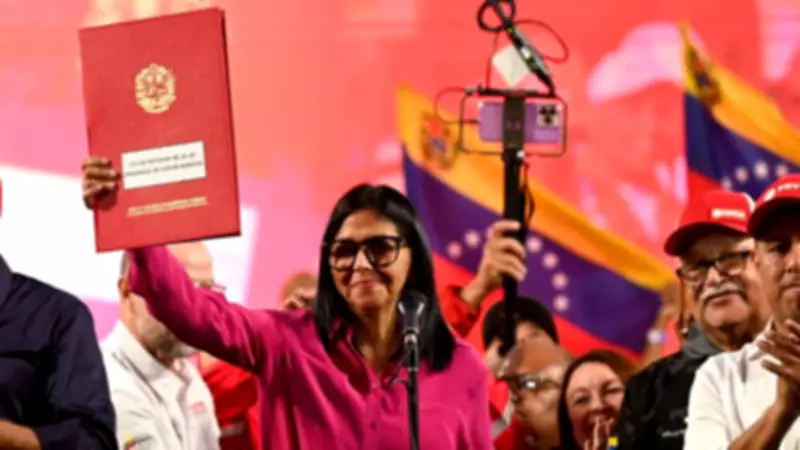
The bill was passed by Venezuela's National Assembly on Thursday and swiftly signed into law by interim president Delcy Rodriguez. The legislation aims to attract foreign capital by allowing private firms to take control over the production, sale, and management of oil resources. Under the new law, companies must demonstrate financial and technical capacity through a business plan approved by Venezuela's oil ministry to assume full operational responsibilities at their own expense and risk.
Key Provisions of the New Law
The reforms introduce several critical changes designed to safeguard investor interests and stimulate the oil sector. One notable provision allows for disputes to be settled independently, rather than through Venezuelan courts, which is viewed as a vital measure to prevent future expropriation. Additionally, the law modifies extraction taxes by setting a royalty cap rate of 30%, with the executive branch empowered to adjust percentages for individual projects based on factors such as capital investment needs and competitiveness.

US Sanctions Easing and Geopolitical Implications
The timing of Venezuela's legislative action aligns with the US decision to ease sanctions on the country's oil industry. A White House official indicated that more announcements regarding the relaxation of sanctions are expected to follow. This move authorises US firms to engage in activities such as buying, selling, transporting, storing, and refining Venezuelan crude oil, although existing sanctions on production remain in place.
The developments occur less than a month after a US military operation to seize former president Nicolas Maduro, highlighting the ongoing geopolitical tensions. The reforms are anticipated to encourage major US oil companies, which have previously hesitated due to past losses under Venezuela's state-centric policies, to reconsider investments in the region.
Historical Context and Future Prospects
Venezuela's oil sector has been heavily controlled by the state since the era of Hugo Chavez, who made it a cornerstone of his socialist-inspired revolution in the late 1990s. The new legislation represents a radical departure from this model, aiming to boost oil and gas production and attract foreign investment as part of a broader $100 billion reconstruction plan proposed by US President Donald Trump.
In a statement, Delcy Rodriguez emphasised the long-term vision of the reforms, stating, "We're talking about the future. We are talking about the country that we are going to give to our children." The proposal was expedited through the legislative process, being submitted, discussed, and approved in less than two weeks, with oil workers celebrating its passage in Caracas.
Economic Impact and International Reactions
The White House has previously expressed intentions to manage sales of Venezuela's oil indefinitely, with plans for US companies to return to the nation. President Trump noted on social media that oil worth over $2 billion would be transported from storage to US docks, underscoring the economic stakes involved. Rodriguez's recent discussions with Trump and US Secretary of State Marco Rubio further indicate ongoing diplomatic engagements to facilitate this transition.
As Venezuela, home to the world's largest proven crude reserves, embarks on this new path, the reforms are expected to pave the way for increased production and investment, potentially reshaping the country's economic landscape and its role in the global oil market.






