

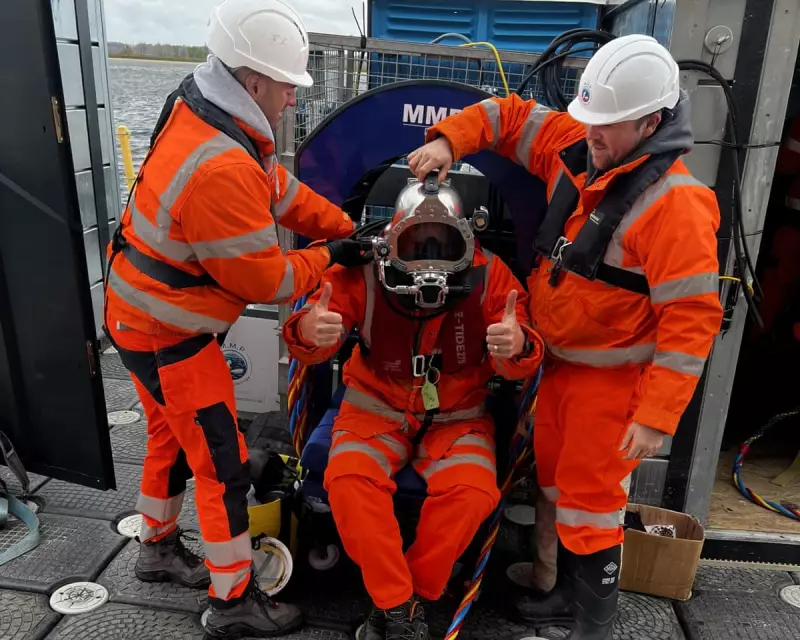
Specialist divers from contractor Glenfield Invicta recently undertook a complex and hazardous operation deep beneath the surface of the Queen Mother reservoir near Heathrow airport. When a critical sluice gate failed twenty-four metres below the waterline at this Thames Water facility, conventional repairs were impossible. With emptying the vast reservoir holding thirty-seven million cubic metres of water not being a viable option, the solution required helmeted divers to work in limited ninety-eight minute stints within the high-pressure environment.
Historic Spending Programme Underway
This challenging project, which involved using thermal lances to cut out broken equipment from a floating platform before bolting new components to the reservoir wall, took over a year to complete. It represents precisely the kind of complex infrastructure work that water companies across Britain are preparing to undertake on an unprecedented scale. The industry is now embarking on the most substantial spending programme in its history, with plans to invest £104 billion between 2025 and 2030, more than doubling the expenditure of the previous five-year period.
This massive investment drive follows decades of acknowledged underinvestment within England and Wales's privatised water system. The necessary funding has been secured through controversial bill increases approved by regulator Ofwat in December 2024, permitting suppliers to raise charges by an average of thirty-six percent over the five-year period. These increases have generated significant political controversy amid widespread public anger regarding sewage spills into rivers and coastal waters.

Regulatory Overhaul and Delivery Challenges
The investment programme coincides with Labour government plans to completely overhaul water regulation. The proposed changes would replace Ofwat with a new regulatory system that assesses each company individually rather than setting industry-wide targets. However, this regulatory transition will take time to implement, meaning water companies must proceed with their upgrade programmes under the existing framework while preparing for future changes.
Industry representatives acknowledge the scale of the challenge ahead. Stuart Colville, deputy chief executive of Water UK, the industry lobby group, stated that suppliers have demonstrated a "steep increase in ambition" with plans to increase capacity at 1,700 wastewater treatment works and upgrade 3,000 storm overflows. He argued that the bill increases were necessary to compensate for historical underinvestment, suggesting that bills should have been approximately twenty-five percent higher if they had kept pace with inflation since 2010.
Capacity Constraints and Inflation Concerns
Despite securing the necessary funding, serious questions remain about the industry's capacity to deliver such an extensive programme. Water companies are not alone in seeking construction resources, with the Labour government pursuing numerous major infrastructure projects including 1.5 million homes annually, substantial energy grid upgrades, nuclear power developments, and transport improvements.
Professor Dieter Helm of Oxford University, who has advised both Labour and Conservative governments on infrastructure matters, highlighted significant capacity constraints. "What is the capacity to build all this? Very little," he stated, pointing to "a scarcity of contractor supply, a scarcity of materials." He noted that infrastructure projects globally typically overrun by thirty percent on both time and cost, raising concerns about whether the water industry's ambitious programme can be delivered within budget and schedule.
Engineering firms including Galliford Try, Kier, and Morgan Sindall are positioned to benefit from the increased spending. Alex Vaughan, chief executive of Costain, which is working on projects for at least six English water companies, noted that longer-term strategies and "extended delivery frameworks" were helping contractors recruit staff by offering greater job security.

Financial Distractions and Operational Pressures
Beyond capacity constraints, several water companies face significant financial distractions that could impede their ability to focus on infrastructure delivery. Thames Water remains embroiled in complex negotiations to restructure its substantial debts and avoid temporary nationalisation. Meanwhile, Ofwat has identified South East Water and Southern Water as requiring active monitoring for financial difficulties, with six additional companies on an "elevated concern" list.
Martin Young of consultancy Aquaicity observed that better-managed companies with stronger financial positions appeared to have progressed more quickly with their investment plans. "The listed companies on balance are performing better than the unlisted companies," he noted, suggesting that more financially stretched operators would find the delivery challenge particularly demanding.
Accountability and Public Trust
The substantial bill increases have intensified scrutiny of water companies' performance and accountability. Environmental campaign group River Action has initiated legal action against Ofwat, arguing that households are effectively paying twice for investments that should have been funded from previous bills. James Wallace, the organisation's chief executive, expressed scepticism about the industry's ability to deliver, predicting "disappointment and more criminal pollution by water companies."
Water UK's Colville emphasised that companies face "really strong financial penalties if they fail to deliver," acknowledging that successful implementation is "absolutely essential for restoring trust and justifying the increases in bills." However, with the industry attempting to address decades of underinvestment while navigating regulatory changes, capacity constraints, and financial pressures, the path to delivering this historic infrastructure programme remains fraught with challenges that will test water companies' capabilities to their limits.





