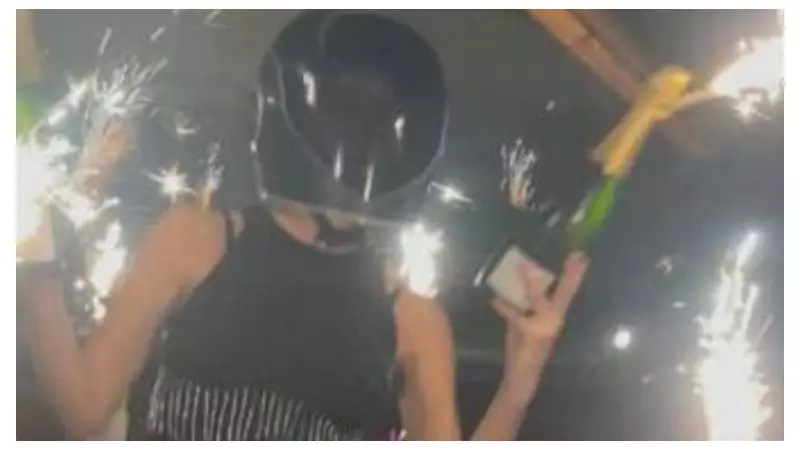
A devastating fire that ripped through a Swiss Alpine bar in the early hours of New Year's Day has claimed at least 40 lives and left 119 people injured, many with life-threatening burns. The blaze at Le Constellation in the upmarket resort of Crans-Montana represents one of Switzerland's worst peacetime tragedies.
How the New Year's Celebration Turned to Tragedy
The incident occurred at approximately 1:30 am local time on Thursday, 1 January 2026, as revellers celebrated the start of the new year. Witnesses reported seeing smoke, with the first police officers arriving on the scene by 1:32 am after an emergency call.
The fire spread with terrifying speed, causing panic as guests tried to flee. Survivors described scenes of chaos, with people screaming, climbing over one another, and smashing windows in a desperate bid to escape. Victims emerged with their hair and clothes burned off, in what bystanders likened to a horror film.

Swiss President Guy Parmelin called the disaster "one of the worst tragedies our country has ever experienced", noting the cruel contrast of an event dedicated to life and joy ending in such devastation.
Cause of the Fire: Sparklers and Flammable Material
On Friday 2 January, Valais attorney general Beatrice Pilloud provided a preliminary cause for the catastrophe. The fire "would appear" to have started from "sparkler candles, otherwise known as flares, which were placed on top of champagne bottles".
These flares were taken too close to the ceiling, triggering a flashover incident where the fire spread almost instantaneously. A key factor in the rapid spread was a polyurethane foam used for soundproofing on the ceiling.
Retired London Fire Brigade Commander Steve Dudeney, now a fire safety consultant, explained the danger of this material to Sky News: "What you've got there is polyurethane foam, a sound-deadening material... it's not at all fire-resistant. In fact, it's an organic hydrocarbon, so it's very flammable. Once it's on fire it will disintegrate, drop, you'll have flaming droplets come off of it and it will spread a fire rapidly."
Officials have cautioned against speculation while the investigation continues to determine if the foam was compliant with safety regulations and whether it was the primary cause of the fire's intensity.
Victims and the International Response
The severity of the burns has made identifying victims extremely difficult, with officials resorting to dental and DNA records. The first victim named was 16-year-old Italian Emanuele Galeppini.
Of the 119 injured, 113 have been identified. The nationalities of those injured include:
- 71 Swiss
- 14 French
- 11 Italian
- 4 Serbian
- 1 Bosnian, 1 Belgian, and 1 Portuguese
Swiss police are cooperating with authorities from France, Belgium, Poland, Portugal, Congo, Serbia, Turkey, Romania, and the Philippines. The UK embassy in Switzerland stated it had "not been approached for assistance" but was monitoring the situation. Among the missing is Charlotte Niddam, a former pupil of Immanuel College in Hertfordshire.
The emergency response was massive, involving 13 helicopters, 42 ambulances, 150 paramedics, and 70 firefighters. Leon Christe, a local worker who was among the first on the scene, described administering first aid in "very chaotic and very sad" conditions, with traumatised young people everywhere needing help.
The resort of Crans-Montana, located in the Valais region approximately 40km north of the Matterhorn, is a popular destination for British and European tourists. The community and the nation are now left to mourn one of the deadliest fires in Switzerland's recent history.