Dubai Hotels Ordered to Shelter Stranded British Tourists as Evacuation Plans Loom
British tourists stranded in Dubai have received a critical update regarding their evacuation, with local authorities issuing a directive that hotels must not evict guests under any circumstances. This move comes as flights across the region face widespread cancellations due to escalating tensions between the US and Iran, leaving thousands of travelers stuck in the United Arab Emirates.
Hotel Directive Ensures Safety and Support for Stranded Visitors
Dubai's Department of Economy and Tourism has sent an email to hotel operators throughout the city, instructing them to provide all necessary support to tourists affected by the travel disruptions. The directive, obtained by the Khaleej Times, explicitly states that hotels must offer guests the option to extend their stays under the same conditions as their original bookings. No guests are to be evicted due to these circumstances, ensuring a safe haven for those unable to depart.
In cases where guests cannot afford the cost of an extended stay, hotels are instructed not to turn them out onto the streets. Instead, they must notify the DET immediately, as reported by the Express. The UAE General Civil Aviation Authority has confirmed that the government will cover all expenses for stranded tourists, including food and accommodation costs, during this crisis.

Widespread Flight Cancellations and Regional Tensions Intensify
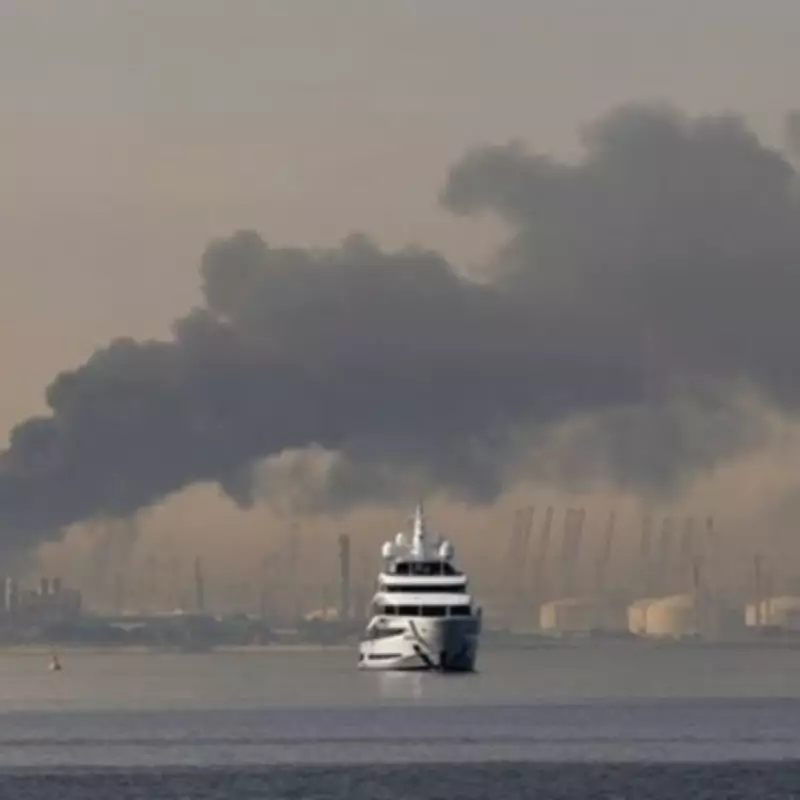
The announcement follows the closure of Dubai's airspace, which has led to thousands of British nationals being trapped in the emirate. Prime Minister Keir Starmer revealed that approximately 200,000 British citizens are believed to be in the Gulf region, with over 50,000 in the UAE alone, many of whom are tourists and holidaymakers. He urged all Britons in affected areas to register their whereabouts with the Foreign Office to receive guidance, noting that around 94,000 have already done so.
The UK Foreign Office is preparing contingency plans to evacuate tens of thousands of British nationals if conflicts in the Middle East intensify. Current travel guidance warns against all travel to Iran, Israel, and Palestine, and recommends against non-essential travel to the UAE, Qatar, Kuwait, and Bahrain. Additional warnings have been issued for certain regions of Pakistan, while British citizens in Saudi Arabia are urged to remain indoors, and those in Jordan, Oman, Syria, Lebanon, Yemen, and Iraq are advised to exercise extreme caution.
Broader Implications for Tourism and Regional Stability
This situation highlights the broader impact of regional tensions on global travel and tourism. In Abu Dhabi, the Department of Culture and Tourism has similarly instructed hotels to extend stays for guests unable to depart, with the department covering the bills for extra nights. The coordinated response across the UAE underscores the government's commitment to visitor safety amid the chaos.
As the crisis unfolds, the hospitality sector in Dubai is playing a crucial role in providing stability and support. The directive not only addresses immediate logistical challenges but also aims to maintain the emirate's reputation as a safe destination. With ongoing uncertainties in the Middle East, the fate of stranded tourists remains closely tied to diplomatic and military developments, making this a critical issue for international observers and travelers alike.