When Janet Newenham spotted an Instagram post advertising a trip to North Korea, she acted with immediate urgency. "I dropped everything and emailed the company saying where do I send my money," she recounts. "We had to make our own way there; they just said we'll meet you at this hotel in this random Chinese city. I had the flight booked before my place was even confirmed."
A Journey to the Hermit Kingdom
A holiday to a nation governed by a dynastic totalitarian dictatorship, seemingly devoid of cars, genuine restaurants, and conventional tourist attractions, appears a challenging proposition. Yet, for a select few like Janet—extreme travellers driven by an insatiable curiosity about the world and an ambition to visit all 195 officially recognised countries—it represented an irresistible opportunity. Currently, she has reached 140 countries.
The Bali-based Irish content creator was among the first international tourists to set foot on North Korean soil in over five years. The hermit state had sealed its borders at the onset of the Covid pandemic in January 2020, only reopening to Western travellers in February 2025. Janet arrived mere weeks later, as the sole woman in a tour group comprising approximately 25 men.

An Abrupt End to Access
On the final morning of their four-day visit, Pyongyang unexpectedly announced the suspension of tourist entries indefinitely. No official reason was provided, and the borders have remained firmly closed since. This sudden closure left Janet's group among the last Western tourists to experience the country under its current restrictive regime.
The Reality Behind the Curtain
So, what truly unfolds behind the curtain of this notoriously reclusive country? "Not a whole lot," Janet admits with a laugh. "The thing is there's not really anything to do in North Korea; it's all about being there," she explains.
Their itinerary, meticulously organised by Young Pioneer Tours—a budget travel company that specialises in destinations like North Korea, which it describes as places "your mother would rather you stay away from"—included a series of peculiar highlights:
- A bank visit: "We got to open an account so I now have the equivalent of a North Korean MasterCard, which is hilarious."
- A brewery tour: "They have their own local beer."
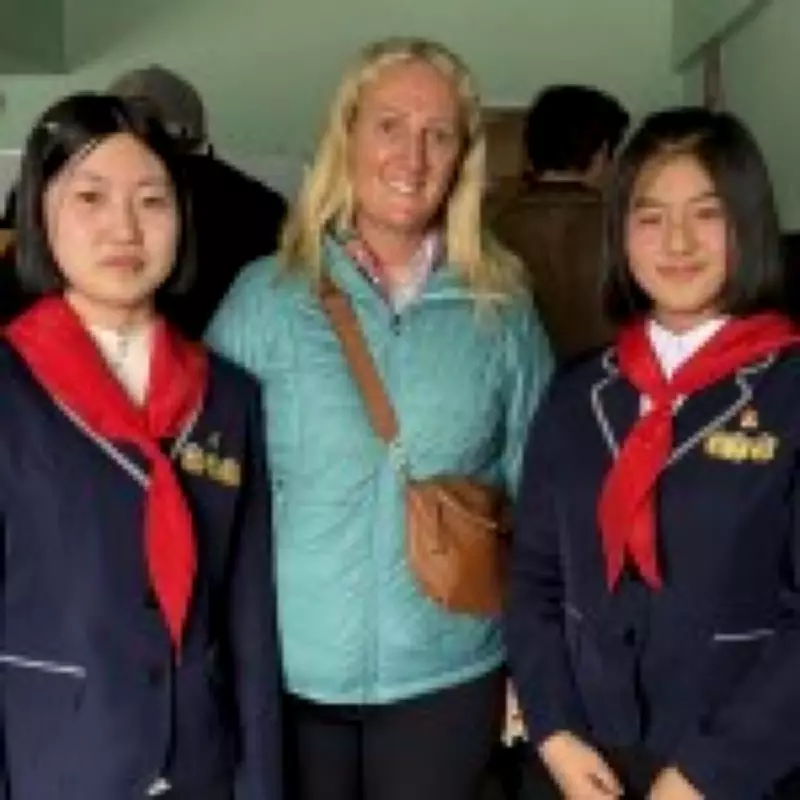
- Five school visits: This provided the only semblance of genuine interaction with local people. "The kids know more about the world than you might think. When I said I was from Ireland, they asked if I was from the north or south."
The group was also escorted to several "restaurants that were not restaurants"—hotel conference rooms hastily converted into dining spaces exclusively for the tourists. "In a way, it's very much what you imagine it to be, and in a way it's not," Janet reflects. "Life is still going on. No one has a car except for government officials; it doesn't feel like anyone has any money, and the way people dress is very old-fashioned."
Strict Dress Codes and Legal Enforcement
The conservative, all-black attire and antiquated footwear observed by Janet are not merely cultural preferences but legally enforced norms. North Korea's supreme leader, Kim Jong-Un, explicitly banned skinny jeans in May 2021, denouncing them—along with mullet hairstyles and certain body piercings—as symbols of a "capitalistic lifestyle." The prohibition on jeans is rigorously upheld, leaving no room for sartorial deviation.
State-Controlled Entertainment and Information
Entertainment venues and publicly accessible internet are conspicuously absent. Instead, residents and visitors alike rely on a state-controlled intranet, which offers messaging services and government-sanctioned news. The North Korean equivalent to Spotify, known as Juchify, features a surprisingly international playlist. "It's got a lot of Mamma Mia and Celine Dion," Janet reveals, painting an unexpected picture of the supreme leader potentially enjoying global pop anthems.
Despite its isolation, North Korea is not entirely disconnected from global events. Janet's local guide, for instance, was aware of former US President Donald Trump's interest in purchasing Greenland, and others she conversed with demonstrated knowledge of the ongoing situation in Gaza.

Religious Prohibitions and Mandated Devotion
Religion is strictly forbidden, with bibles, Qurans, and any religious memorabilia prohibited. Janet notes that one member of her group had a Quran confiscated at the border. Conversely, unwavering devotion to the "king" and country is compulsory. "You'd ask what their favourite song is, and our tour guide would say 'the national anthem of North Korea'. Ask what their favourite book is, and they'd genuinely say the constitution," Janet recalls, highlighting the pervasive state ideology.
Reflections on an Unconventional Adventure
Janet's passion for travel has evolved into a business venture; she is the founder of Janet's Journeys, an adventure travel company that leads small groups on immersive cultural trips. Would she consider organising a tour to North Korea if it reopens? "It's definitely not for everyone," she cautions. "It's for people who are inquisitive about the world and locked-off places."
"I couldn't say I really enjoyed it," she admits candidly. "Some places were weird, and to be honest, the only reason it wasn't boring was because of where it was. You're there as a group, dissecting everything at night together—'was that real', 'was that all for show'. Everything feels special because you're like, woah, I'm in North Korea."
The UK Foreign Office strongly advises against all but essential travel to North Korea. The few British nationals who visit typically do so as part of an organised tour, which remains the sole method to obtain a visa should the borders ever reopen to tourists. Notably, many embassies, including the British Embassy in Pyongyang, continue to operate with limited capacity or remain closed.