The Rise of Single-File Queueing in British Pubs
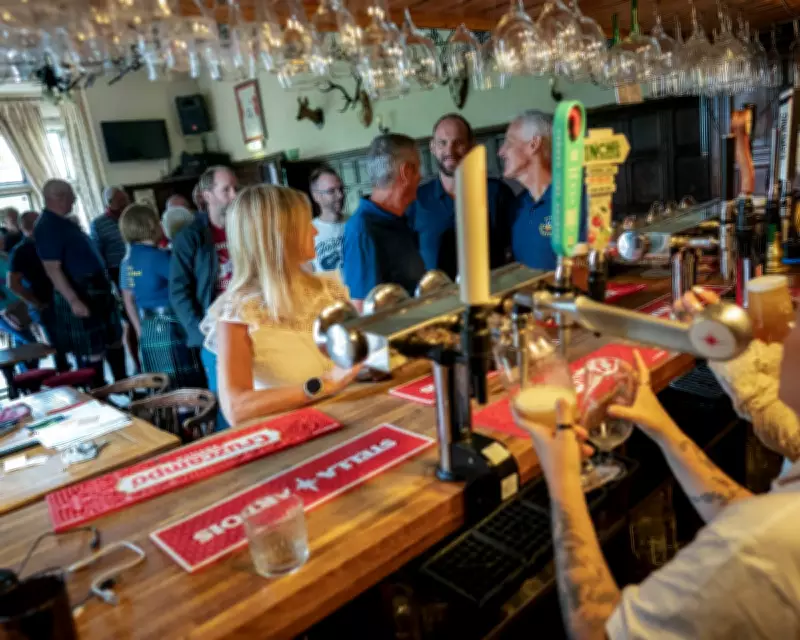
Publicans across the United Kingdom are expressing bewilderment at a growing phenomenon that's fundamentally altering the traditional pub experience. The age-old system of lateral crowding at bars, where patrons gather and bartenders serve at their leisure, is being systematically replaced by orderly single-file queues reminiscent of airport security lines.
Publican Frustration and Business Impact
Paul Loebenberg, managing director of Wolfpack Brewing Company which operates a taproom in north-west London, voiced his exasperation at the trend. "I'm not sure what else we can do to be honest," he said, observing customers lined up at his establishment. "Maybe there's something I've missed, but we've tried everything."
Loebenberg described how staff have been trained to actively intervene, walking from behind the taps to free customers from queues and direct them toward the bar. "It's like the one person did it once and since then everyone has followed like lemmings, they all just copy each other's behaviour," he remarked, noting the practice is negatively affecting both business operations and customer experience.

The Pandemic Connection
Jess Riley, manager at Wylam Brewery's large bar and events space in Newcastle, identifies a clear timeline for this behavioural shift. "I think it was the pandemic," Riley stated. "It wasn't a thing before 2020, and then all of a sudden people really started to like a single-file line after Covid. I know we're British and we like a queue, but it's ridiculous."
Despite Wylam Brewery featuring multiple bars with the largest measuring over 20 feet (6 metres) in length, customers persist in forming orderly queues that sometimes "snake around the building" rather than utilizing available space. Riley has engaged in arguments with queuing customers who complain about fairness when she serves those who approach the bar directly.
Psychological Perspectives on New Social Norms
According to Professor John Drury, a psychology expert at the University of Sussex who specialises in crowd behaviour, people's attitudes toward public activities have undergone significant transformation since the pandemic. "For people who work in these industries, when we've spoken to them, a lot say that behaviour has gotten worse post-pandemic," Drury explained.
The professor, who consulted on planning the queue to pay respects to Queen Elizabeth II in 2022, believes this represents a "new norm" that has become socially embedded. "A norm means not only something that people generally do, it also means something that people in your group think is the right thing to do, so if you resist it, you are going to be regarded as a deviant, a troublemaker, a pain," he elaborated.
Drury suggests that despite queueing often being illogical in pub settings - with data showing it rarely reduces waiting times - people may prefer it for perceived fairness, "knowing they're waiting just as long as the person in front of them."
Cultural Implications for British Hospitality
This behavioural shift represents more than mere inconvenience for publicans. The traditional British pub has operated for centuries on an unspoken understanding: patrons approach the bar, and bartenders serve according to their own rhythm and awareness. This lateral system allowed for:
- More efficient use of bar space
- Flexibility in serving order based on bartender awareness
- A social atmosphere where patrons interact while waiting
- Reduced physical crowding through dispersion
The single-file queueing phenomenon, while orderly, creates bottlenecks, reduces bar capacity, and fundamentally alters the social dynamics that have characterised British pub culture for generations. As Professor Drury notes, these new norms have become normalised to the extent that many patrons don't even realise their behaviour has changed.

Publicans now face the challenge of either adapting to this new reality or finding innovative ways to re-educate patrons about traditional pub etiquette. With behavioural patterns established during the pandemic proving remarkably persistent, the future of British pub service hangs in the balance between tradition and evolving social norms.