Wednesday 28 January 2026 11:56 am
A Modern Safari Experience with Sri Lanka's Leopards and Elephants
By: Sophie Ibbotson
Has wildlife tourism in Sri Lanka truly transformed its practices? For any wild creature—be it a leopard, tiger, or elephant—few scenarios could be more alarming or disruptive than encountering a convoy of jeeps relentlessly invading their territory. These vehicles often edge closer and closer as animals go about their daily routines of grazing, bathing, or nurturing their young. Recent distressing accounts of tourists obstructing the Great Migration for the perfect photograph serve as a stark reminder: as humans, we are mere visitors in these wild spaces, not their rulers.

During my journey to Sri Lanka, I was determined to witness the island's native wildlife, but not at any ethical cost. To ensure a responsible approach, I enlisted the expertise of sustainable travel specialists, Travel the Unknown, to craft an itinerary that allowed me to tread lightly across diverse ecosystems. The goal was to appreciate the stunning landscapes and, with a bit of luck, catch glimpses of the birds and animals that call these places home.
Wilpattu National Park: A Sanctuary for the 'Big Three'
Wilpattu, meaning 'Land of the Lakes', stands as one of Sri Lanka's oldest and most expansive national parks. This lush environment, dotted with over 100 lakes—some seasonal—creates a paradise for the Sri Lankan 'Big Three': leopards, elephants, and sloth bears. Over two consecutive days, I ventured into the park with expert naturalists: Nadun from Mahoora by Eco Team and Manusha from Thamaravila. Their sharp eyesight, patience, and deep knowledge, which they eagerly shared, enriched the experience immensely.
Wilpattu has 200 registered jeeps, fewer than half the number found at the more famous Yala National Park, with only about 60-70 operating in the park on any given day. For safety, visitors are restricted to driving; walking or horse riding is not permitted. Remarkably, just 10 per cent of the park is accessible by road, leaving the vast majority of the territory untouched and allowing wildlife to roam freely without disturbance.
The park management prioritises conservation over tourism, a strategy that surprisingly enhances wildlife viewing. The animals encountered are genuinely wild and unharassed, with minimal vehicle interference. On our second outing, we spotted a leopard, lazily yawning and grooming itself. With no natural predators here, leopards can be found both on the ground and in trees. Through the foliage, I caught a faint view, but with Manusha's binoculars, I gained a much closer, intimate perspective.
Encounters with Sloth Bears and Diverse Wildlife
The sloth bear, a species more bear than sloth, made no attempt to hide. Taking advantage of a break in the rain, it ambled out of the undergrowth and strolled beside the road, pausing occasionally to sniff before continuing its journey. These bears consume large quantities of termites and ants, but they also share a fondness for mangoes—a trait I can relate to. We observed it for about five minutes, with no other jeeps in sight.
On another drive, a mongoose darted across the road, while Asian green bee-eaters and Sri Lankan jungle fowl added vibrant colour to the grey monsoon days. Larger birds, such as painted cranes, grey-headed fish eagles, and Malabar pied hornbills, feasted on the abundant fish and fruits, showcasing the park's rich biodiversity.
The Shift in Elephant Tourism and Conservation Efforts
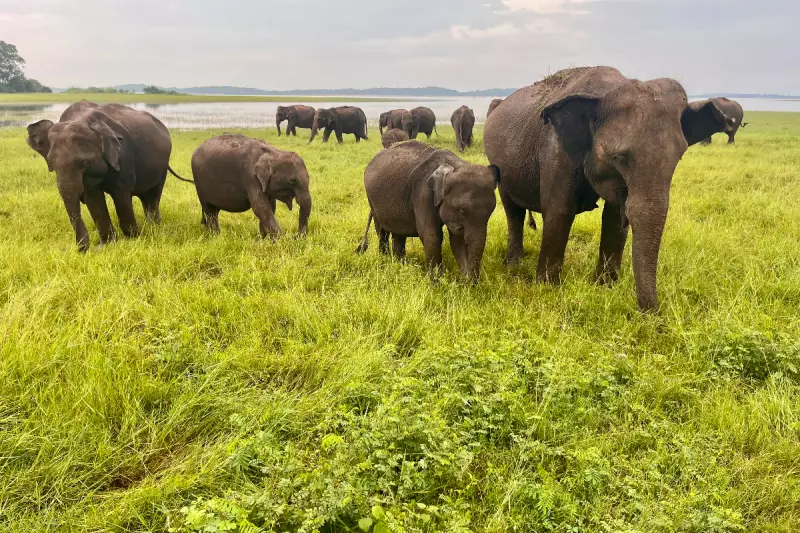
Reflecting on my visit to Sri Lanka 25 years ago, elephant tourism primarily involved the Pinnewala Elephant Orphanage and the caparisoned elephants of the Kandy Perehera procession. Thankfully, the market has evolved, with more tour operators and tourists recognising that the best place to observe elephants is in the wild. Sri Lanka's wild elephant population now stands at around 7,500, marking a nearly four-fold recovery since the early 1990s.

The migratory elephant corridor through Minneriya and Kaudulla National Parks almost guarantees sightings. However, elephant-farmer conflicts have intensified due to habitat loss from development. Villagers face a lose-lose situation, as elephants, capable of eating half their bodyweight in one night, are drawn to ripe crops. Larger protected areas play a crucial role in diverting elephants from farms, but they must ensure year-round food and water supplies to keep these majestic animals content.
Minneriya excels in this regard, particularly during the dry season when elephants gather at the Minneriya Tank. This massive reservoir, built by King Mahasen in the 3rd century AD to irrigate the ancient Kingdom of Anuradhapura, now benefits elephants and other wildlife as a long-term sanctuary.
Horton Plains National Park: A Walking Wildlife Haven
For those preferring wildlife encounters on foot, Horton Plains National Park is an exceptional destination. It encompasses the headwaters of Sri Lanka's three main rivers and was named after Sir Robert Wilmot-Horton, a British Governor of Ceylon. Historically, the British used this plateau in the central highlands as a hunting ground, but the montane forests, grasslands, and their fauna have shown remarkable resilience.
Today, Horton Plains is a UNESCO World Heritage Site and an Important Bird Area, attracting visitors primarily for its breathtaking views. The park authorities have recently enhanced the nine-kilometre walking trail that connects the visitor centre with World's End—a cliff with an 870-metre sheer drop—and the stunning Baker's Falls. Named after big game hunter Sir Samuel Baker, who discovered the falls in 1845, perhaps it's time to consider renaming it to honour the park's resilient wildlife or its dedicated protectors.
Walking at a leisurely pace allows time to appreciate the intricate flora. Horton Plains hosts almost 750 plant species, with forest canopies reaching up to 20 metres. Half of the woody plant species are endemic to Sri Lanka, including 16 orchid varieties. This lush greenery supports a population of 1,500 to 2,000 sambar deer, along with Indian muntjacs and spotted chevrotains. Spotting these deer grazing peacefully, only to dart away when noticed, adds to the park's charm.
The ancient Persian and Arabic name for Sri Lanka, Serendib, inspired the English word 'serendipity'—a fortunate discovery by chance. While many foreign visitors are initially drawn to Sri Lanka for its cultural riches, stumbling upon the island's natural wonders, resilient flora, and fauna often becomes a serendipitous highlight of their journey.
Planning Your Ethical Wildlife Adventure
Travel the Unknown offers a 14-day Sri Lanka itinerary that includes nine national parks and protected areas, all providing opportunities for wildlife spotting. Prices start from £3,195 per person. This experience underscores the importance of sustainable tourism in preserving Sri Lanka's incredible biodiversity for future generations.