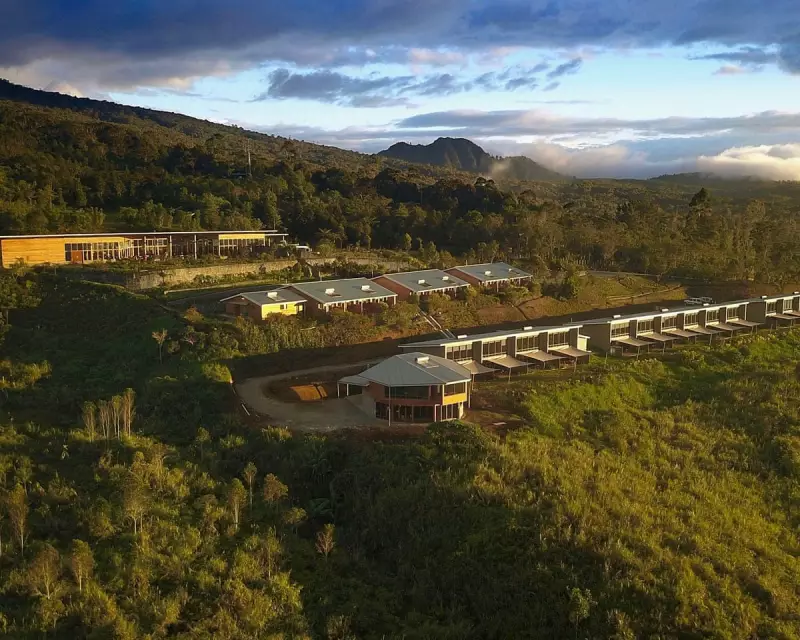
Nestled in the lush, mountainous terrain of Papua New Guinea's highlands, a quiet revolution is taking place. Against a backdrop of tribal conflict and a dangerous reputation, tourism operators are successfully carving out a path for visitors, offering breathtaking scenery, rich cultural experiences, and a significant economic boost for local communities.
A Safe Haven Amidst Tension
In Hela province, one of the nation's poorest and most troubled regions, the Ambua Lodge has welcomed tens of thousands of international guests over four decades. Run by Trans Niugini Tours, the lodge features thatched-roof rooms overlooking pristine valleys and is a base for witnessing the iconic Huli Wigmen and exceptional birdwatching.
Jayesh Naduvil from Trans Niugini Tours emphasises that safety for visitors is paramount. "None of our clients ever had any law and order issues," he states, explaining that all drivers and guides are from local communities, enabling them to navigate the area safely. This model of local employment is central to its success.

Prime Minister James Marape visited the lodge in December, highlighting its long record of "safe and successful investment" and encouraging others not to be deterred by the region's negative image.
Growth of a 'Sleeping Giant'
The industry is demonstrating robust growth. Data from the Pacific Tourism Organisation shows international visitor numbers to Papua New Guinea grew by 9.3% in the first half of 2025. The majority of travellers come from Australia (39%) and Asia (35%).
Tourism Minister Belden Namah has labelled the sector a "sleeping giant" with deep potential, describing it as an "unexplored pot of gold." He advocates for increased funding to overcome infrastructure challenges and fully realise this potential.
Trans Niugini also operates Rondon Ridge in the Western Highlands, a luxury hotel developed in partnership with the local Melpa tribe, who actively sought tourism development after seeing its benefits elsewhere.
Authentic Adventure on Mount Wilhelm
Roughly 250km east of Hela, in the shadow of the country's highest peak, Mount Wilhelm, lies Betty's Place. This family-run hotel in Chimbu province serves as a crucial base for climbers and those seeking authentic Melanesian culture.
Founded by Betty Higgins and her Australian husband Kenneth in the 1990s after they took in stranded climbers, the lodge has evolved from a simple homestead. Ruth Higgins, who now manages it, recalls the immense challenges: "There was no water supply, no electricity and no roads." Today, it runs on generators and satellite internet, providing a hub for adventure tourism.
"We promote authentic culture … the culture we still practice today," says Ruth, who is passionate about preserving the region's pristine environment and high-altitude biodiversity. American visitor Robert Mads Anderson called it a "magical place in the midst of a whole lot of wilderness."
Economic Benefits and Future Challenges
Both operations underscore tourism's vital role in providing local employment and income. At Betty's Place, residents earn good money as guides. However, Ruth Higgins highlights ongoing struggles with basic utilities and calls for more government support to "keep the lights on and the water flowing for visitors."
While tribal violence remains a serious issue in parts of the highlands, particularly with the proliferation of more sophisticated weapons, these tourism enterprises demonstrate that carefully managed sustainable tourism can thrive. They offer a compelling, safe, and economically positive narrative for a region often defined solely by its conflicts.