

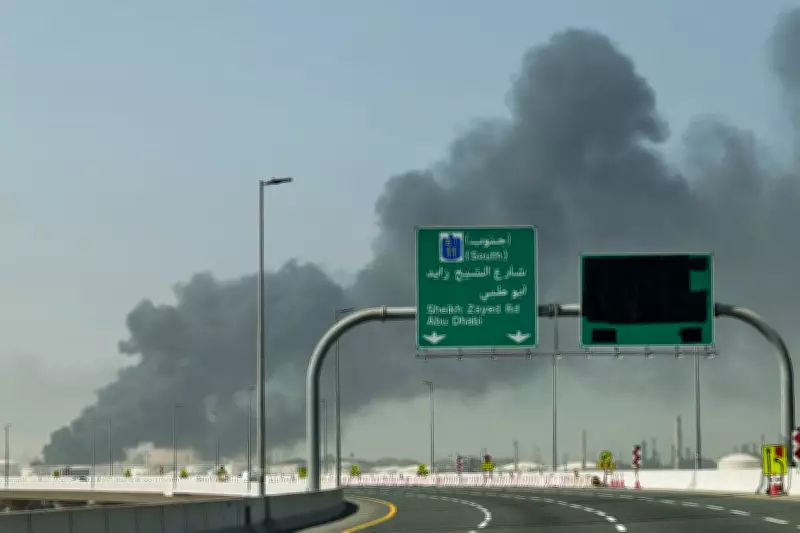
Global trade faces unprecedented disruption as more than half of the world's leading maritime insurance providers suspend war-risk coverage for ships entering the Persian Gulf following escalating military conflict in the region. This dramatic development comes after coordinated strikes by the United States and Israel against Iran triggered retaliatory attacks across the Gulf region.
Insurance Market Withdraws Critical Coverage
Seven prominent members of the London-based International Group of Protection and Indemnity Clubs will automatically terminate war-risk insurance for any vessels entering the Persian Gulf waters, according to Bloomberg reports. The affected insurers include Gard AS, NorthStandard, Steamship Mutual Underwriting Association, Assuranceforeningen Skuld, American Steamship Owners Mutual Protection and Indemnity Association, The Swedish Club, and the London P&I Club.
The London insurance marketplace dominates global war insurance, underwriting between 70 and 80 percent of the world's war-risk business. This sector operates uniquely, allowing insurers to intervene and modify coverage mid-policy when security conditions deteriorate rapidly.

Strategic Waterway at Risk
The Persian Gulf, also referred to as the Arabian Gulf, represents a critical artery for international commerce. This narrow body of water serves as the primary transit route for over 20 percent of global oil consumption and substantial liquefied natural gas shipments through the strategically vital Strait of Hormuz.
Energy markets have reacted sharply to the escalating tensions. Brent crude oil, the international benchmark, surged 13 percent to reach $82 per barrel, marking its highest price level since July 2024. This dramatic increase reflects mounting concerns about potential disruptions to the world's oil supply chains amid the ongoing military confrontation.
Shipping Operations Grind Toward Standstill
Since the surprise offensive against Tehran launched by former President Donald Trump and Israeli Prime Minister Benjamin Netanyahu in the early hours of Saturday, regional stability has deteriorated rapidly. Iran has responded with missile strikes targeting major urban centers in the United Arab Emirates, Qatar, Kuwait, and Israel itself.
Most regional airspace, including key travel hubs in Dubai and Doha, remains closed following the missile exchanges that illuminated night skies across the Gulf. Maritime operations have similarly been disrupted, with international shipping traffic nearly halted at the entrance to the Strait of Hormuz.
The UK Maritime Trade Operations Centre confirmed that two commercial vessels sustained damage from attacks, while a third ship reported an "unknown projectile" exploding in dangerously close proximity. These incidents have created a perilous environment for commercial shipping operations.
Insurance Premiums Set to Skyrocket
Dylan Mortimer, marine hull UK war leader at insurance brokerage Marsh, provided sobering analysis of the developing situation. "The primary risks center on the Persian and Arabian Gulf, particularly the threat of vessel boarding and seizure by Iranian forces and the potential closure of the Strait of Hormuz," Mortimer stated.
He continued, "It is very early to tell at this point, but we would estimate that near-term rate increases for marine hull insurance in the Gulf could range from 25 to 50 percent, barring any direct attack on merchant shipping, which could have major repercussions across war insurance rates."
Mortimer emphasized the human dimension of the crisis, noting, "Given the military build-up in the region, crew are far more likely to be concerned than they might have been to previous risks. The situation remains very fluid, requiring ongoing attention."
The withdrawal of war-risk insurance coverage represents a significant escalation in the economic consequences of the Gulf conflict, potentially disrupting global energy markets and supply chains for an extended period. Shipping companies now face difficult decisions about whether to risk uninsured transit through the region or reroute vessels at substantial additional cost and time.






