

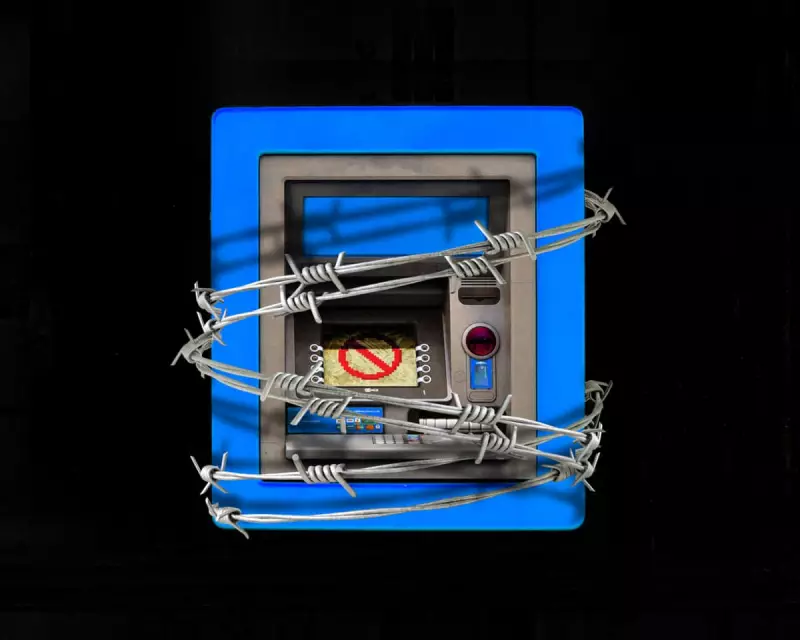
In the rolling hills of mid Wales, a heartwarming cultural project has inadvertently exposed a deep-seated injustice within the global financial system. Hamish Wilson's farm, Degmo, serves as a summer retreat where Somali communities reconnect with their heritage, but it has also become a case study in how post-9/11 banking reforms are systematically excluding innocent people from basic financial services.
The Farm That Revealed a Systemic Problem
Hamish Wilson inherited his father's passion for East Africa. Captain Eric Wilson had fought alongside Somali comrades during the Second World War, earning a Victoria Cross for his bravery. To honour this legacy and combat negative media portrayals of Somalia, Hamish sold the medal to purchase a Welsh farm where Somali families could celebrate their culture.
Every summer, British-Somali visitors camp in bell tents, participate in farm activities, and share traditional stories. While similar to other farm-stay operations across Britain, Degmo has encountered extraordinary banking difficulties that reveal a troubling pattern of financial exclusion.

When Everyday Banking Becomes a Nightmare
Wilson himself faces constant scrutiny from his bank. "They phone me up and ask questions about the source of every amount of money that went in or out," he explains. "Every time they ask the same questions, and it's always another half-hour of my time."
His guests face even greater challenges. One Birmingham community leader described how simple transactions - like collecting payments for a weekend retreat - triggered intensive bank investigations. "It almost made me feel like we were doing something wrong, almost like we were money laundering," she said with disbelief.
Her banking problems extended far beyond the farm visit. When she transferred money to her sister for family plane tickets, the bank froze the funds. A savings club with friends was shut down. Even writing payment references in Somali rather than English triggers transaction blocks.
The Post-9/11 Regulatory Framework
This systemic discrimination traces back to reforms rushed through after the September 11th attacks. The Financial Action Task Force (FATF), originally created to combat drug money laundering, expanded its mandate to include terrorist financing. Banks worldwide faced enormous pressure to identify and block suspicious transactions.
The fundamental problem, as lawyer Richard Gordon warned at the time, was that "banks have to figure out on their own what's terrorism finance. That's lunacy." Unlike money laundering where criminals try to clean dirty money, terrorists typically use small amounts of legitimate funds that only become criminal after atrocities are committed.
The Charitable Organisation Loophole
Desperate for guidance, compliance officers seized on FATF suggestions that terrorist fundraising might occur "in the name of organisations having the status of a charitable or relief organisation, and it may be targeted at a particular community." This created what campaigners describe as a "dog whistle" that has led to widespread debanking of Muslim-focused organisations.
In July 2014, HSBC wrote to multiple Muslim charities on the same day, informing them their accounts would be closed because they "fell outside our risk appetite." Similar actions followed at other banks, affecting organisations like the Finsbury Park Mosque, Islamic Relief Worldwide, and numerous Palestinian solidarity groups.
The Human Cost of Financial Exclusion
The consequences extend far beyond inconvenience. Charities lose regular donations when accounts close, as few donors bother to reset payment details. The stigma becomes contagious, making it nearly impossible to find alternative banking arrangements.
"Once you're flagged, it's very difficult to find another bank that will be willing to do business with you," explained one anonymous non-profit director. Mohamed Ibrahim of the London Somali Youth Forum asks pointedly: "Can we speak of racism here?"
While banks strenuously deny targeting Muslims specifically, the mechanism appears to rely on automated systems flagging "adverse news" associated with Muslim names or addresses. One researcher witnessed an organisation flagged simply because it shared an office building with a mosque, despite being completely unconnected.

A System That Fails Everyone
The post-9/11 financial architecture has failed to achieve its primary objectives. Terrorist groups have proliferated across multiple regions, while the banking system creates what Pamela Dearden of JPMorgan Chase describes as "a ping-pong match between financial inclusion and avoiding regulatory scrutiny, and we are the ball."
Between 2016 and 2022, account closures in the UK soared from 45,091 to 343,350 annually. Banks face an impossible choice: maintain accounts that require dozens of compliance officers to monitor, or shut them down to avoid potential billion-dollar fines.
The Privilege of Financial Access
The system's inherent unfairness becomes clearest when comparing experiences. When Nigel Farage lost his Coutts bank account in 2022, political allies and media coverage forced a reversal. His case received parliamentary attention and widespread coverage, presenting debanking as an unusual scandal rather than routine practice.
Similarly, in the United States, campaigns against Operation Choke Point successfully framed banking restrictions as political attacks, leading to policy reversals. As billionaire Marc Andreessen noted on a popular podcast, "I have not heard of a single instance of anyone on the left getting debanked."
This reveals the system's fundamental flaw: only those with wealth, connections, or media savvy can effectively challenge banking decisions. For ordinary citizens - particularly those from marginalised communities - there is no appeal process, no explanation, and no recourse.
Time for Political Solutions
Campaigners argue this represents a political failure. Asking profit-driven banks to act as police forces creates perverse incentives. As with bounty hunting systems, the wealthy can buy their way out of trouble while the poor suffer consequences.
The FATF's belated attempts to introduce "risk-based approaches" have failed because they don't address the core problem: banks will always prioritise avoiding fines over serving customers. Until politicians recognise that fighting terrorism requires engagement rather than exclusion, innocent people will continue paying the price for security measures that have demonstrably failed.
As the community leader from Birmingham concluded while tracing her hijab: "It doesn't matter that I'm a British citizen, it's just that I'm poor - and there's this." Her rueful smile speaks volumes about a financial system that sees identity as risk, and community as suspicion.





