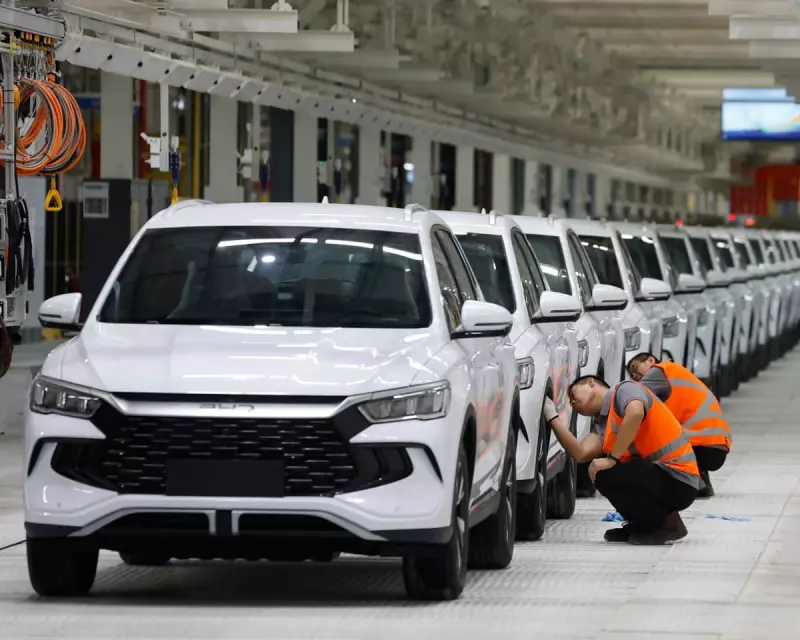
In a landmark shift for the global automotive industry, Chinese manufacturer BYD has officially overtaken Tesla to become the world's largest seller of battery electric vehicles in 2025. The change in leadership marks a symbolic moment in the rapid ascent of China's carmakers on the international stage.
The Numbers Behind the Shift
BYD sold 2.26 million pure electric cars globally throughout 2025, comfortably surpassing the 1.63 million deliveries reported by its American rival. Tesla's sales for the year fell by 9% compared to 2024, with a particularly sharp slump in the final quarter. The company delivered just 418,200 vehicles between October and December, missing analyst forecasts.
When including plug-in hybrid models, BYD's total sales volume reached an impressive 4.55 million cars for the year. However, its plug-in hybrid sales alone saw an 8% annual decline to 2.29 million units. The Shenzhen-based giant also more than doubled its commercial vehicle sales, including buses and lorries, to 57,000.

Political Headwinds for Tesla
A significant factor behind Tesla's declining performance appears to be the withdrawal of electric vehicle subsidies and the rollback of emissions regulations by the administration of US President Donald Trump. This policy shift occurred despite Tesla CEO Elon Musk being a major donor to Trump's victorious 2024 election campaign.
The relationship between Musk and Trump, which initially seemed promising for EV support, deteriorated dramatically in the summer. The removal of financial incentives for buyers is seen as a direct blow to Tesla's market in its home country, contributing to the annual sales drop.
A Broader Industry Trend
BYD's rise reflects the broader ambition of Chinese automotive companies, which are using the transition to electric power to challenge established global players. Led by BYD and rivals like SAIC and Chery, Chinese car exports have surged in recent years.
Founded in 1995 as a battery company by entrepreneur Wang Chuanfu – often called China's answer to Elon Musk – BYD had previously outsold Tesla in individual quarters. However, 2025 was the first full year where it pulled decisively ahead in pure electric production, even amidst fierce competition within China itself.
Globally, electric car sales continue to grow, but the pace has been slower than many anticipated. This has led to aggressive price cuts by manufacturers and prompted several governments to reassess or delay targets for phasing out petrol and diesel vehicles.