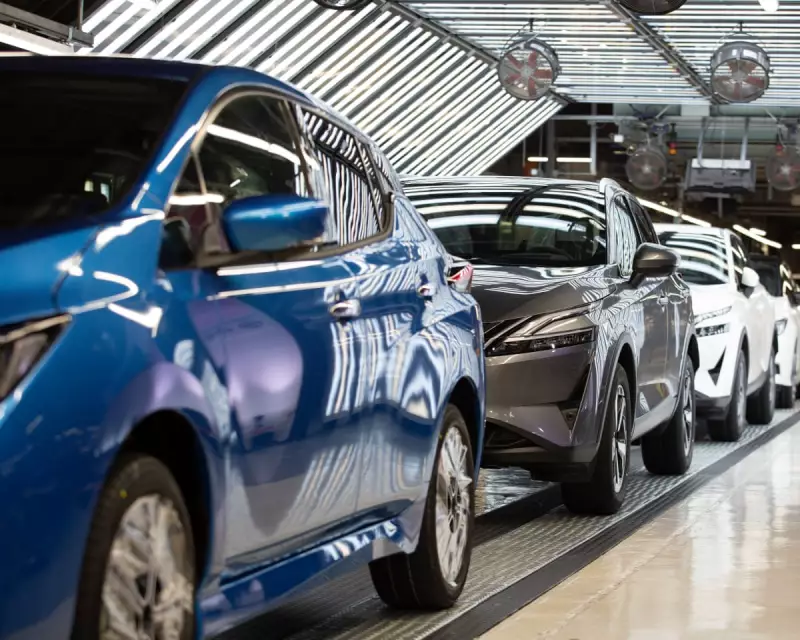
In a significant boost for British manufacturing, Nissan has officially commenced production of its latest electric vehicle at its Sunderland plant. The launch of the third-generation Leaf marks a pivotal moment in the UK's shift away from petrol and diesel cars.
A Major Investment in UK Manufacturing
The Japanese carmaker has invested a substantial more than £450 million into the development and manufacturing of the new model. Crucially, over £300 million of this investment has been directed into Nissan's UK operations. Industry Minister Chris McDonald is scheduled to visit the factory to mark the occasion.
This new Leaf is the successor to the model that was the first mass-market battery electric car built in the United Kingdom. To date, the Sunderland facility has produced 282,704 units of the Leaf.

Securing the Future of the Sunderland Plant
The Sunderland site remains Britain's largest car factory, employing 6,000 people and possessing a theoretical annual production capacity of 600,000 vehicles. However, output in 2024 was reported at 284,000 units, reflecting broader challenges faced by European manufacturers.
The success of the new Leaf is seen as vital for the long-term security of the plant. In 2023, Nissan revealed it was considering building two further electric models in Sunderland. These vehicles are anticipated as electric replacements for the petrol-powered Qashqai and Juke models currently manufactured there, although a final investment decision is pending.
Adam Pennick, Nissan's Vice-President for Manufacturing at the plant, stated: "There is huge pride and excitement in our team to be building this brilliant car in Sunderland."
Broader Context and Government Support
This local investment contrasts with a global restructuring at Nissan, which involves closing seven factories and cutting 20,000 jobs worldwide. The Sunderland plant is not affected by these closures.
The UK government has confirmed that the new Leaf will qualify for the full £3,750 electric car grant. The vehicle features an improved range of up to 386 miles per charge, thanks to a larger 75 kilowatt-hour battery.
Business Secretary Peter Kyle commented: "Sunderland is the beating heart of the UK’s automotive industry, and Nissan’s investment is a major commitment to the north-east and a huge vote of confidence in our economy."
Looking ahead, the future of electric vehicle production in Sunderland is also closely tied to the adjacent AESC battery factory, which is majority-owned by a Chinese company. Furthermore, Nissan's CEO has indicated the potential for the Sunderland plant to manufacture vehicles for Chinese partner Dongfeng.