UK's Last Major Chemical Plant Faces Closure Amid Soaring Energy Costs
The American owner of one of Britain's last major chemical plants has issued a stark warning: if energy prices remain at current elevated levels for the next three months, the facility will be forced to close. Peter Huntsman, CEO of Huntsman Corporation, stated that the recent surge in gas prices, exacerbated by conflicts in Iran, represents "another nail in the coffin" for European heavy industry.
Critical Facility on Teesside
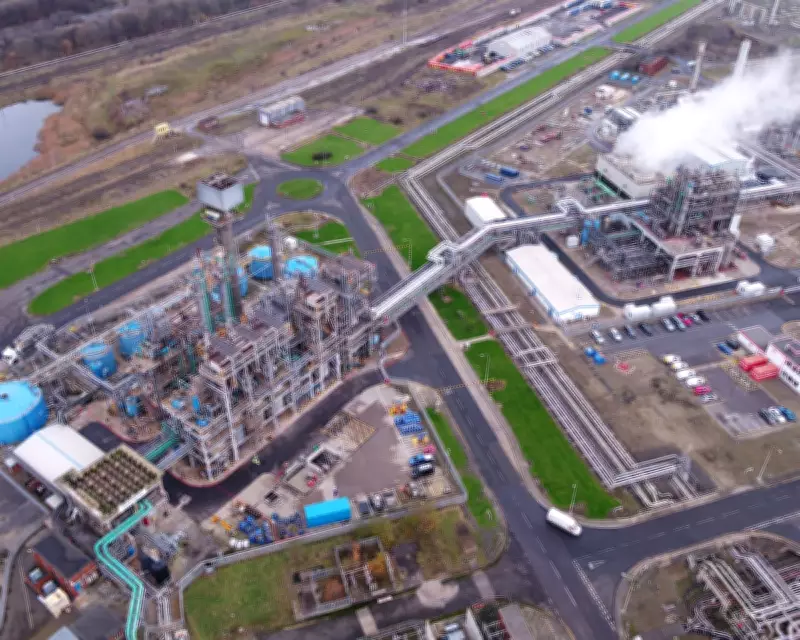
The plant in Wilton, located in north-east England's Teesside region, employs approximately 80 workers and specializes in producing aniline. This chemical is essential for manufacturing a range of products, from car seats to aircraft components. Historically, this site was part of Imperial Chemical Industries (ICI), which dominated as Britain's largest manufacturer throughout much of the 20th century.
Huntsman expressed deep frustration, noting that just four years ago, the UK facility was the most cost-effective aniline producer globally. "Right now, this week, it is the most expensive," he lamented, highlighting a dramatic shift in competitiveness due to rising energy costs.

Global Context and Corporate History
Huntsman Corporation, founded by Peter's father Jon Huntsman, originated in packaging with innovations like the clamshell burger carton for McDonald's Big Macs in 1974 before transitioning into chemicals. Under Peter's leadership since 2000, the company expanded significantly, including the acquisition of ICI's industrial chemicals arm for £1.7 billion.
The corporation operates plants across the United States, Europe, Southeast Asia, and the Middle East. However, its UK and European sites are particularly vulnerable to international gas market fluctuations, with prices hitting peaks not seen since Russia's invasion of Ukraine. Huntsman emphasized that while regions like China and the US are less affected, the EU and UK are bearing the brunt of these economic pressures.
Broader Industry Crisis
This situation mirrors warnings from other industry leaders, such as Jim Ratcliffe of Ineos, who secured a £120 million government bailout to save the UK's last ethylene cracker at Grangemouth. Ratcliffe has described the environment for European chemical plants as "unsurvivable" due to rising carbon costs and weak trade defenses.
According to the Chemicals Industries Association, production output has plummeted by 60% since 2021, with at least 25 site closures. Huntsman criticized what he called "self-inflicted" troubles, blaming successive governments for inadequate policies to reduce industrial energy bills. "Failed energy policy has made UK industry less resilient," he asserted.
Impact on Investment and Sovereign Capability
Huntsman revealed that the UK has dwindled from a key investment hub to having just one remaining asset in the country. He described laying off workers in the UK as "one of the greatest disappointments" of his career. Over the past decade, the UK has lost its last domestic producers of critical chemicals like ammonia for fertilizers and sulfuric acid for explosives, raising concerns about national security in food production and defense manufacturing.
When asked about future investments, Huntsman questioned the rationale: "I'm doing quite well in China, the United States, I've got growing operations in the Middle East. Why on earth would I put money in the UK, where there's neither growth nor a policy to incentivise people like me?"
Government Response
A government spokesperson acknowledged the challenges, stating, "We know this is a tough time for our chemicals industry, who are paying the fossil fuel penalty. The best way to tackle this is getting on to clean homegrown power which we control, to bring down bills for good." Officials are engaging with the industry to assess the impact of Middle East tensions and explore potential solutions.
This crisis underscores a broader trend of deindustrialization in the UK, with heavy industries struggling to compete globally amid volatile energy markets and policy uncertainties. The potential closure of the Wilton plant would mark another significant loss for Britain's manufacturing sector, emphasizing the urgent need for strategic interventions to preserve industrial capabilities.