

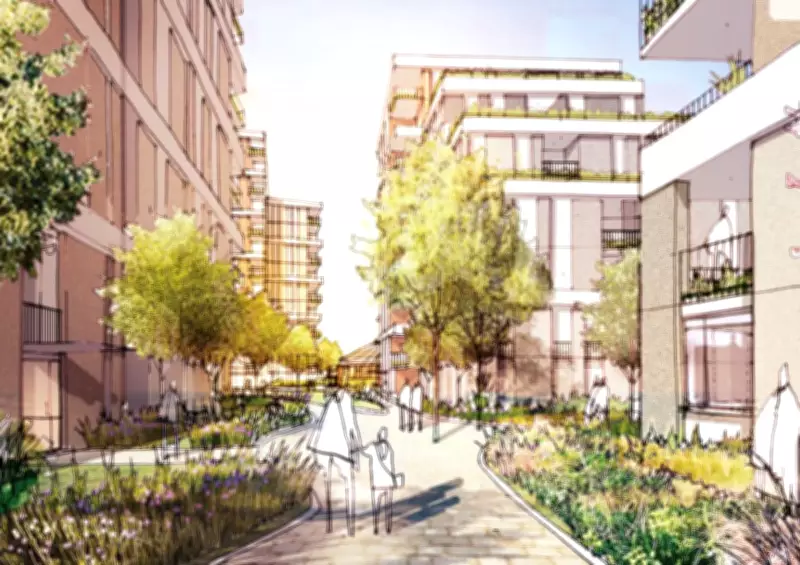
Chalk Farm High-Rise Estate Redevelopment Faces Crucial Decision
Camden Town is bracing for a transformative property decision as the Riverside Housing Association awaits a critical verdict on its controversial proposal to demolish the celebrated Juniper Crescent estate in Chalk Farm. The plans, which will be determined tonight, envision replacing the existing 120-home development with five new high-rise blocks reaching up to 15 storeys, igniting renewed fears of over-development in the area.
Architectural Legacy Versus Modern Housing Demands
Juniper Crescent, an architecturally acclaimed estate built in 1997, currently features homes up to four storeys high arranged around an open space with a playground. Riverside argues that the redevelopment will provide much-needed new housing, addressing pressing housing inequality in Camden. However, critics contend that the project will irrevocably alter the character of Chalk Farm, Primrose Hill, and Camden Market, transforming them into "poorly designed forests of expensive flats."
Andrej Mecava, a resident living opposite the plot, expressed grave concerns, stating, "The astonishing scale and magnitude of these buildings will completely devastate the character of multiple beloved areas. It is a true dereliction of duty that such schemes have been allowed to progress."

Community Division and Ballot Controversy
A resident ballot conducted by Riverside showed 63 percent in favour, with an 83 percent turnout. The housing association vows that every eligible resident will be offered a new home on the estate at the same rent levels, with one-bedroom properties available for adult children currently residing there. Despite this, the ballot process has faced severe criticism.
Eleonora Andronaco, secretary of the Juniper Crescent Tenants and Residents Association, accused Riverside of "gerrymandering" the ballot to secure a favourable outcome. She claimed, "Social housing residents were moved out and replaced with intermediate tenants, which amounts to manipulation. The way this was handled undeniably tore a community apart."
Another neighbour from Gilbeys Yard echoed these sentiments, describing the ballot as "unethical, rushed, and enforced for the benefit of the landlord, leaving many feeling betrayed and disempowered."
Environmental and Conservation Objections
Opposition extends beyond resident concerns. The Primrose Hill Conservation Area Advisory Committee has raised alarms about inadequate affordable housing and doubts over its actual delivery. Additionally, Climate Emergency Camden has highlighted environmental issues, warning that demolition could result in the loss of embedded carbon on site, increased light pollution affecting neighbours and biodiversity, and potential impacts on flood management.
Planning Recommendations and Proposed Benefits
In the application, planning officers have recommended approval, citing significant health and safety benefits and the opportunity to address housing inequality. They emphasize that the redevelopment will make more efficient use of the land, creating an open, inclusive, and welcoming environment enhanced by greening, flood management, and biodiversity gains in high-quality open spaces.
The applicant also notes that the project includes dedicated community facilities, such as a new hall, and will be built in two phases to allow some tenants to remain in place during construction, temporarily relocating to empty homes as work progresses.
As Camden Town awaits tonight's decision, the debate underscores the ongoing tension between modern housing demands and the preservation of community character and environmental sustainability in one of London's most iconic neighbourhoods.






