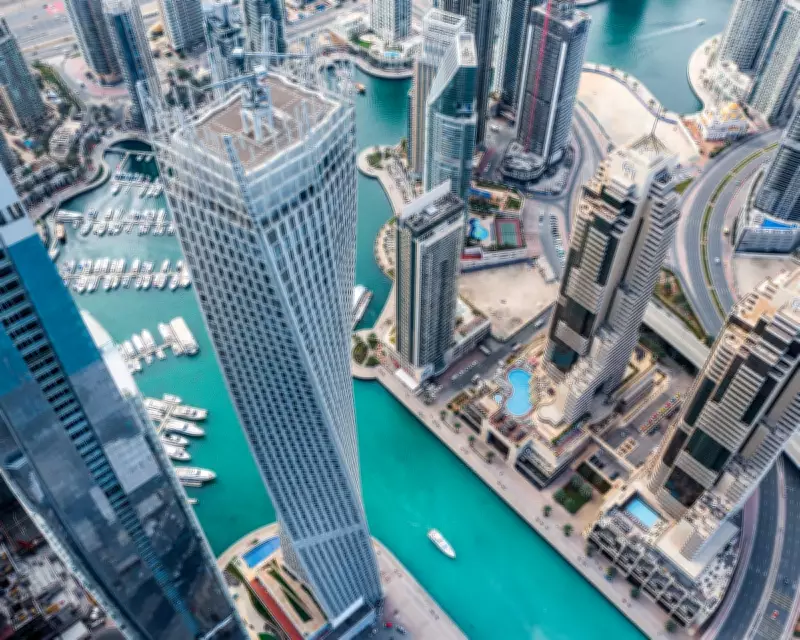
Dubai's Potent Lure: The Reality Behind the Real-Estate Frenzy
Bankers, hedge fund managers, lawyers, and accountants are among the high-profile professionals flocking to Dubai, drawn by the city's zero income tax policy and burgeoning opportunities. This migration is positioning Dubai as a significant competitor to traditional financial hubs like London, New York, and Hong Kong.
From Liverpool to Luxury: A Success Story
Aidan Doyle's journey epitomises the transformative potential of Dubai. Formerly an estate agent in Liverpool earning £30,000 annually, Doyle relocated to Dubai and now generates commissions exceeding £500,000 per year. Acting as an agent for buyers and sellers, he has achieved financial success unimaginable in the UK within just three years in this dynamic city-state.
The Billionaire Exodus
Dubai's appeal extends beyond young entrepreneurs to established billionaires. Lakshmi Mittal, the steel magnate, recently announced his relocation from Britain to Dubai, citing protest against Labour's abolition of non-dom status. He purchased a palatial home in an exclusive gated community often dubbed the "Beverly Hills of Dubai."

Mukesh Ambani, frequently described as Asia's wealthiest individual, followed suit by acquiring one of Dubai's most expensive properties on the Palm Jumeirah beachfront estate. The £120 million residence features ten bedrooms, Italian marble, and a private 70-metre beach, described by local consultants as "a statement" rather than merely a home.
Property Market Dominance
International estate agent Knight Frank reports extraordinary activity in Dubai's luxury property sector. During the fourth quarter, Dubai surpassed all global cities in sales of homes priced between $2.5 million and $10 million, outperforming New York, Los Angeles, Hong Kong, and London.
In the ultra-luxury bracket exceeding $10 million, Dubai recorded 9,050 sales, significantly ahead of New York's 6,577 and London's 3,089. This represents a dramatic shift from 2022 when London led this category with 5,826 sales compared to Dubai's 3,982.
The Allure Beyond Taxation
While zero income tax remains a primary attraction, Dubai offers additional compelling advantages:
- Ultra-modern infrastructure including 5G telecommunications and state-of-the-art medical facilities
- Strict street-crime laws that minimise theft of luxury items
- Flexible residency policies allowing visa holders to establish business bases
- Hi-tech digital infrastructure supporting remote work and digital entrepreneurship
- Abundant luxury properties and amenities including twelve Michelin-starred restaurants
- Year-round cultural and business events attracting diverse international communities
Demographic Transformation
Dubai's population of approximately 4 million grows by roughly 200,000 annually, comprising not only ultra-high-net-worth individuals but also middle-income professionals seeking opportunities. The pandemic accelerated this trend as Dubai became a hub for remote workers and digital influencers attracted by its climate and infrastructure.
Russian migrants constitute a significant minority, with approximately 1 million Russian-born residents arriving particularly after the Ukraine invasion. Dubai maintained flight connections with Russia and offers residency visas in exchange for property purchases or substantial deposits.
Cultural Integration and Entertainment
The city's growing international community has stimulated a vibrant cultural scene. Legendary British band Madness performed in Dubai last November, while productions like Wicked occupy the city's opera house. The Russian State Ballet recently presented The Nutcracker at the Zabeel Theatre, reflecting the diverse cultural influences shaping Dubai's entertainment landscape.
Regulatory Environment and Criticism
Critics argue that Dubai tolerates financial activities that would face stricter scrutiny in London or New York, including potential money laundering, organised crime connections, and cryptocurrency trading. However, the UAE government disputes these claims, pointing to actions like the extradition of Sean McGovern, a leader of the Kinahan organised crime group, to Ireland last year.

Economist Brunello Rosa notes that the UAE has implemented comprehensive digital currency regulations that other jurisdictions struggle to match. His analysis describes a three-layer digital money pyramid that the UAE has effectively recognised and regulated.
Economic Disparities and Challenges
Azad Zangana, an economist at Oxford Economics who has lived in Dubai for four months, observes significant pay disparities exceeding European levels. While housing and amenities in surrounding areas can reduce living costs, the wealth gap remains pronounced.
Additional challenges include severe traffic congestion and extreme summer temperatures reaching 50°C. Some returning expatriates report a demanding long-hours culture that can diminish the value of higher salaries.
Sustainable Growth and Future Prospects
Despite concerns about potential property market corrections, demand continues to outstrip supply significantly. Aidan Doyle, now an Instagram star sharing investment insights, acknowledges missing England's countryside but appreciates Dubai's growing family orientation and proximity to greener environments like Oman.
"Dubai sells itself the more you are here," Doyle reflects. "I had a three-year plan to stay before leaving, but that doesn't exist any more." His sentiment captures the magnetic pull that continues to draw global professionals to this tax-free oasis of opportunity.