

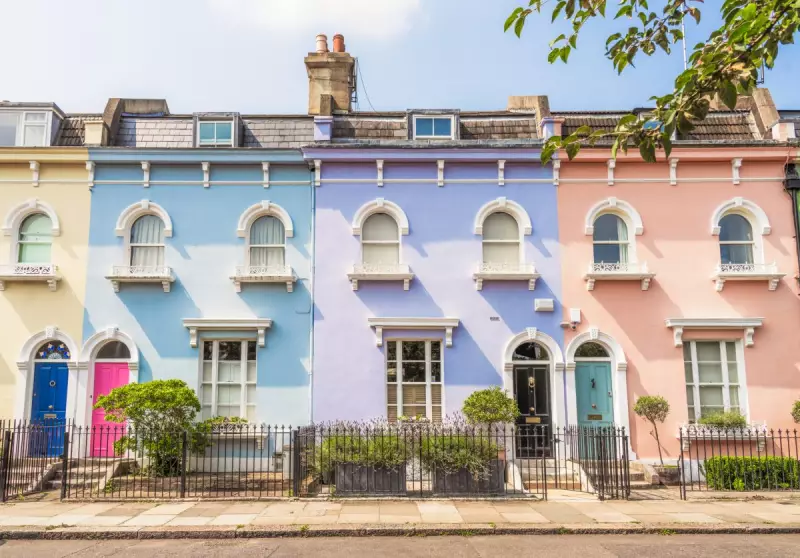
London's prestigious property market, long a magnet for global wealth, is showing significant signs of strain as a growing number of homeowners are being forced to sell at a loss. Exclusive analysis reveals that the capital's most affluent neighbourhoods are at the epicentre of this downturn.
Prime Boroughs and Flats Bear the Brunt
Research conducted by estate agency Hamptons, using Land Registry data, shows that 14.8 per cent of London's property sellers made a loss in 2025. This figure is almost double the national average of 8.7% and marks a worrying increase of more than five percentage points since 2019.
The pain is not evenly distributed. The boroughs where sellers are most likely to lose money include some of London's most exclusive addresses: Chelsea and Kensington, Camden, and Hammersmith and Fulham. Tower Hamlets, an outlier due to its high concentration of flats, also featured prominently, with 28.2 per cent of sales there made at a loss.

The collapse is being driven primarily by the flat market. In 2025, a staggering 22 per cent of London flats were sold at a loss, compared to just 3.5% of houses. Aneisha Beveridge, Head of Research at Hamptons, explained that the high density of flats is the key reason for Tower Hamlets' poor performance.
Multiple Factors Converge to Depress Values
Experts point to a perfect storm of issues causing the slump. The 2014 stamp duty overhaul under then-Chancellor George Osborne is cited as a primary long-term cause, making transactions more expensive and dampening market fluidity. This has been compounded by reduced investor demand, rising interest rates, and post-Grenfell safety regulations that have added costs and complexity to the flat market.
James Holroyd, a partner at Property Vision, highlighted the broader context of instability. "The problem is that we’ve had 12 years of political instability and just general chaos," he said, referencing Brexit, the pandemic, and recent Budget turmoil. He also noted that the government's non-dom crackdown is driving away wealthy foreign buyers, a cohort that accounted for two in every three super-prime sales last year.
The termination of the Help to Buy scheme has also had a severe impact, particularly on new-build flats. Charlie Lamdin, founder of BestAgent, described its end as creating a "cliff-edge" for flat values, arguing that the scheme artificially inflated prices and its cessation has led to a dramatic 72% drop in housebuilding in London.
Is a Recovery on the Horizon?
The outlook remains uncertain. Many homes currently being sold were purchased during the price peaks of the mid-2010s or the pandemic boom, locking sellers into a loss. Beveridge admitted that a reversal is dependent on stronger price growth, but "we don’t really know when that’s going to happen."
One potential bright spot could emerge from across the Atlantic. Dubbed the 'Trump effect', potential US policies restricting institutional home purchases could redirect American investment into the UK's build-to-rent sector, offering some support to the market.
In response to the wider housing crisis, a government spokesperson stated that an evaluation of Help to Buy is ongoing and pointed to new emergency measures being unveiled to tackle housebuilding delays and unlock stalled sites across London.






