

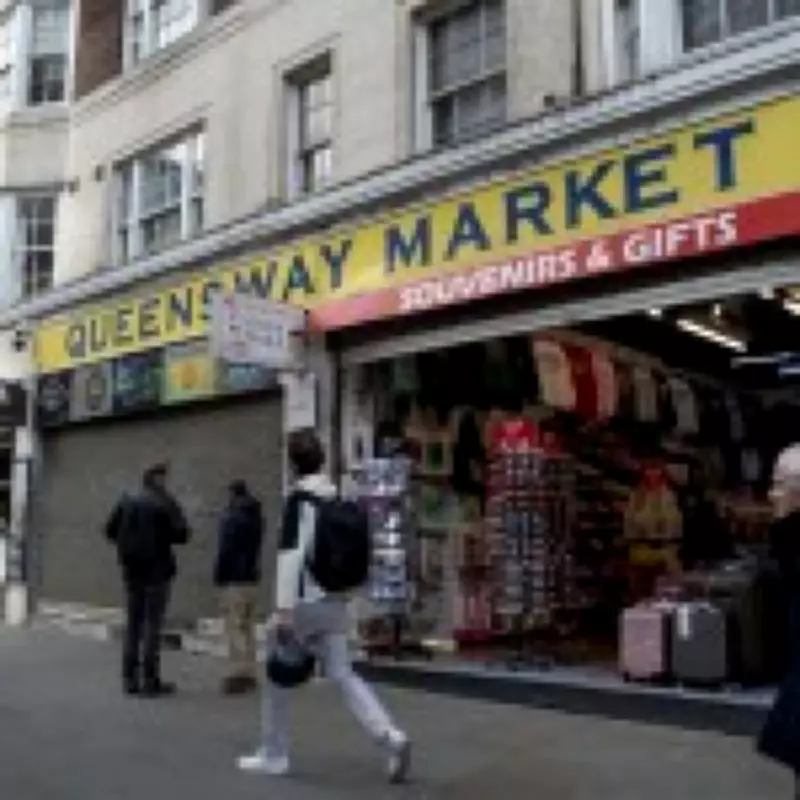
Queensway Market Traders Vow to Fight Closure for Whole Foods Development
Traders at a popular west London indoor market are claiming they are victims of "assassination by gentrification" as Queensway Market faces imminent closure to accommodate a new Whole Foods store. Dozens of small businesses that have operated at the market for decades have received notice to vacate by May 28, following an extension from the original April 28 deadline.
Market's Unique Character Under Threat
Located near Bayswater station and opposite Hyde Park, Queensway Market has long been a "go-to" destination for tourists and locals alike, featuring boutiques, restaurants, and second-hand shops distinct from chain stores. Described as an "Aladdin's Cave" nestled among high-street staples like Pret and Starbucks, the market's low lighting and eclectic atmosphere contribute to its mystique.
Mohammad Sultani, 58, who has run a juice stand for 15 years, expressed devastation: "I serve fresh juice that customers call the best. I have regulars in top jobs and tourists who return every visit. We don't need another Whole Foods—there are two locally already. This feels like assassination by gentrification."

Community Impact and Economic Struggles
Traders emphasize the market's role in fostering community, with many describing their relationships as familial. Isabel Del Campo, 46, operator of Eva's hair salon for over 20 years, stated, "It's going to be the end of my business. My customers are friends more than clients. Gentrification is ripping the heart out of our community."
Vito Di Bari, 35, who runs a boutique catering to the LGBTQ+ community, highlighted the financial strain: "I sank my life savings into this business, and now I'm on the brink of losing everything. London is becoming full of chains, and big money is taking over diversity."
Public Outcry and Petition Efforts
A petition to save the market has garnered nearly 570 signatures, reflecting widespread support. Tourists and locals alike praise the market's unique character. Portuguese visitors Bernardo Costa, 32, and Teresa Goncalves, 29, called it "everything we love about London" and "a taste of the real London," criticizing the trend of cities becoming homogenized with chains.
Hazel Brand, a nearby worker, added, "This place should be preserved. I'm not against chains, but we need small businesses too. It's shameful and disgraceful that it's facing closure."
Trader Resilience and Legal Challenges
Jassar Mohamed, 51, who owns three shops in the market, noted the personal service that big chains cannot offer: "I have four children and was bringing them into the business. Now that dream is in tatters. We are a happy family here, but we're up against rich and powerful organizations."
Traders are bound by short lease agreements, allowing owners to provide minimal notice. Despite this, they are vowing to fight the closure, citing the area's existing Whole Foods stores in Notting Hill and Kensington High Street as evidence of unnecessary duplication.
Corporate and Council Responses
A Whole Foods spokesperson confirmed, "We have signed a lease as a tenant with Bourne Capital, but we don't have any additional updates at this time." Westminster City Council has been contacted for comment, with no immediate response available.
The closure highlights broader tensions in London's property market, where small businesses struggle against rising rents and corporate expansion, raising questions about urban diversity and community preservation.






