

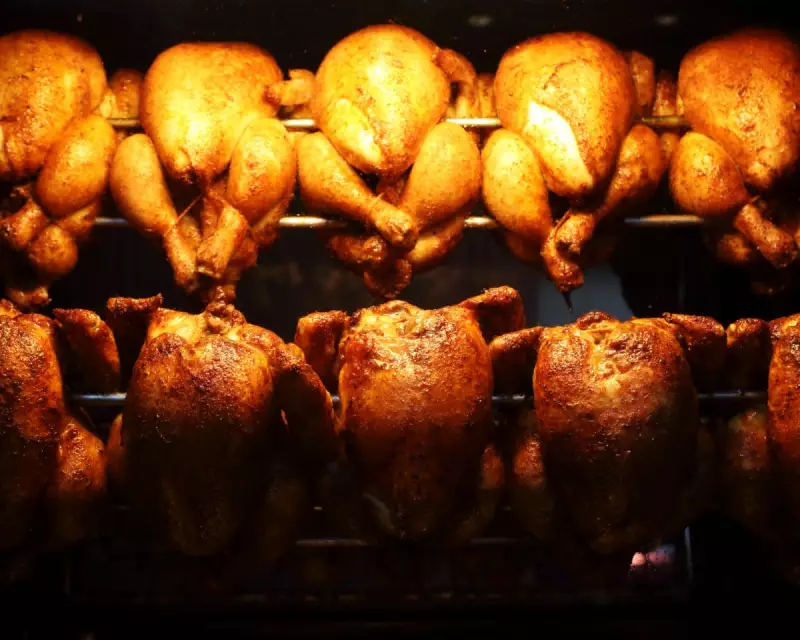
Supermarket giant Morrisons has been handed a hefty £17 million tax bill after losing a major legal battle with HM Revenue and Customs (HMRC) over whether its rotisserie chickens should be subject to VAT.
The 'Pasty Tax' Precedent and the Court's Decision
The dispute has its roots in the controversial 2012 budget changes by then-Chancellor George Osborne, widely known as the 'pasty tax'. This reform extended the standard 20% VAT rate to hot takeaway food, including items like Cornish pasties and sausage rolls sold by bakeries and supermarkets.
Following a public outcry, the rules were tweaked. VAT would apply to food kept hot in a cabinet, but not to products sold from a rack that were either cold, or 'incidentally hot' but intended to be eaten cold. Morrisons argued its whole cooked chickens, left to cool down after roasting, fell into this exempt category.

However, the High Court disagreed. It ruled that Morrisons' 'cool-down' rotisserie chickens are liable for the full 20% VAT rate. The judgment highlighted that the chickens were sold in special foil-lined bags labelled 'caution: hot product' and were taken off sale after two hours if unsold.
Morrisons' Defence and Customer Impact
During the case, Morrisons presented evidence that 80% of customers bought the chickens to eat cold or to reheat later for a meal. Richard Nichols, the company's finance director until January, stated the typical buyer was on a lower income and that two-thirds of customers saw £4.50 as the maximum price they would pay.
Nichols warned that adding VAT, which would have pushed the price from £4.40 to £5.28, 'could have resulted in hundreds of thousands fewer chickens being bought every month'. He argued this would harm both the supply chain and the balanced diets of UK families.
The court, however, noted critical details. Witnesses stated that after two hours in the bag, the chickens' temperature was between 42C and 45C, far higher than the 31.8C of a naturally cooling chicken. The judge concluded this showed the bags were designed to retain heat, meaning the chickens were not on a normal cooling trajectory and were not merely 'incidentally hot' when sold.
Financial Repercussions and Lost Expectations
The ruling carries an immediate financial sting, with Morrisons now liable for the £17 million in VAT under dispute. The court also addressed the supermarket's claim of having received unclear guidance from HMRC in the early years of the rule change (2012-2014).
While acknowledging that HMRC did not give 'clear and unambiguous rulings' that the chickens were zero-rated, the judgment stated that Morrisons could not have held a 'legitimate expectation' to rely on such guidance, given the evidence about how the products were stored and sold.
This case sets a significant precedent for the retail sector, clarifying the application of VAT rules on hot food and underscoring the importance of precise product handling and presentation. Morrisons has been contacted for comment on the ruling.






