

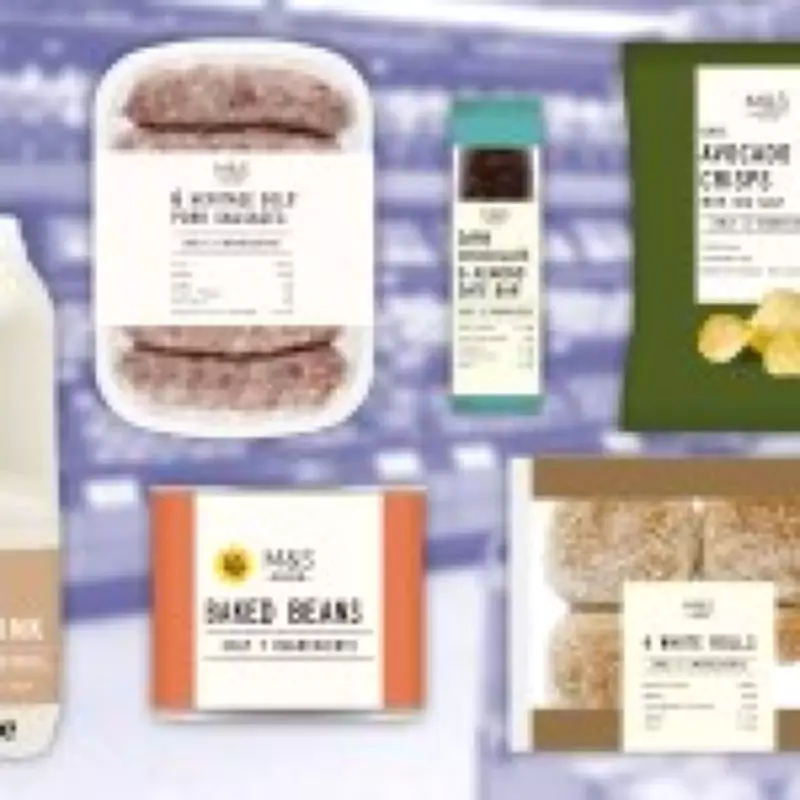
M&S 'Only Ingredients' Range: Health Revolution or Marketing Masterstroke?
The British high street has become a battleground for food philosophy, with Marks & Spencer's 'Only Ingredients' range at the centre of a heated debate. As shoppers navigate supermarket aisles, they're confronted with a fundamental question: does fewer ingredients truly mean better health, or are we witnessing sophisticated marketing dressed up as nutritional enlightenment?
The Rise of Minimalist Eating
Over recent years, consumer interest in low-ingredient foods has surged dramatically, positioned by advocates as the natural antidote to ultra-processed meals dominating supermarket shelves. Marks & Spencer first entered this arena back in 2023 with their pioneering 'Only...Ingredients' launch, creating a selection of food items made with just a handful of basic 'store cupboard' ingredients.
Responding to growing public demand for greater transparency about what goes into our weekly shopping, the supermarket has steadily expanded this range over three years. The latest 2026 expansion introduces twelve new products including sausages, chipolatas, burgers, meatballs, yoghurts, porridge and various condiments, allowing customers to incorporate minimalist principles across all daily meals.

The Premium Price of Simplicity
This back-to-basics approach comes with a distinctly premium price tag that has raised eyebrows among budget-conscious shoppers. The 'Only 4 Ingredients White Sliced Toasting Loaf' serves as a striking example, costing £2.40 for 550 grams of minimalist bread. For context, Tesco offers 800 grams of standard white bread for just 74p.
Valentine's Day celebrants planning homemade burgers face similar premium pricing. Four British beef patties from the new range, containing just beef, salt, and pepper, retail at £5.75. Add a bottle of M&S's minimal ingredients ketchup at £2.40, and the cost exceeds £8 before considering any dessert options.
Consumer Reactions: From Celebration to Cynicism
Customer responses have revealed a fascinating split in public opinion. Many shoppers have enthusiastically embraced the range, praising M&S for what they perceive as a return to 'proper food'. Social media platforms have buzzed with positive commentary, with one X user declaring: "Clever work by @marksandspencer they've launched an 'only' range of foods. Each food item has the minimal required natural ingredients and no additives, colours, processed crap... A good idea!"
For customers with specific dietary requirements, the range has been particularly welcomed. Kerry Clayton, who follows gluten-free, citrus-free and tomato-free diets, told the BBC in 2025: "It's hard to find enjoyable things we can all eat. For those of us that need low ingredient food, it's perfect."
However, not all feedback has been celebratory. Some consumers have expressed cynicism about what they perceive as marketing manipulation. One social media user commented: "This is just pure marketing. Cheap food with an expensive price tag. Aldi will give you better quality for less money." Another added: "So sad we have to congratulate a supermarket for providing real food."
Nutritional Reality Check
Beyond the price debates and marketing discussions lies a crucial nutritional question: are these minimalist products actually healthier? Nutritionist Milena Kaler offers important perspective: "Fewer ingredients can be a positive sign, particularly if it means less reliance on artificial additives, emulsifiers or ultra-processed extras. But fewer ingredients doesn't automatically equal healthier."
The Mayfair-based expert emphasises that nutritional value depends more on ingredient quality and overall nutrient profile than list length. "Sometimes a longer ingredient list simply reflects fortification or added nutrients, which can be beneficial, not harmful," she explains. Kaler identifies transparency as the range's most significant benefit, noting that "consumers are increasingly interested in understanding what they're eating, and simpler ingredient lists can make food feel less intimidating."

The Ultra-Processed Food Context
This debate unfolds against a backdrop of growing concern about ultra-processed foods (UPFs), which have been linked to more than thirty different health problems including heart disease, cancer and anxiety. A significant study published in June 2025 revealed that UPF intake contributes "significantly to the overall burden of disease in many countries", with academics urging governments to include UPF reduction in national dietary guidelines and public policies.
Dietitian Jo Travers acknowledges the range represents "a positive step in the right direction" within this context, but encourages a shift in nutritional thinking. "I always encourage my clients to think about what they can add to a meal to make it more nutritious, rather than focusing on what they can remove or take away," she shares. "We want to get variety into our diet, and when I'm making my own food I'm often thinking: 'What else can I add to this to make it even better.'"
The Accessibility Question
Travers also raises concerns about how such ranges might position basic food as premium products. "When you are using actual food, as opposed to by-products etc, it is a bit more expensive," she acknowledges. "However, they are selling it as a kind of 'elite' product which is a shame." This observation touches on broader questions about food accessibility and whether health-focused ranges inadvertently create nutritional divides based on purchasing power.
As the conversation continues to evolve, Marks & Spencer's 'Only Ingredients' range serves as a fascinating case study in how supermarkets navigate changing consumer expectations, nutritional science, and commercial realities. Whether viewed as genuine innovation or clever marketing, it undoubtedly reflects our deepening cultural conversation about what constitutes proper food in the twenty-first century.





